19 Best Wood Choices for Kitchen Cabinets for Any Style
Choosing the right Wood Choices for Kitchen Cabinets can completely change how your kitchen looks and feels. It’s not just about color—it’s about warmth, texture, durability, and how your space works every single day.
If your kitchen feels outdated, too dark, or simply not “you,” the cabinet material might be the missing piece. This guide brings together beautiful, practical options that fit real homes and real lifestyles. From light and airy finishes to rich, dramatic tones, each idea helps you visualize a better, more personalized space.
In my experience, the right wood doesn’t just upgrade a kitchen—it transforms how you enjoy it. You’ll discover options that balance style and function, so you can confidently choose a look that feels timeless, welcoming, and uniquely yours.
1. White Oak Warmth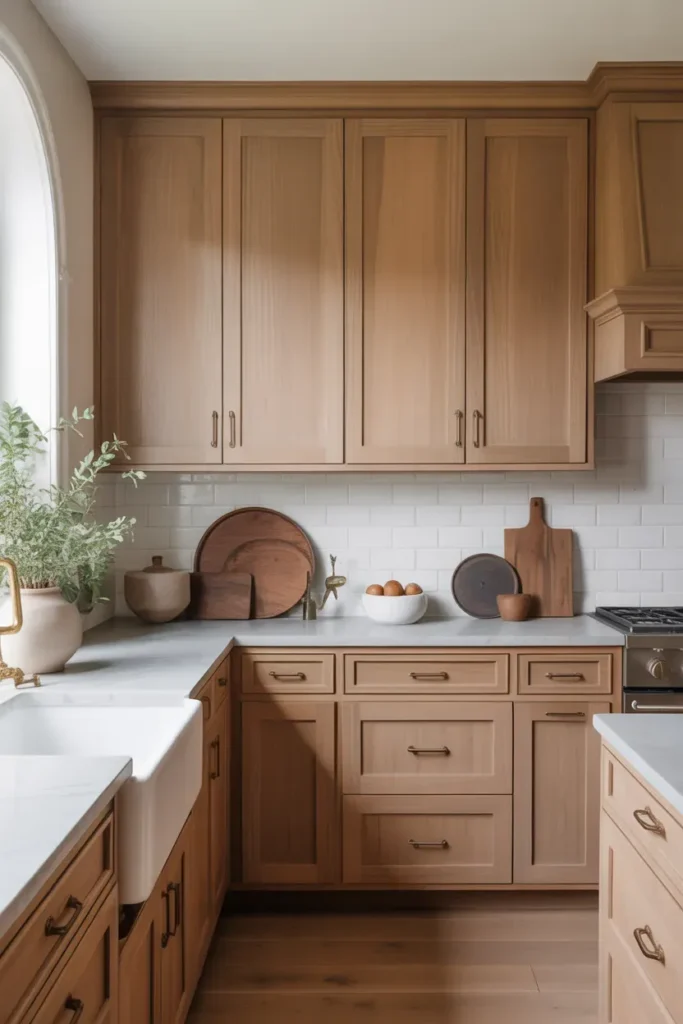
- Adds warmth without making the kitchen feel dark or heavy
- Works beautifully with modern, rustic, and classic decor styles
- Makes everyday wear less noticeable because the grain adds natural texture
- Creates a soft, inviting look that feels easy to live with
- Pairs well with brass, black, or brushed nickel hardware
Nothing feels more timeless than warm oak cabinetry anchoring a kitchen with soft texture and natural depth. White oak brings a balanced grain that adds interest without making the room feel busy, which is why it works beautifully in both modern and classic spaces. It pairs especially well with matte brass hardware, creamy walls, and subtle stone countertops. In my experience, oak is one of the easiest woods to style because it can lean rustic, Scandinavian, or upscale depending on the finish. That flexibility makes it a smart choice for homeowners who want longevity without sacrificing visual charm.
A kitchen instantly feels calmer when the cabinet material has visible character but still looks refined and clean. Oak does exactly that by adding soft movement through the grain while keeping the overall design grounded. This choice works well in busy family kitchens because minor wear often blends into the texture more naturally than on smoother surfaces. I’ve noticed oak also helps open layouts feel warmer and more connected to nearby dining or living spaces. If you are comparing Wood Choices for Kitchen Cabinets, this option stands out for its versatility, durability, and broad design appeal.
2. Maple Simplicity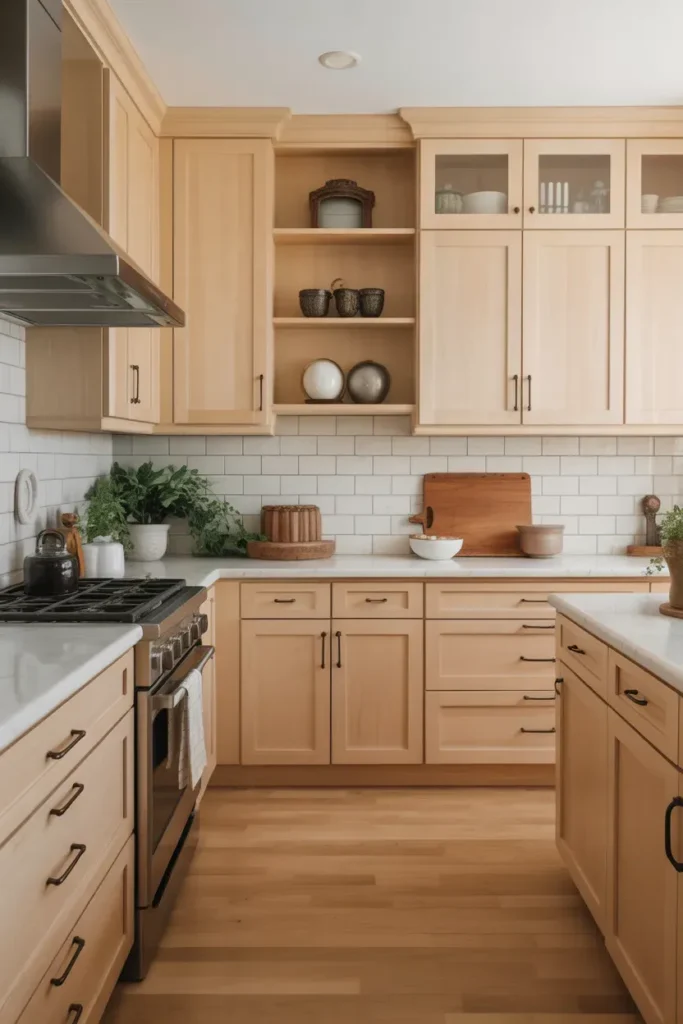
- Keeps the kitchen looking bright, fresh, and visually clean
- Great for smaller spaces that need a lighter and more open feel
- Gives paint and stain a smooth, even finish
- Helps backsplashes and lighting stand out without visual clutter
- Feels timeless but still easy to personalize
If you want a kitchen that feels bright, clean, and quietly luxurious, maple is a beautiful place to start. Its smooth, fine grain creates a polished look that feels less busy than stronger-patterned woods, making it ideal for smaller kitchens or minimalist layouts. Maple takes paint and stain evenly, so it gives you more freedom when choosing the final cabinet color. That is especially helpful when you want a soft beige, creamy white, or pale natural finish. Many designers recommend maple for timeless cabinetry because it supports a crisp look without feeling cold or overly formal.
The real beauty of maple shows up in the way it makes a kitchen feel neat, airy, and easy to personalize. Because the surface is subtle, backsplashes, hardware, and lighting details get more room to shine without visual competition. I’ve seen this work especially well in homes where the kitchen connects to open dining areas and the owner wants everything to feel cohesive. Maple is also practical for everyday use, since its understated pattern helps the room look clean even when counters are busy. Among popular cabinet woods, it offers a fresh balance of simplicity, flexibility, and elegance.
3. Walnut Depth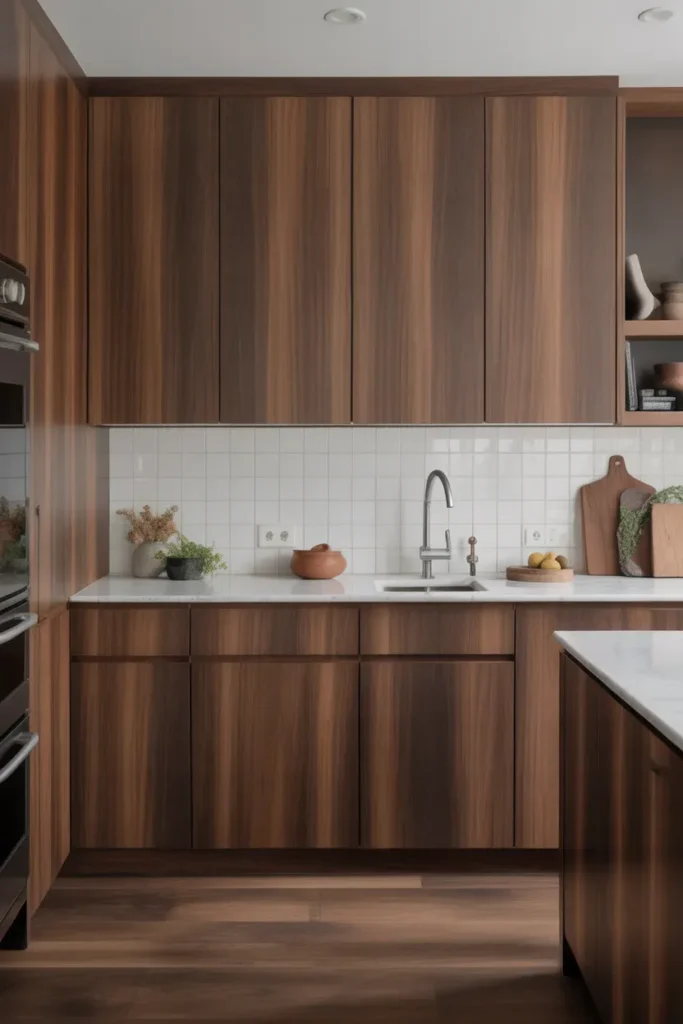
- Brings rich contrast and instant visual depth to the kitchen
- Makes simple layouts feel more custom and elevated
- Looks especially striking with white counters and warm metals
- Adds a designer feel without needing too many extra details
- Works well when you want a bold but polished style
There is something instantly rich about walnut cabinets that makes a kitchen feel custom, elevated, and deeply inviting. The darker tone brings dramatic warmth, while the flowing grain adds movement that feels luxurious without needing excessive decoration. Walnut works especially well in kitchens with white walls, soft black accents, and warm metal finishes because the contrast looks intentional and refined. I’ve noticed this wood often becomes the visual centerpiece of the entire room, even when the layout is simple. For homeowners who want depth and character, walnut creates a bold yet sophisticated foundation that feels designer-led.
A darker cabinet finish can completely transform a plain kitchen into a space that feels layered and memorable. Walnut does this beautifully because it adds mood without making the room feel heavy when balanced with light counters or open shelving. That is why many designers recommend it for contemporary homes that need warmth as much as style. In real kitchens, walnut also photographs beautifully, which matters if you love Pinterest-worthy interiors with strong contrast and texture. When people explore Wood Choices for Kitchen Cabinets, walnut often stands out as the most striking option for a polished, high-end look.
Also view: 18 Clever Tiny Kitchen Design Ideas for Functional Style
4. Cherry Elegance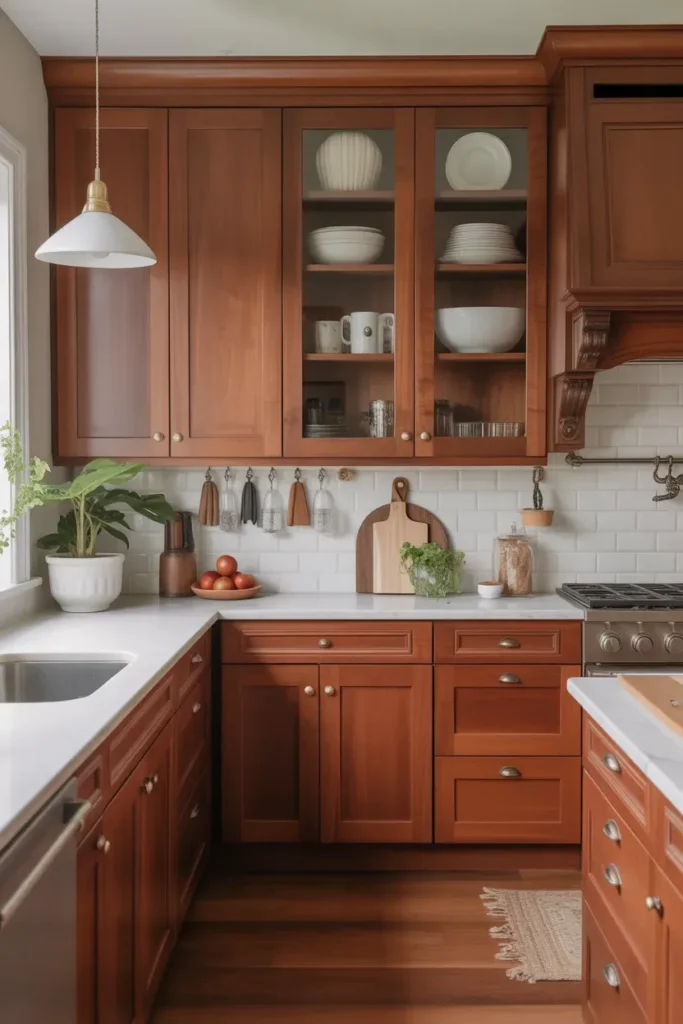
- Adds a warm, luxurious tone that deepens over time
- Perfect for traditional and classic kitchen styles
- Creates a cozy, rich atmosphere without extra decor
- Works beautifully with dark counters and bronze accents
- Develops a unique patina that enhances character
Cherry wood has a way of making a kitchen feel instantly elegant and lived-in, with a richness that naturally deepens over time. Its warm reddish undertone adds depth without needing bold colors or heavy styling. This makes it a great option for homeowners who want a space that feels timeless and slightly traditional. In my experience, cherry cabinets look even better after a few years, as the wood matures and develops a deeper tone. That natural aging process gives the kitchen a unique personality that feels authentic and welcoming.
One of the reasons cherry remains a favorite is its ability to create warmth without overwhelming the space. It pairs especially well with neutral walls, darker countertops, and subtle metallic accents like bronze or antique brass. I’ve seen this work beautifully in homes where the kitchen is meant to feel like the heart of the home—comfortable, inviting, and full of character. While lighter woods feel airy, cherry offers a grounded elegance that feels more intimate. For anyone drawn to classic design, this wood delivers both beauty and long-term visual appeal.
5. Hickory Texture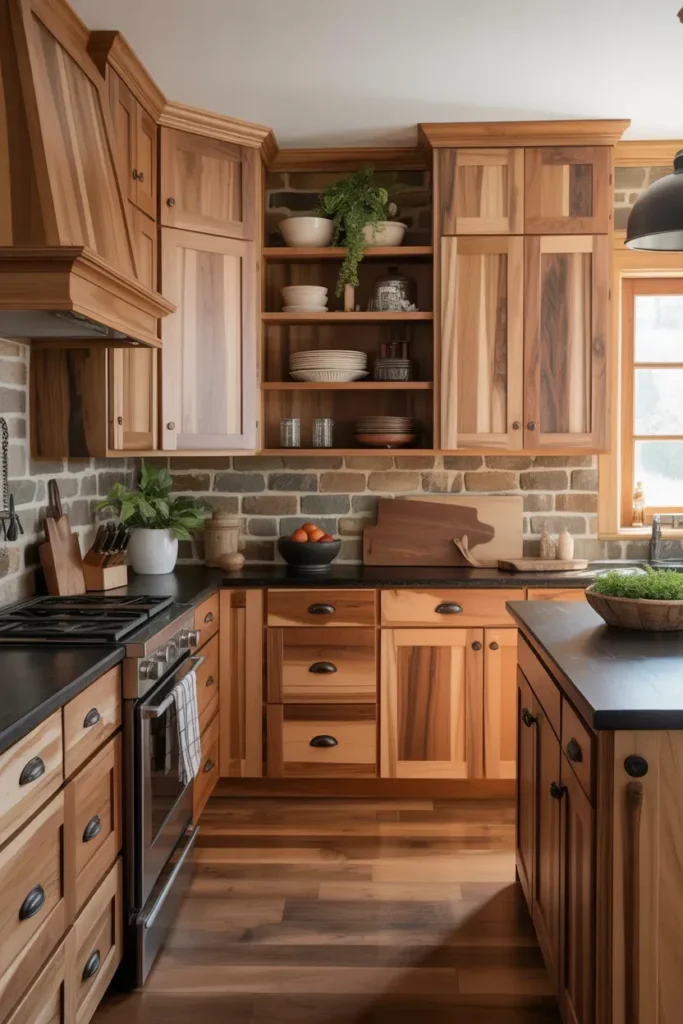
- Creates strong visual texture with bold grain patterns
- Ideal for rustic, farmhouse, or cabin-style kitchens
- Hides wear and tear easily due to natural variation
- Adds a handcrafted, organic feel to the space
- Works well with stone, metal, and raw materials
If you love a kitchen that feels full of personality, hickory is one of the most striking choices you can make. Its bold grain and natural color variation instantly create visual texture that makes the cabinets stand out. No two pieces look exactly alike, which adds a handcrafted, one-of-a-kind feel. I’ve noticed hickory works especially well in rustic or farmhouse kitchens where warmth and character matter more than perfection. It pairs beautifully with stone backsplashes, black hardware, and warm lighting to create a cozy, grounded atmosphere.
The beauty of hickory is that it embraces imperfection in a way that actually enhances the overall design. Everyday marks and wear blend into the natural pattern, making it a practical option for busy households. This wood also adds depth without needing additional layers of decoration, which keeps the kitchen from feeling cluttered. I’ve seen this work well in open spaces where texture helps define the kitchen area without walls. If you want cabinets that feel bold, natural, and full of life, hickory brings a strong visual impact that feels authentic and inviting.
6. Ash Light Grain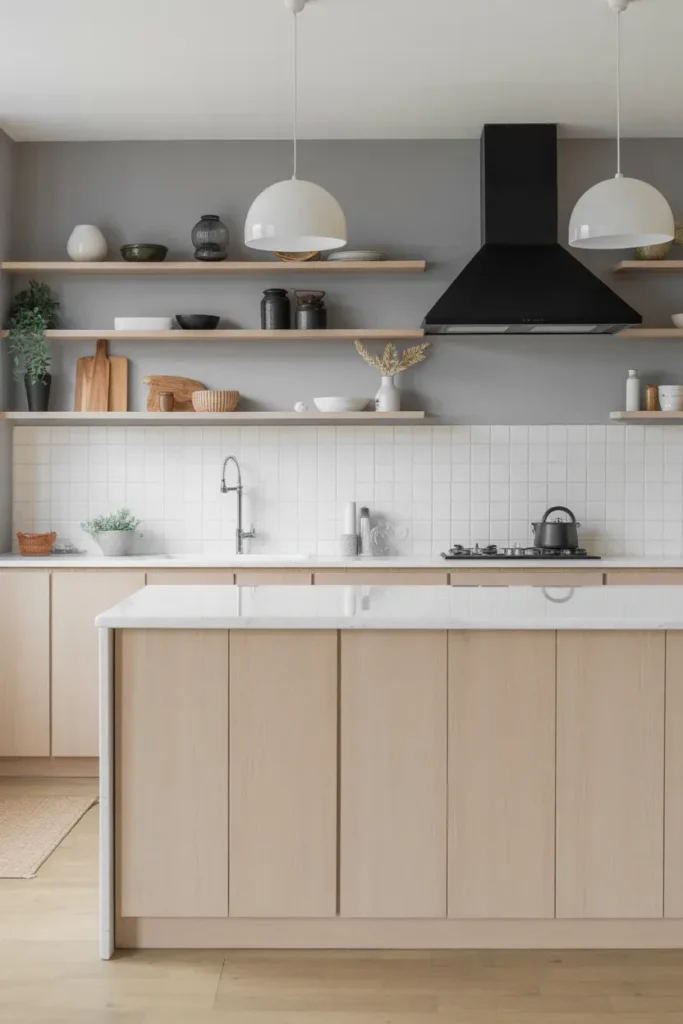
- Offers a light, airy look with subtle natural grain
- Perfect for modern and minimalist kitchens
- Keeps the space feeling open and uncluttered
- Works well with cool tones like gray and black
- Provides a clean base for layered design elements
Ash wood is a beautiful choice when you want a kitchen that feels fresh, open, and effortlessly modern. Its light tone and soft grain create a clean look without feeling flat or lifeless. This makes it ideal for minimalist designs where simplicity is key, but warmth is still important. I’ve seen ash work especially well in kitchens with gray walls, white counters, and black fixtures, where it helps balance cool tones with a natural touch. The result is a space that feels calm, bright, and visually balanced.
What makes ash stand out is its ability to stay subtle while still adding depth through texture. It doesn’t compete with other design elements, which allows lighting, hardware, and decor to stand out more clearly. In my experience, this wood is perfect for homeowners who want a modern kitchen that still feels welcoming rather than cold. It also adapts easily to different styles depending on the finish, making it a flexible option for evolving spaces. For a light and contemporary feel, ash offers a clean and refined foundation.
7. Birch Soft Finish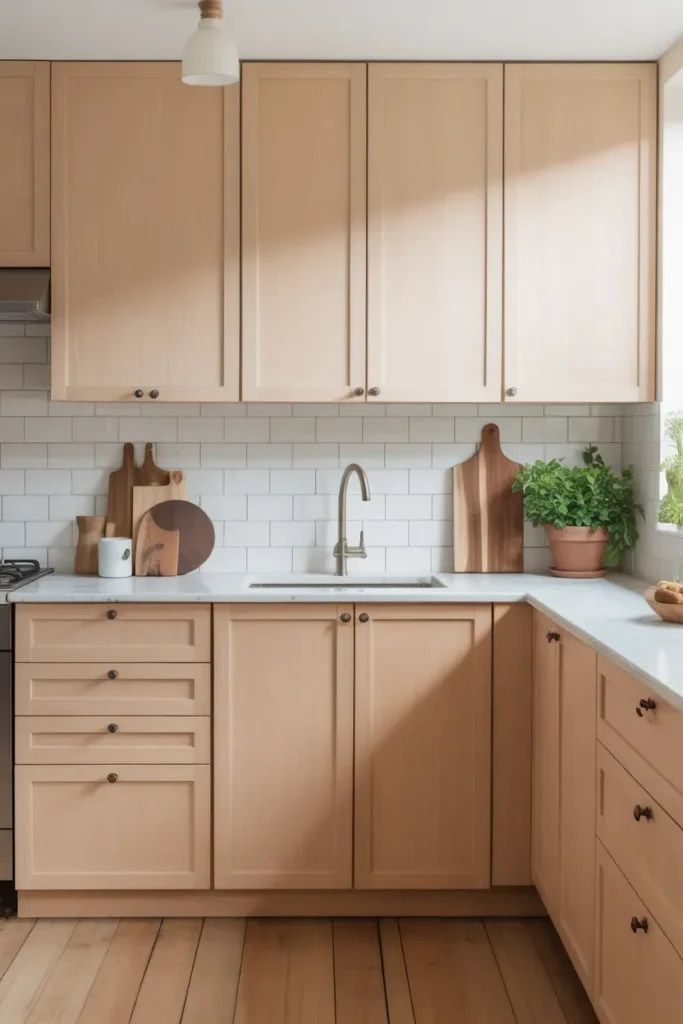
- Creates a soft, even look that feels calm and balanced
- Budget-friendly option with a clean natural appearance
- Takes stain well for subtle color variations
- Ideal for simple, cozy, and functional kitchens
- Blends easily with light countertops and neutral decor
Birch is a quiet achiever that brings softness and balance to a kitchen without drawing too much attention. Its fine, even grain creates a smooth surface that feels clean and consistent, which works especially well in smaller or more compact layouts. This wood is often chosen for its affordability, but visually it still delivers a warm and polished result. I’ve noticed birch is perfect for homeowners who want a natural look without strong patterns or bold contrasts, making it easy to build a calming and functional kitchen space.
What makes birch especially practical is how well it adapts to different finishes while maintaining its soft appearance. It pairs beautifully with light countertops, simple backsplashes, and minimal hardware, creating a kitchen that feels uncluttered and easy to maintain. In my experience, birch cabinets work well in everyday homes where simplicity and comfort matter more than dramatic design. It helps create a space that feels approachable and lived-in, while still looking neat and intentional. For a subtle and budget-friendly option, birch offers a clean and reliable foundation.
8. Pine Rustic Charm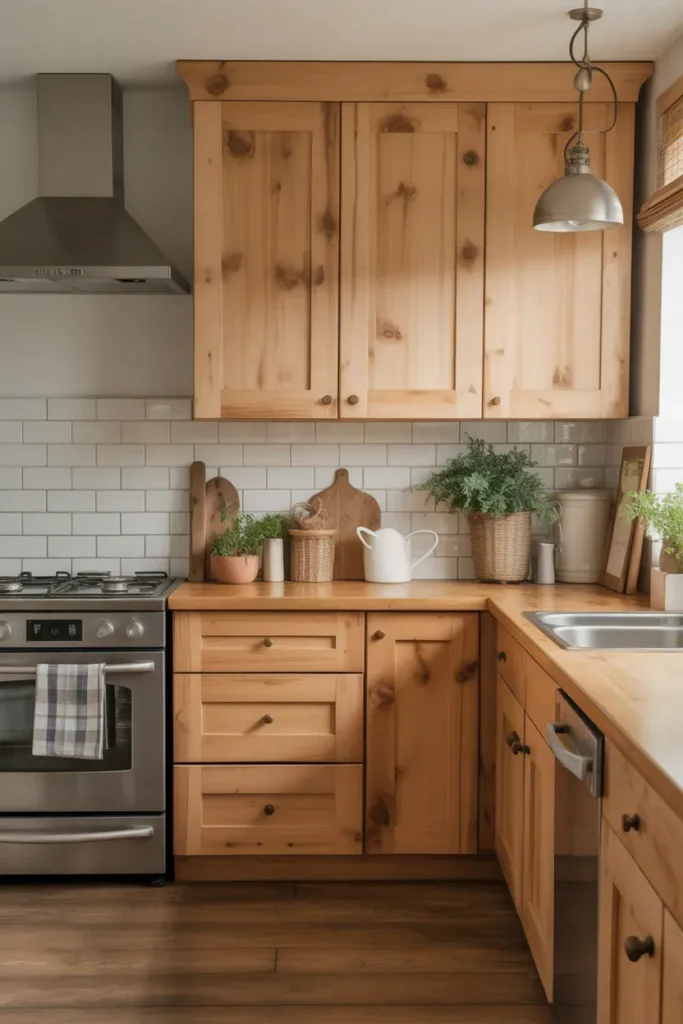
- Brings natural knots and texture for a cozy rustic feel
- Ideal for farmhouse, cottage, or cabin-style kitchens
- Adds warmth without needing extra decorative layers
- Works beautifully with wood counters and vintage accents
- Creates a relaxed, welcoming atmosphere
Pine is all about warmth, texture, and a relaxed, lived-in feel that instantly makes a kitchen more inviting. The visible knots and natural imperfections give it a rustic charm that feels authentic rather than overly styled. This makes pine a great choice for farmhouse or cottage-inspired spaces where comfort is the priority. I’ve seen pine cabinets transform even simple kitchens into cozy, welcoming environments that feel full of personality. Its lighter tone also helps prevent the space from feeling too heavy, even with strong texture.
One of the best things about pine is how it creates character without requiring perfect finishes or strict design rules. It pairs naturally with butcher block counters, vintage hardware, and warm lighting, making the entire kitchen feel cohesive and grounded. In my experience, pine works best when you lean into its imperfections rather than trying to hide them. That’s what gives the space its charm and authenticity. For homeowners who want a kitchen that feels relaxed, warm, and full of life, pine is a beautiful and approachable choice.
9. Mahogany Luxury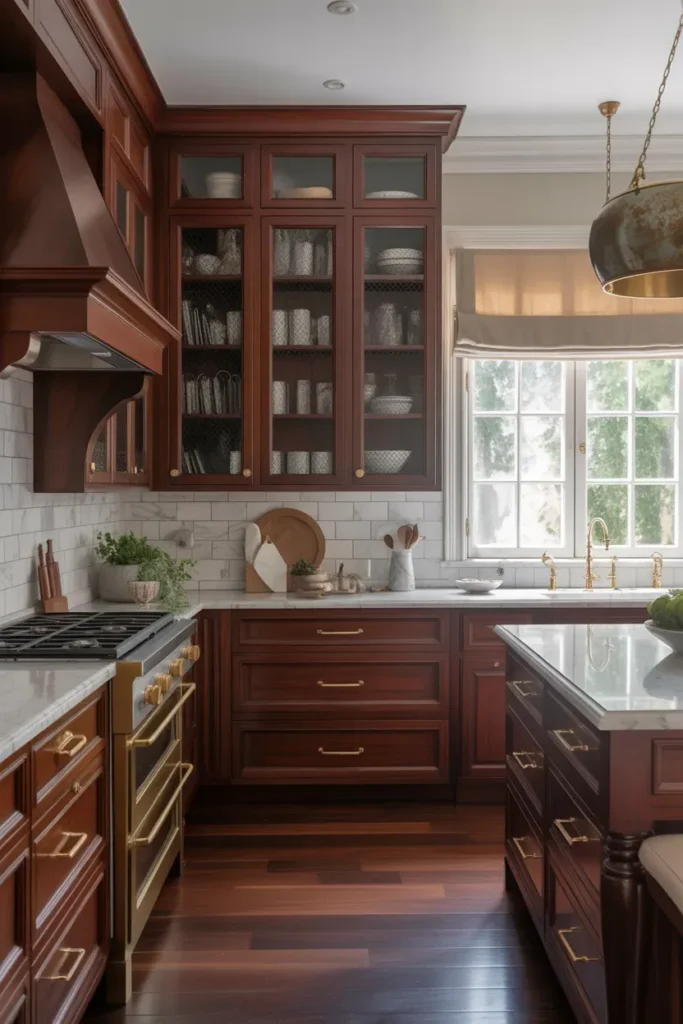
- Delivers a deep, rich tone for a luxury look
- Perfect for formal and high-end kitchen designs
- Pairs beautifully with marble and gold accents
- Adds a sense of depth and refinement
- Makes the kitchen feel more structured and polished
Mahogany is the definition of classic luxury, bringing a deep richness that instantly elevates the entire kitchen. Its dark tone creates a strong visual anchor, making even simple layouts feel more structured and intentional. This wood is often used in high-end designs because it pairs beautifully with marble countertops, gold hardware, and elegant lighting. I’ve noticed that mahogany works best in kitchens where the goal is to create a refined and sophisticated atmosphere rather than a casual one. It adds depth that feels timeless and quietly powerful.
What makes mahogany stand out is its ability to create a sense of presence without relying on busy details or bold patterns. The smooth grain keeps the look polished while the deep color adds drama in a controlled way. In real homes, this wood can transform a kitchen into a space that feels almost furniture-like in quality. I’ve seen this work especially well in larger kitchens where darker tones can fully shine without making the room feel cramped. For a truly elevated and luxurious feel, mahogany delivers unmatched elegance.
10. Alder Smooth Grain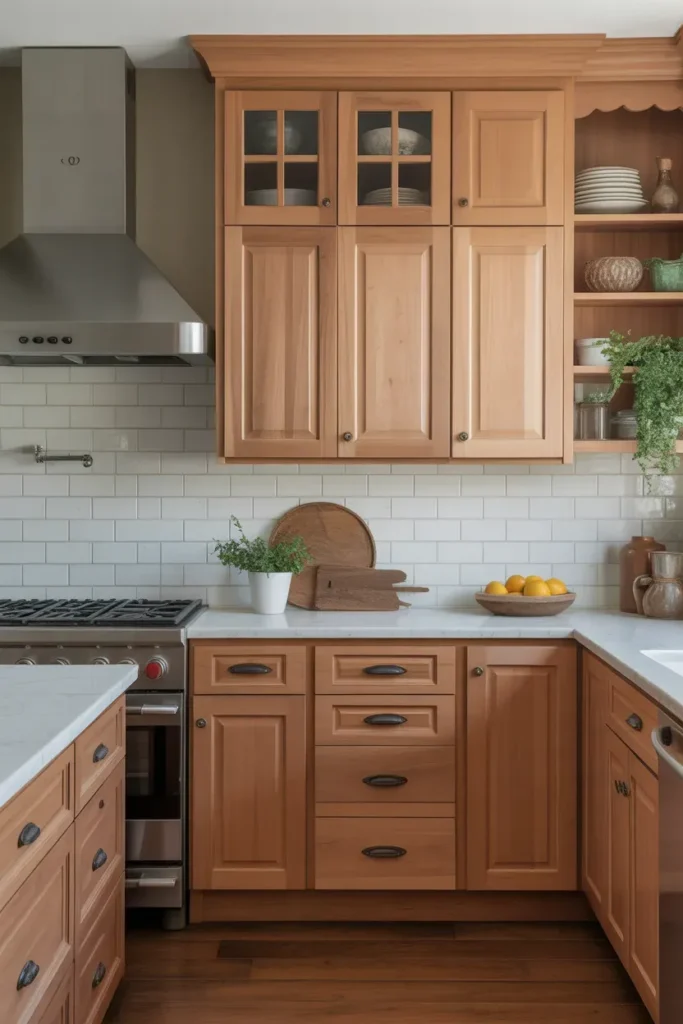
- Offers a smooth, uniform grain with a warm tone
- Great for traditional and transitional kitchen styles
- Accepts stains beautifully for custom finishes
- Adds warmth without strong visual contrast
- Creates a soft, welcoming kitchen atmosphere
Alder wood brings a soft, understated warmth that feels comfortable and easy to live with every day. Its smooth grain and slightly muted texture make it ideal for homeowners who want a natural look without bold patterns. This wood is especially popular in transitional kitchens where you want a balance between classic and modern design. In my experience, alder takes stain exceptionally well, allowing you to customize the tone from light honey to deeper shades while still maintaining a natural feel. That flexibility makes it a practical and visually appealing choice.
The beauty of alder is how effortlessly it blends into the overall kitchen design without overpowering other elements. It works well with neutral walls, warm lighting, and simple hardware, creating a space that feels cohesive and relaxed. I’ve seen alder used in many family kitchens where the goal is comfort and functionality without sacrificing style. It creates a gentle warmth that makes the space feel inviting without being too bold. For homeowners who want a balanced and adaptable option, alder offers a smooth and dependable foundation.
11. Beech Subtle Tone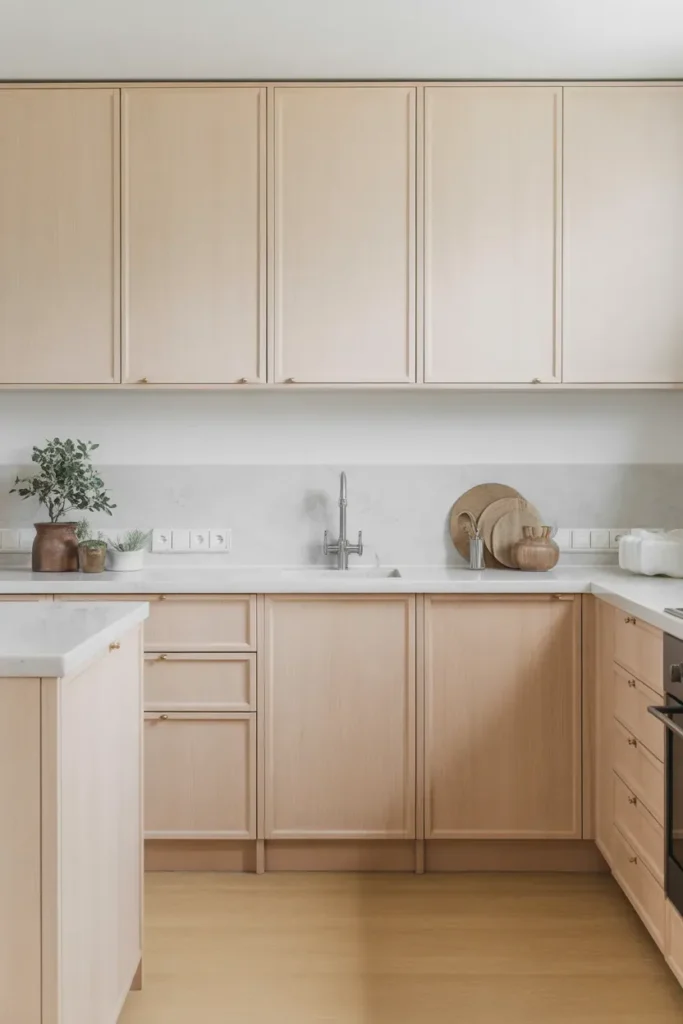
- Features a light, consistent tone for a clean look
- Ideal for modern and minimalist kitchen designs
- Keeps the space bright and visually open
- Blends seamlessly with neutral palettes
- Offers a simple and refined appearance
Beech wood is perfect for those who love simplicity and subtle beauty in their kitchen design. Its light tone and fine grain create a clean and consistent look that feels fresh and uncluttered. This makes it especially suitable for modern kitchens where minimalism and brightness are key. I’ve noticed that beech works beautifully in smaller kitchens because it helps reflect light and keeps the space feeling open. It pairs effortlessly with white walls, soft stone counters, and sleek hardware, creating a calm and balanced environment.
What makes beech stand out is its ability to stay understated while still contributing to the overall design. It doesn’t demand attention, which allows other features like lighting or backsplashes to take the spotlight. In my experience, this wood is ideal for homeowners who prefer a quiet, refined aesthetic rather than bold contrasts. It also adapts easily to different finishes, making it versatile for evolving styles. For a kitchen that feels light, simple, and effortlessly polished, beech provides a clean and timeless foundation.
12. Teak Natural Richness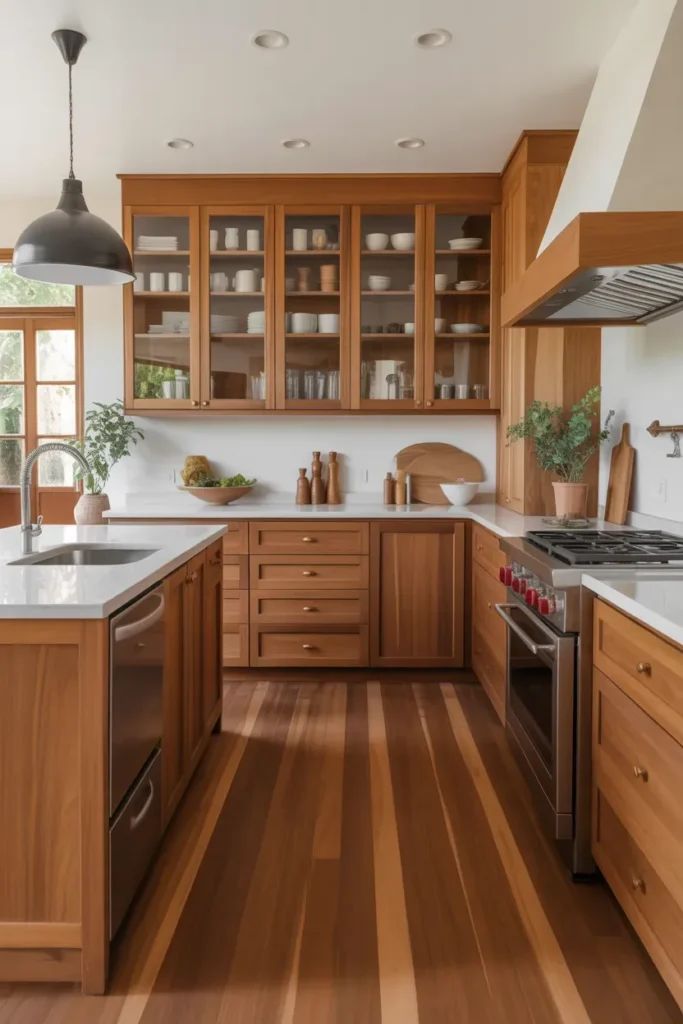
- Brings a rich golden tone with natural warmth
- Highly durable and resistant to moisture
- Ideal for long-lasting kitchen cabinetry
- Adds a slightly exotic, upscale feel
- Works well with modern and tropical styles
Teak is known for its natural richness and durability, making it a standout choice for kitchens that need both beauty and strength. Its warm golden tone adds depth while still feeling inviting and comfortable. One of the biggest advantages of teak is its resistance to moisture, which makes it especially practical for busy kitchens. I’ve seen teak used in homes where longevity is just as important as style, and it consistently performs well over time. It pairs beautifully with white counters and dark fixtures, creating a balanced and refined look.
Beyond its durability, teak also brings a unique character that feels slightly more exotic and upscale compared to more common woods. The natural oils in the wood help maintain its appearance, which is why many designers recommend it for long-term use. In my experience, teak works especially well in modern kitchens where clean lines meet warm textures. It adds a richness that feels natural rather than overwhelming. For homeowners who want a combination of strength, beauty, and long-lasting performance, teak is a premium and reliable option.
13. Red Oak Classic Grain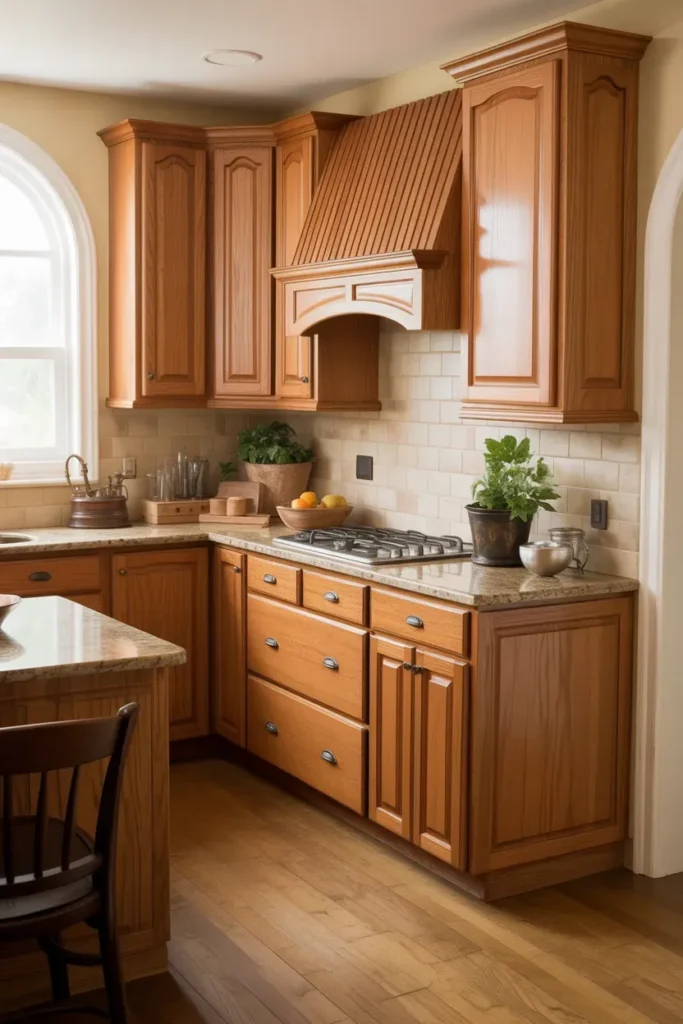
- Features a bold grain pattern for a classic look
- Ideal for traditional and family-style kitchens
- Durable and widely available wood option
- Adds warmth and texture without needing extra details
- Works well with darker counters and warm tones
Red oak is one of those classic choices that instantly makes a kitchen feel familiar, warm, and reliable. Its strong grain pattern adds visible texture, giving the cabinets more character compared to smoother woods. This makes it a great fit for traditional kitchens where detail and warmth matter. I’ve noticed red oak is especially popular in family homes because it feels sturdy and timeless without being overly formal. It pairs beautifully with granite countertops and warm-toned walls, creating a balanced and comfortable environment.
What makes red oak stand out is its ability to hold up well over time while still looking visually interesting. The pronounced grain helps hide minor wear, which is practical in busy kitchens where cabinets see daily use. In my experience, this wood works best when you lean into its natural texture rather than trying to minimize it. That’s what gives the space its authentic charm. For homeowners who want a dependable, classic look with lasting appeal, red oak remains a strong and trusted option.
14. Poplar Painted Base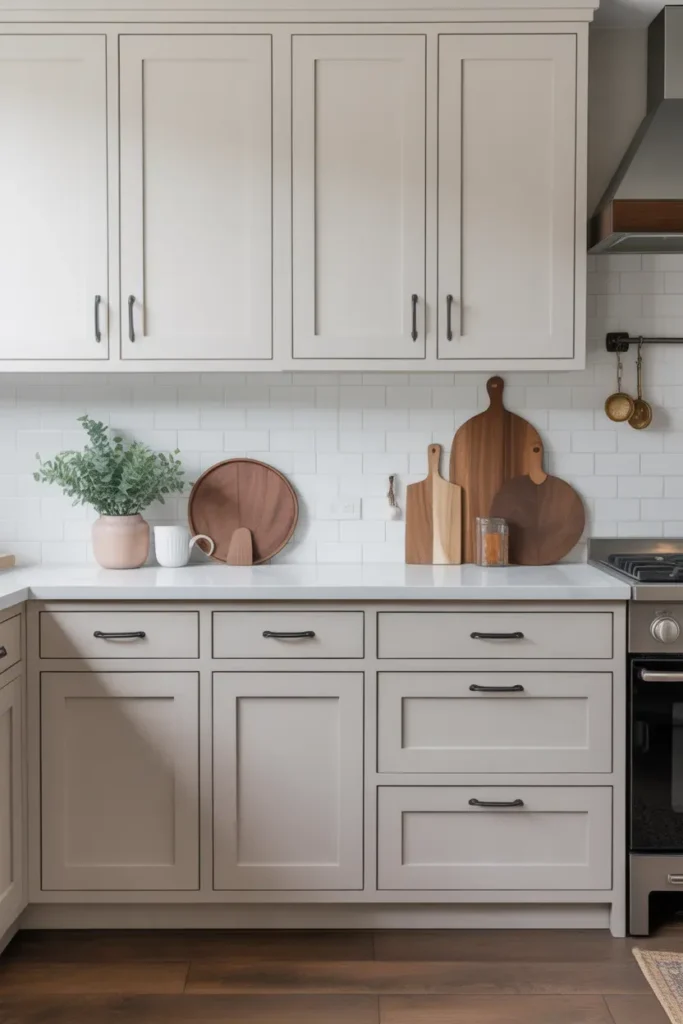
- Excellent base for painted cabinets with smooth results
- Affordable option for modern kitchen designs
- Keeps the kitchen looking clean and bright
- Works well with bold or soft paint colors
- Provides a sleek and polished finish
Poplar is often chosen when the goal is a smooth, flawless painted cabinet finish. Its subtle grain makes it ideal for paint, allowing colors to appear even and refined without visible texture underneath. This makes it perfect for modern kitchens where clean lines and crisp surfaces matter. I’ve seen poplar used in everything from soft white kitchens to bold navy designs, and it consistently delivers a polished look. It’s also a more budget-friendly option, which makes it accessible without sacrificing visual quality.
One of the biggest advantages of poplar is how well it supports creative color choices. Whether you want a bright white kitchen or something more dramatic, this wood provides a reliable base that enhances the final result. In my experience, painted poplar cabinets also help reflect light, making the space feel more open and fresh. That’s especially helpful in smaller kitchens or spaces with limited natural light. For homeowners focused on color and clean finishes, poplar offers a practical and stylish solution.
15. Bamboo Eco Style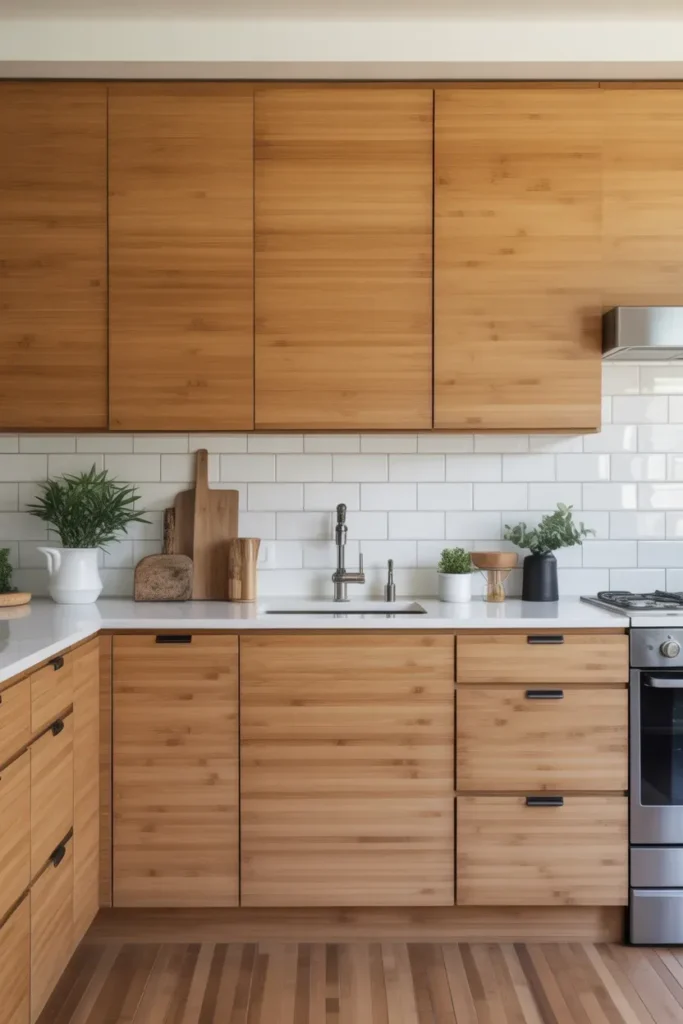
- Sustainable and eco-friendly cabinet option
- Light tone creates a fresh, modern look
- Strong and durable despite its lightweight feel
- Works well in contemporary and minimalist kitchens
- Adds a unique, clean-lined grain pattern
Bamboo is a smart choice for homeowners who want a kitchen that feels modern while also being environmentally conscious. Its light tone and unique horizontal grain create a sleek and contemporary look that stands out without feeling overwhelming. Even though it’s technically a grass, bamboo is surprisingly strong and durable, making it a practical option for cabinetry. I’ve noticed it works especially well in minimalist kitchens where clean lines and natural materials take center stage. It pairs beautifully with white surfaces and black accents for a fresh, balanced design.
What makes bamboo special is the combination of sustainability and style it brings into the kitchen. It offers a lighter, cleaner aesthetic compared to traditional hardwoods, which helps keep the space feeling open and uncluttered. In my experience, bamboo cabinets also hold up well in everyday use while maintaining their smooth appearance. That’s why many designers recommend it for modern homes focused on both function and environmental impact. For a fresh, eco-friendly approach, bamboo delivers both performance and visual appeal.
16. Plywood Veneer Build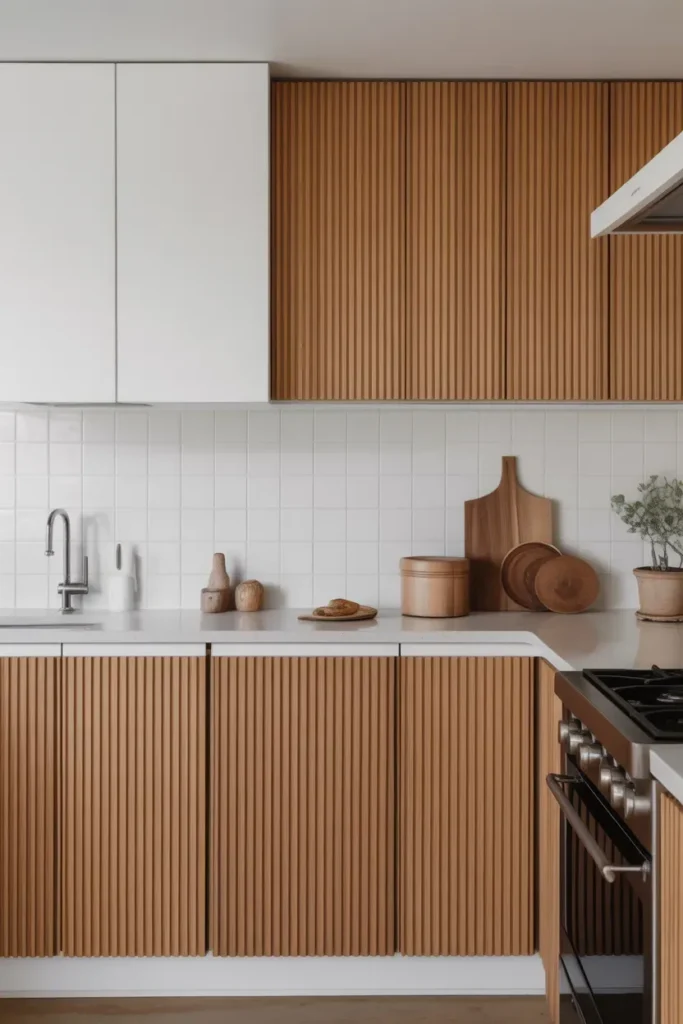
- Strong and stable construction with less warping
- Offers a modern, layered wood edge detail
- Budget-friendly compared to solid hardwood
- Works well for sleek, minimalist kitchens
- Supports a variety of veneer finishes and styles
Plywood veneer cabinets are a smart solution when you want durability combined with a clean, modern look. The layered construction makes them more resistant to warping and cracking, which is especially helpful in kitchens where humidity changes often. Visually, the exposed plywood edges can even become a design feature, adding a subtle architectural detail. I’ve seen this style work beautifully in minimalist kitchens where simplicity and function go hand in hand. It offers the flexibility of different wood veneers while keeping costs more manageable.
What makes plywood veneer appealing is how it balances practicality with modern aesthetics. You can achieve the look of high-end wood finishes without the same level of expense, which makes it a popular choice in contemporary homes. In my experience, it’s especially useful for flat-panel cabinet designs where clean lines are the focus. The surface stays smooth and consistent, allowing other elements like lighting and hardware to stand out. For homeowners exploring different cabinet materials, this option offers strength, versatility, and a sleek visual finish.
17. MDF Painted Finish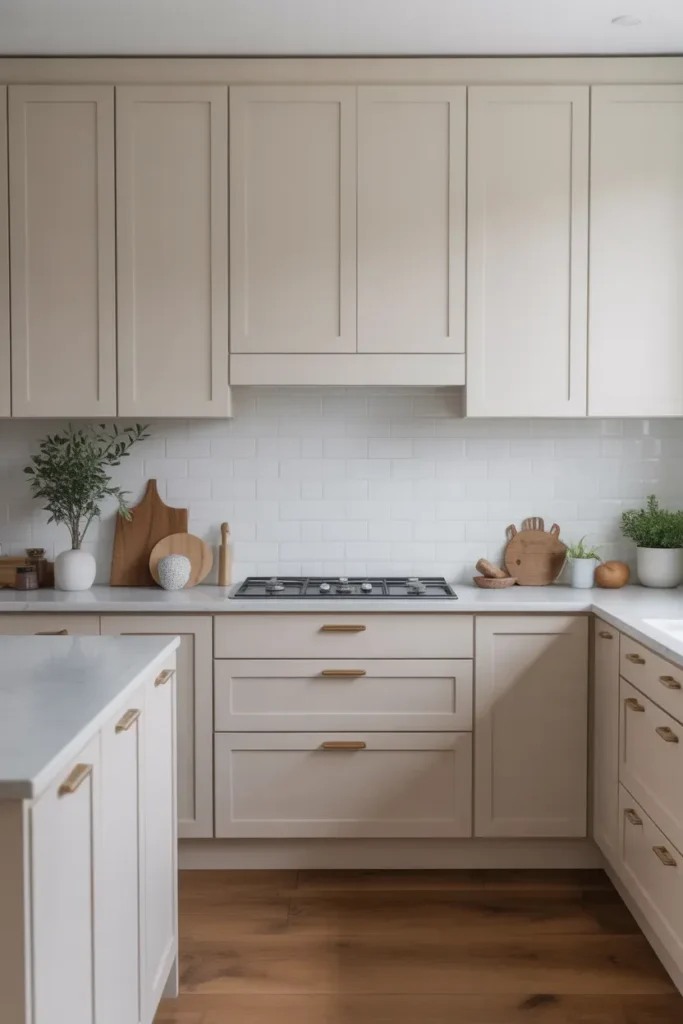
- Ultra-smooth surface perfect for painted cabinets
- Budget-friendly alternative to solid wood
- Ideal for modern and contemporary kitchen styles
- Allows bold or neutral paint colors to shine evenly
- Creates a clean, seamless cabinet appearance
MDF cabinets are often chosen for their perfectly smooth surface, which makes painted finishes look incredibly clean and refined. Unlike natural wood, MDF doesn’t have grain patterns, so the final result appears uniform and polished. This makes it a popular choice for modern kitchens where simplicity and color play a big role. I’ve noticed that MDF works especially well for matte finishes, giving the kitchen a soft, contemporary feel. It’s also a cost-effective option, which allows homeowners to invest more in other design elements like countertops or lighting.
The real advantage of MDF is how it supports bold or minimal color choices without visual distractions. Whether you prefer crisp white, soft gray, or deeper tones, the paint looks consistent across every cabinet surface. In my experience, this creates a cleaner overall aesthetic, especially in smaller kitchens where clutter can feel overwhelming. It also pairs well with handle-less designs for a seamless, modern look. For those prioritizing a smooth painted finish and budget-friendly design, MDF offers a practical and visually appealing solution.
18. Reclaimed Wood Character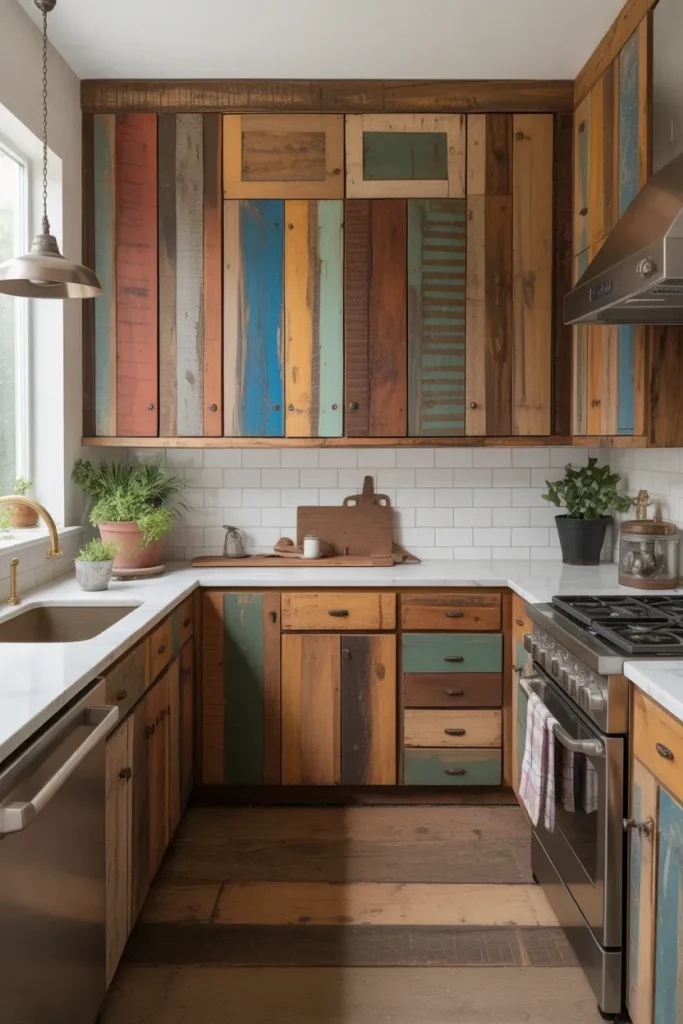
- Adds unique, one-of-a-kind character to the kitchen
- Sustainable option using recycled materials
- Brings warmth through varied tones and textures
- Ideal for rustic, industrial, or vintage styles
- Creates a story-driven, lived-in aesthetic
Reclaimed wood cabinets bring unmatched character and history into a kitchen, making the space feel deeply personal and unique. Each piece of wood carries its own marks, textures, and tones, which creates a layered and visually rich design. This makes it perfect for rustic or industrial kitchens where imperfections are celebrated rather than hidden. I’ve seen reclaimed wood completely transform a space, turning a simple kitchen into one that feels full of story and warmth. It’s also an environmentally friendly option, which adds another layer of value.
What makes reclaimed wood so appealing is its authenticity and depth that can’t be replicated with new materials. The mix of tones and textures creates a dynamic look that keeps the kitchen visually interesting without needing extra decoration. In my experience, it works best when paired with simple elements like stone or metal accents to keep the focus on the wood itself. It also blends beautifully with open shelving and vintage details. For a kitchen that feels soulful, warm, and truly unique, reclaimed wood is a powerful choice.
19. Laminate Wood Look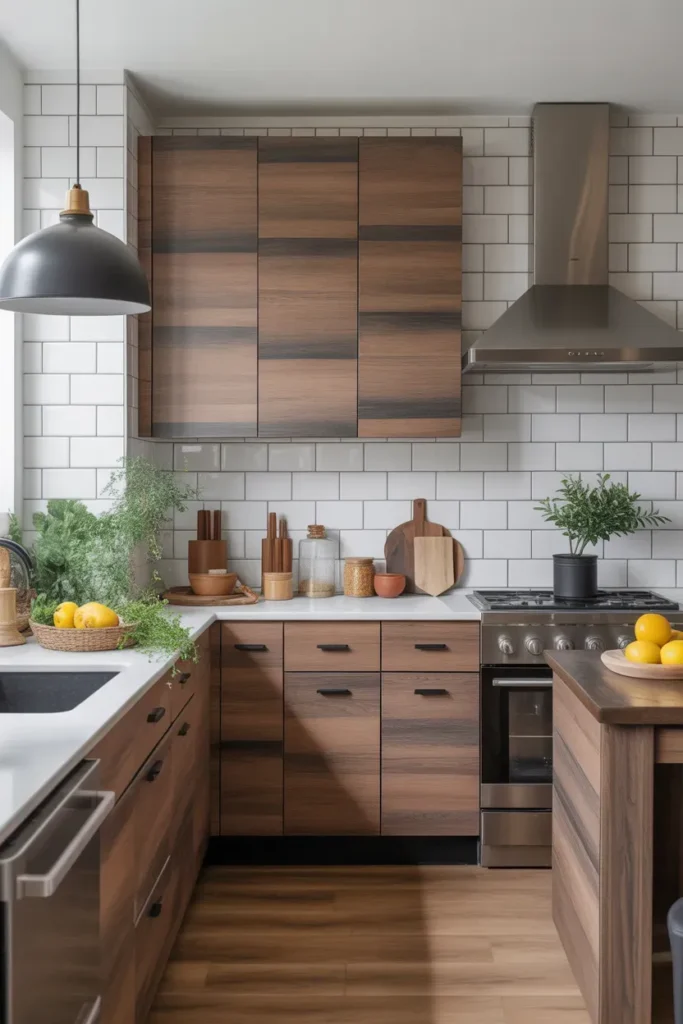
- Mimics real wood at a more affordable price
- Easy to clean and maintain for daily use
- Resistant to stains and moisture
- Ideal for busy and modern households
- Offers consistent color and finish
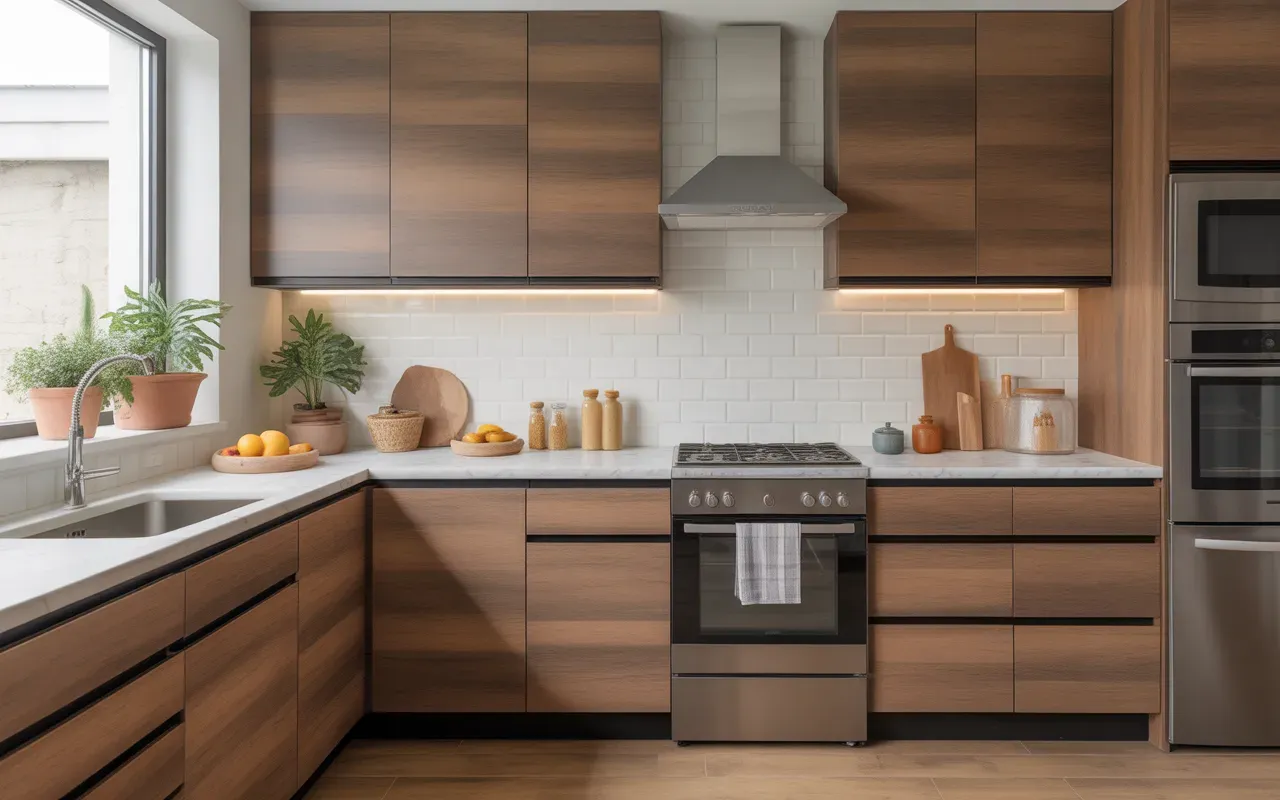
Laminate wood-look cabinets are a practical choice for homeowners who want the appearance of wood without the higher cost or maintenance. Modern laminates have improved significantly, offering realistic textures and tones that closely resemble natural materials. This makes them a great option for contemporary kitchens where function is just as important as style. I’ve noticed laminate works especially well in busy households because it resists stains, moisture, and everyday wear. It allows you to enjoy a wood-inspired look while keeping maintenance simple and stress-free.
The biggest advantage of laminate is its consistency and durability in everyday use. Unlike natural wood, it won’t change color over time or develop variations, which keeps the kitchen looking uniform. In my experience, this makes it ideal for people who prefer a clean and predictable finish. It also pairs easily with modern fixtures and minimalist designs, creating a sleek and polished space. For those comparing Wood Choices for Kitchen Cabinets, laminate offers a low-maintenance alternative that still delivers style and functionality.
The right cabinet material can turn an ordinary kitchen into a space that feels warm, stylish, and truly your own. From soft, light finishes to deep, rich tones, each option offers a unique way to enhance both beauty and function. I’ve seen how even small changes in cabinet choice can completely shift the mood of a kitchen.
As you explore different Wood Choices for Kitchen Cabinets, focus on what feels right for your lifestyle and design vision. Save your favorite ideas on Pinterest, try one that inspires you, and share this guide with someone planning their dream kitchen.
Conclusion
The right cabinet material can turn an ordinary kitchen into a space that feels warm, stylish, and truly your own. From soft, light finishes to deep, rich tones, each option offers a unique way to enhance both beauty and function. I’ve seen how even small changes in cabinet choice can completely shift the mood of a kitchen.
As you explore different Wood Choices for Kitchen Cabinets, focus on what feels right for your lifestyle and design vision. Save your favorite ideas on Pinterest, try one that inspires you, and share this guide with someone planning their dream kitchen.