15 Cozy Autumn Decor Inspirations for Every Room
Cozy autumn decor inspirations for every room use the season’s specific material palette — warm terracotta, deep burgundy, golden amber, burnished copper, dried botanical forms, layered natural textiles, and the soft warm light of shorter days — to create domestic interiors that feel genuinely seasonal without reading as costumed or overwrought. This article gives you exactly 15 ideas spanning living rooms, dining rooms, bedrooms, kitchens, entryways, and outdoor transitions so every room finds an autumn approach that is achievable, warm, and genuinely beautiful.
Autumn decor done well draws from the season’s own material language — the warm earth tones of fallen leaves, the dried textures of seed heads and seed pods, the specific warmth of candlelight against early dark, the heaviness of wool and velvet against cooling air — rather than from a commercial seasonal palette of orange, black, and artificial gourds. The genuinely cozy autumn room is one that the season itself would recognize. Here are 15 inspirations worth implementing.
Why Cozy Autumn Decor Inspirations Work for Every Room
The seasonal decorating impulse — the desire to make the interior environment correspond to and comfort against the exterior season — is one of the most deeply rooted domestic aesthetic practices documented across cultures and centuries. In the autumn specifically, the decorating impulse addresses a specific environmental shift: the progressive shortening of daylight hours, the cooling of temperatures, the increasing time spent indoors, and the specific quality of autumn light — lower angle, warmer color temperature, more horizontal — that makes the domestic interior a more primary environment than it was during the summer months. Autumn decor that works responds to all four of these environmental conditions simultaneously: it adds warmth (in texture, color, and literal thermal material), it addresses the shorter daylight hours (through candlelight, warm lamps, and the specific material quality of things that glow in low light), it responds to the indoor-orientation (making interior spaces more genuinely comfortable for extended occupancy), and it draws from the season’s own visual vocabulary rather than imposing a generic “harvest” or “Halloween” aesthetic.
The material distinction between autumnal decor that reads as genuinely beautiful and autumnal decor that reads as seasonal theme-park kitsch is almost entirely a function of material authenticity: genuine dried botanicals (real seed heads, real dried leaves, real dried florals) versus plastic facsimiles; genuine natural fiber textiles (wool, mohair, heavy linen, velvet) versus synthetic alternatives; genuine warm-toned candles in natural wax versus battery-powered flickering LEDs in orange plastic holders; genuine seasonal produce (small pumpkins, gourds, apples, quinces) used as decoration versus manufactured seasonal props. The former reads as considered seasonal engagement; the latter reads as purchased thematic decoration.
Style at a Glance
| Element | Autumn Core | Cozy Design Edge |
|---|---|---|
| Philosophy | The season’s own materials, not its commercial simulacrum | Warmth earned through material honesty |
| Materials | Dried botanical, wool, velvet, beeswax, natural stone | Terracotta, copper, deep burgundy, golden amber |
| Key Senses | Visual warmth, tactile weight, olfactory depth |
15 Cozy Autumn Decor Inspirations for Every Room
1. Living Room — The Layered Textile Transformation
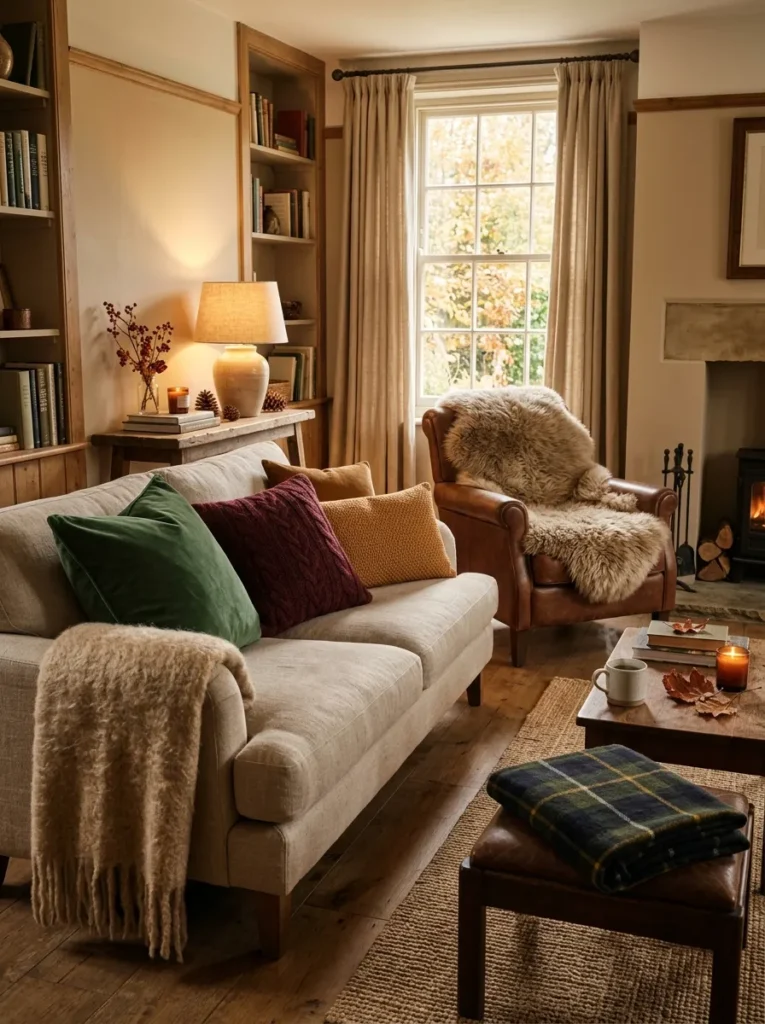
Vibe: The autumn textile living room feels like the room has dressed for the season itself — the accumulated weight of velvet, mohair, and plaid creating a warmth that extends beyond the visual into the genuinely tactile.
Why it works: Layered autumn textiles in the living room apply the thermal-and-visual-warmth principle — the specific quality of comfort that autumn domestic interiors provide is experienced simultaneously through two channels. Visual warmth (the deep jewel tones of forest green velvet and deep burgundy, the warm amber woven texture) tells the visual system that the room is warm before any physical contact is made. Tactile warmth (the chunky mohair, the sheepskin, the heavy plaid) delivers genuine physical warmth when the textiles are used as intended. The most effective autumn textile strategy adds these elements in layers rather than all at once — the existing room’s linen sofa and neutral rug remain as the neutral foundation, and the seasonal cushions, throws, and sheepskin sit on top as a seasonal layer that can be removed at spring’s arrival.
Implementation: Store a dedicated “autumn textile set” (three seasonal cushion covers, one chunky throw, one plaid blanket) in a storage box and replace the room’s existing neutral cushion covers for the autumn and winter months. This swap — not an addition — prevents the over-furnished quality that too many cushions creates.
Shop The Look
| Product |
|---|
| Forest green velvet cushion 55cm |
| Deep burgundy knit cushion 45cm |
| Warm amber woven rectangular cushion |
| Chunky mohair throw oat |
| Natural sheepskin rug armchair |
Also view: 14 Stylish Living Room Ideas That Look Expensive
2. Dining Room — The Seasonal Table
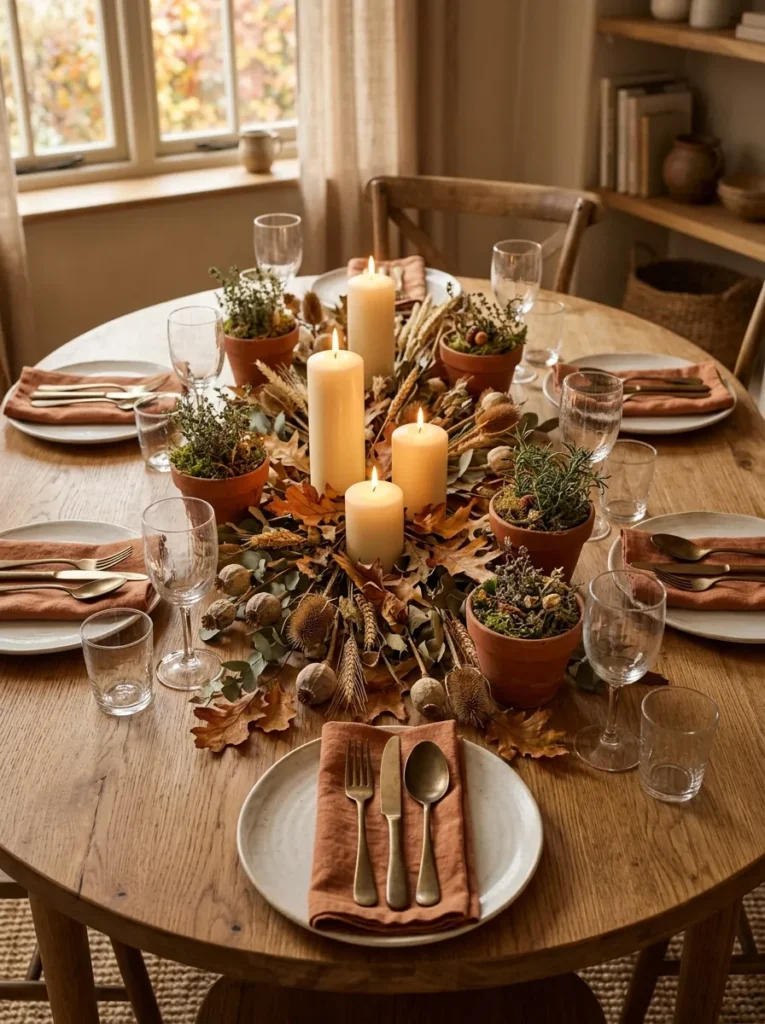
Vibe: The autumn dining table feels like a feast table laid in a kitchen garden after the harvest — the dried botanicals and terracotta creating a setting that makes every autumn meal feel genuinely seasonal.
Why it works: A dried botanical dining table runner applies the continuous living element principle — a garland or runner of dried botanical material along the table’s full length creates a continuous organic presence at the dining table’s center that neither a single centerpiece nor a scattered arrangement achieves. The varied textures of dried poppy seed heads (architectural, geometric), dried teasel (spiky, dramatic), dried wheat (fine, linear), and preserved eucalyptus (blue-green, aromatic) create a botanical composition with multiple texture registers at close range. The cream pillar candles at varied heights add the specific warmth of gathered candlelight that autumn dining specifically requires — the warm amber glow of multiple candles at table level creates the intimate quality that overhead lighting cannot replicate.
Making the runner: Lay a single length of botanicals along the table center before any place-setting elements are added, working from a central anchor point outward toward each table end. Tuck smaller elements between larger ones to fill gaps and create density. The runner should be dense enough to read as a composed botanical installation at room distance while leaving space for the candle holders to sit between and within the botanical elements.
Shop The Look
| Product |
|---|
| Dried poppy seed head bunch |
| Dried teasel bunch natural |
| Dried wheat stem bundle |
| Cream pillar candle set varied heights |
| Terracotta linen napkin set |
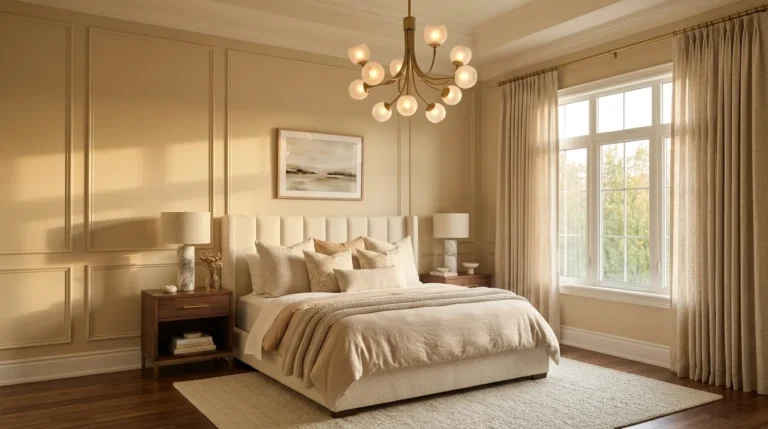
3. Bedroom — Autumn Bedding and Warmth
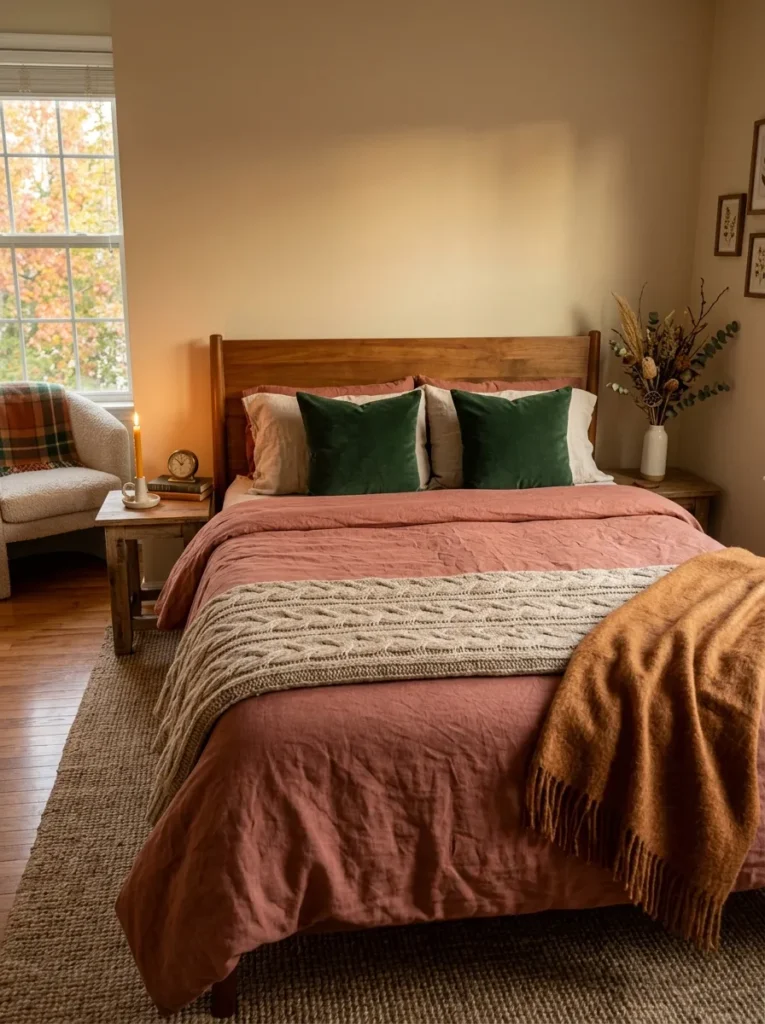
Vibe: The autumn bedroom feels like the room learned the seasonal shift before the calendar did — the heavier duvet, the velvet cushions, and the beeswax candle creating the specific atmosphere of rest during the season that most needs it.
Why it works: An autumn bedroom transformation through duvet, textile, and candlelight applies the seasonal sleep environment optimization principle — the bedroom’s primary function (sleep and rest) benefits from seasonal calibration because sleep quality and pre-sleep comfort are significantly affected by the thermal environment. A heavier linen or cotton duvet cover (replacing the summer’s lightweight equivalent), additional blanket layers, and the specific pre-sleep atmosphere of warm candlelight (which supports melatonin production more effectively than overhead artificial light) together create a sleep environment that is both physically warmer and psychologically more restful in the season that most requires both qualities.
The bedside candle: A natural beeswax candle on a bedside table, burned for 20–30 minutes before sleep and then extinguished, provides the specific warm amber light quality and natural honey fragrance that petroleum-based candles do not. Beeswax burns longer, cleaner, and produces the deepest warm color temperature of any available candle type.
Shop The Look
| Product |
|---|
| Linen duvet cover terracotta warm |
| Chunky knit blanket oat |
| Forest green velvet cushion pair |
| Warm rust mohair throw |
| Natural beeswax bedside candle |
4. Kitchen — The Seasonal Produce Display
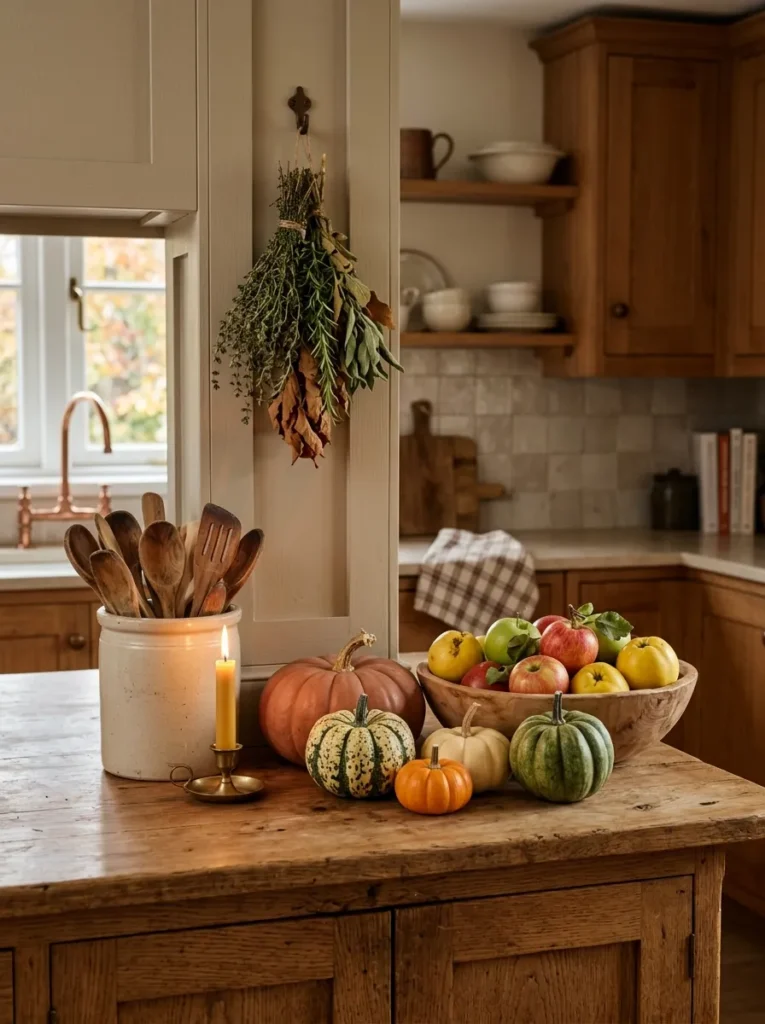
Vibe: The autumn kitchen feels like the harvest came inside and was comfortable staying — the actual seasonal produce making the kitchen decoration a byproduct of genuine seasonal living rather than a decorating decision.
Why it works: Seasonal produce as kitchen decoration applies the genuine material authenticity principle — the kitchen is the domestic space where food provenance and material honesty are most legible, and a kitchen decorated with genuine seasonal produce (real small pumpkins, real apples and quinces, real dried herbs) reads as a household that engages with the actual season rather than simulating it. The specific beauty of this idea is that the “decorations” — the pumpkins, the apples, the quinces — are all edible and will be used in the coming weeks, meaning the decoration is genuinely functional rather than purely aesthetic. Small pumpkins and heritage squash varieties (available in farmers’ markets and most supermarkets in autumn) are significantly more beautiful than commercial carved pumpkins — their varied natural colors (terracotta, cream, warm green, dusty orange) create a color composition that no painted or plastic equivalent can replicate.
The hanging herb bundle: A bundle of fresh rosemary, sage, and thyme tied with jute twine and hung from a small hook beside the kitchen cabinet provides both a decorating element and a continuously available fresh herb supply, its scent released whenever a spray is taken for cooking.
Shop The Look
| Product |
|---|
| Small pumpkin set varied autumn |
| Heritage squash seasonal selection |
| Apple quince wooden bowl |
| Jute twine herb bundle tie |
| Small hook herb bundle hang |
5. Entryway — The First Impression of Autumn
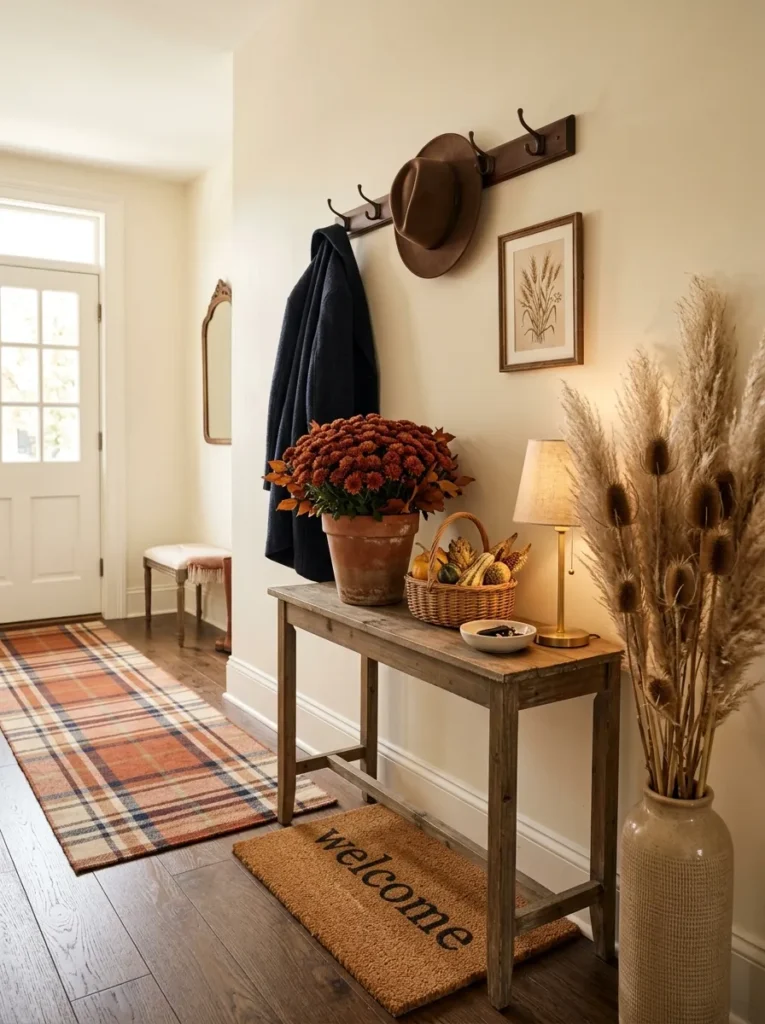
Vibe: The autumn entryway feels like arriving home to a specific season rather than a generic space — the layered autumn elements at the home’s threshold creating a genuinely seasonal welcome before any other room is entered.
Why it works: An autumn entryway arrangement applies the sensory threshold principle — the entryway is the first domestic space experienced on returning home, and the specific autumn elements within it create the sensory transition from the outdoor autumn (cooling air, lower light, falling leaves) to the domestic autumn (warmth, candlelight, gathered botanicals). The chrysanthemums in a terracotta pot are the most reliably effective autumn entryway plant because they bloom through autumn in the warm jewel tones that define the season (burnt orange, deep burgundy, warm gold) and they tolerate the temperature variation of an entryway better than warmer-loving houseplants. The tall dried botanical arrangement on the floor beside the console (using a large ceramic vase at floor level) adds the vertical scale that converts the entryway from a collection of table-level objects to a complete composed arrangement with height variation.
Shop The Look
| Product |
|---|
| Autumn chrysanthemum burnt orange |
| Terracotta pot large chrysanthemum |
| Dried pampas stem large |
| Dried teasel bunch autumn |
| Natural fiber doormat welcome |
6. Bathroom — The Spa-Autumn Atmosphere
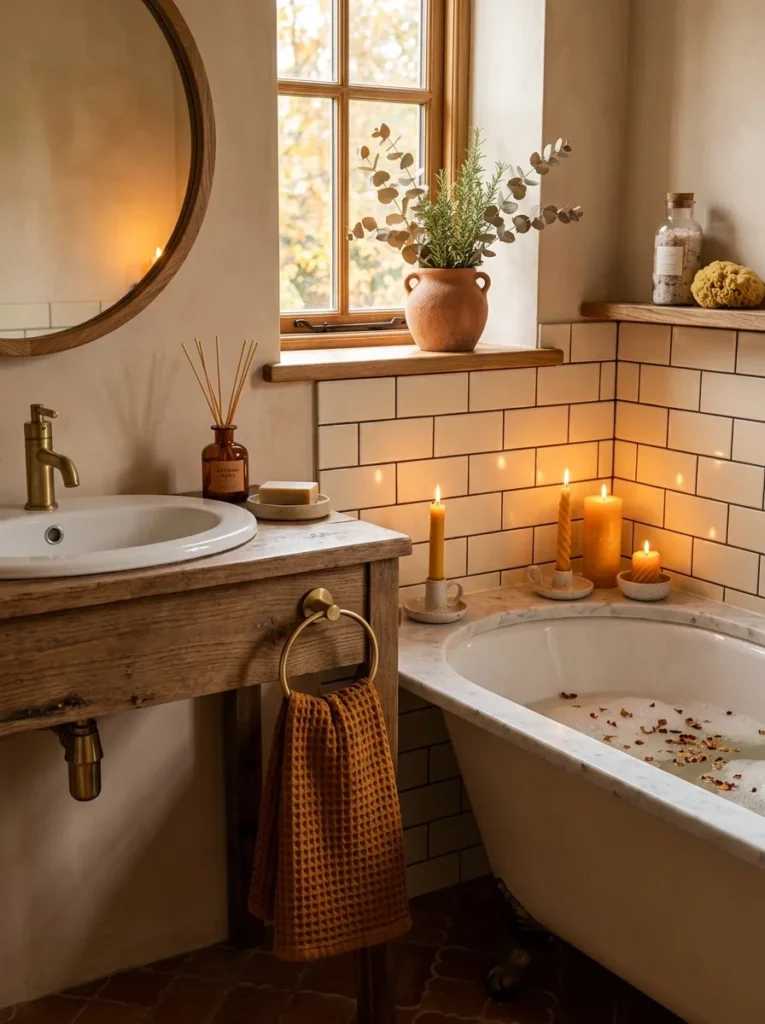
Vibe: The autumn bathroom feels like a seasonal ritual has been given a room specifically for it — the candles, the eucalyptus, and the warm amber towel converting a utilitarian space into a genuinely seasonal retreat.
Why it works: An autumn bathroom transformation applies the minimal seasonal addition principle — the bathroom requires only three to four specific autumn additions to shift its atmosphere from neutral-utilitarian to seasonally warm, because its small scale means that each addition makes a proportionally larger atmospheric contribution than the same element in a larger room. The most impactful additions are: scent (the eucalyptus and rosemary botanical, the amber glass diffuser) which creates olfactory warmth that the visual elements cannot replicate; candle light (the warm amber glow of beeswax candles at bath-edge height creating the specific pre-bath atmosphere of warm, low-level, flickering light); and towel color (swapping white to warm amber or deep rust, the highest-visibility change in any bathroom because the towels are the room’s primary textile element).
Shop The Look
| Product |
|---|
| Eucalyptus dried stem autumn |
| Dried rosemary stem bath |
| Natural beeswax candle trio |
| Simple ceramic candle holder set |
| Waffle towel amber or rust |
7. Home Office — Autumn at the Desk

Vibe: The autumn home office feels like the season has been acknowledged without the work being interrupted — the four small additions providing genuine warmth without converting the workspace into a harvest festival.
Why it works: Autumn additions to a home office apply the minimal workplace seasonal enrichment principle — research on workspace environments documents that small nature-referencing elements (a plant, a natural object, a seasonal botanical) reduce physiological stress markers and improve subjective wellbeing during extended desk work. The autumn-specific additions in this idea (a small ceramic pumpkin, a dried botanical, a beeswax candle, a warm-toned ceramic mug) apply this principle with seasonal specificity: they are small enough not to distract from work function, warm enough in color and material to affect the atmosphere of the workspace, and genuinely seasonal in their material quality. The beeswax candle specifically — burned during work sessions in the darker autumn and winter afternoon hours — provides the warm color temperature light that supports concentration more effectively than cool overhead artificial light.
Shop The Look
| Product |
|---|
| Small ceramic pumpkin autumn decor |
| Dried botanical single stem slim vase |
| Natural beeswax desk candle |
| Warm amber ceramic mug |
| Slim ceramic bud vase natural |
8. Mantel — The Autumn Fireplace Display
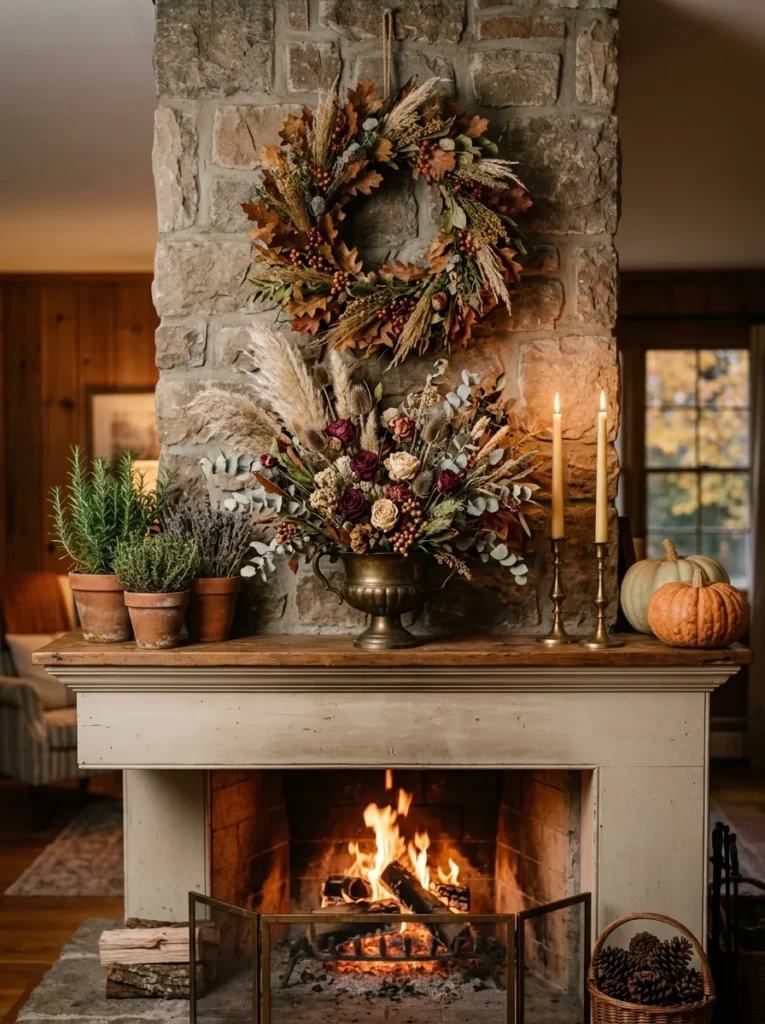
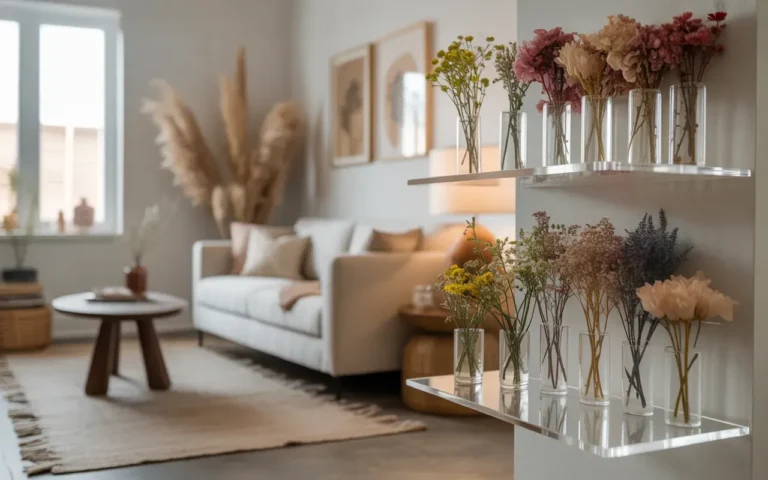
Vibe: The autumn mantel feels like the most generous version of seasonal abundance — the large dried floral urn and the flanking elements creating a mantel composition that reads as genuinely designed rather than decorated.
Why it works: An autumn mantel arrangement applies the symmetrical abundance principle — the mantel is the living room’s natural focal point and its autumn styling therefore creates the room’s primary seasonal statement. The compositional structure (a large central urn, two flanking candlestick holders at similar heights, smaller objects decreasing in height toward each outer edge) creates the visual symmetry and hierarchy that makes a mantel arrangement read as composed. The dried floral urn at the center is the element that carries the most visual weight and must be the most substantial piece in the arrangement — a large urn filled with a generous mix of dried botanicals in varied forms (architectural pampas, detailed dried roses, spiky dried thistle, aromatic dried eucalyptus) provides the botanical complexity that the arrangement’s center requires.
The wreath above: Leaning a dried wreath against the chimney breast above the mantel (rather than hanging it centered on the chimney breast wall) creates a more contemporary and less formal relationship between the wreath and the mantel arrangement below — the slight asymmetry of the lean communicates deliberate informality.
Shop The Look
| Product |
|---|
| Aged brass urn large dried floral |
| Dried pampas cream large |
| Dried rose bunch autumn tones |
| Aged brass taper candlestick pair |
| Dried oak leaf wreath autumn |
9. Bookshelf — The Seasonal Styling Update
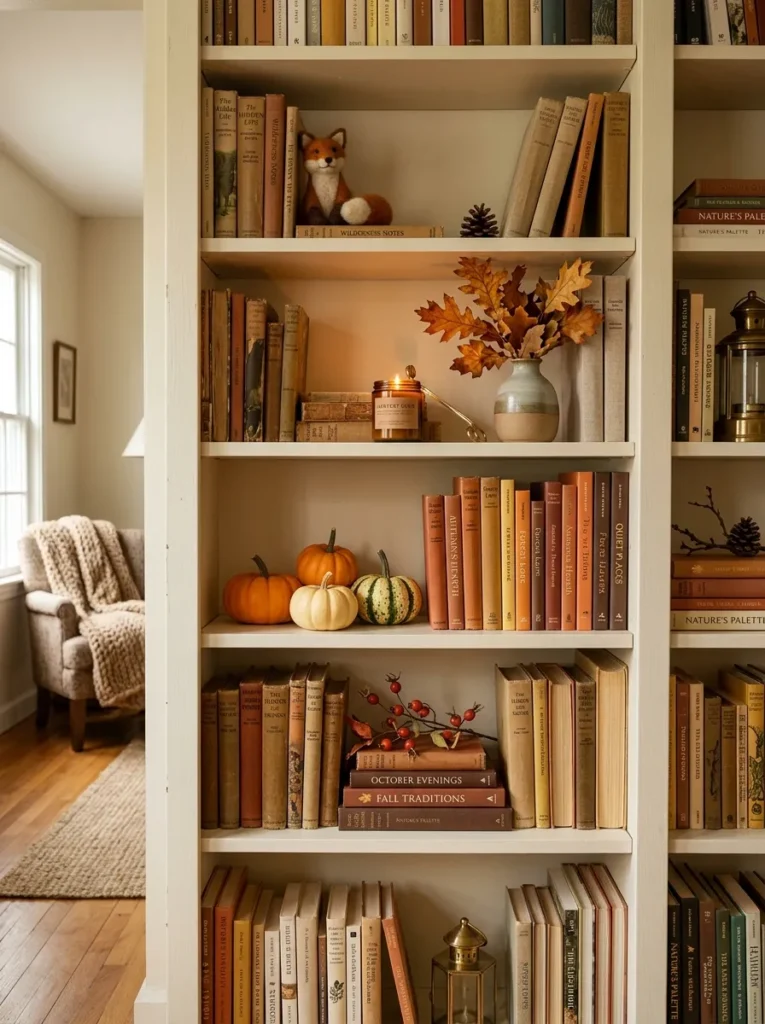
Vibe: The autumn bookshelf feels like someone spent an afternoon distributing the season through the books — the small seasonal elements scattered through the shelving creating seasonal warmth that is integrated with rather than imposed on the room’s existing character.
Why it works: Integrating seasonal elements throughout a bookshelf applies the embedded seasonal presence principle — the most effective seasonal bookshelf styling is one where the seasonal elements are threaded through and between the existing books and objects rather than clustered on one section or replacing the books entirely. This integrated approach allows the bookshelf to remain recognizably itself (the books, the existing display objects) while acquiring the seasonal warmth of the additional autumn elements (the miniature pumpkins, the dried leaf arrangement, the amber candle). The specific autumn elements chosen for a bookshelf should be small in scale (the shelf is typically 25–30cm deep and 30–40cm tall per section) and individually interesting at close range (the kind of objects that reward examination when a book is being selected).
Shop The Look
| Product |
|---|
| Miniature pumpkin set three |
| Dried autumn leaf arrangement |
| Amber glass candle jar small |
| Wool fox or owl woodland figure |
| Dried rosehip berry spray |
10. Window Treatment — Autumn Light Management
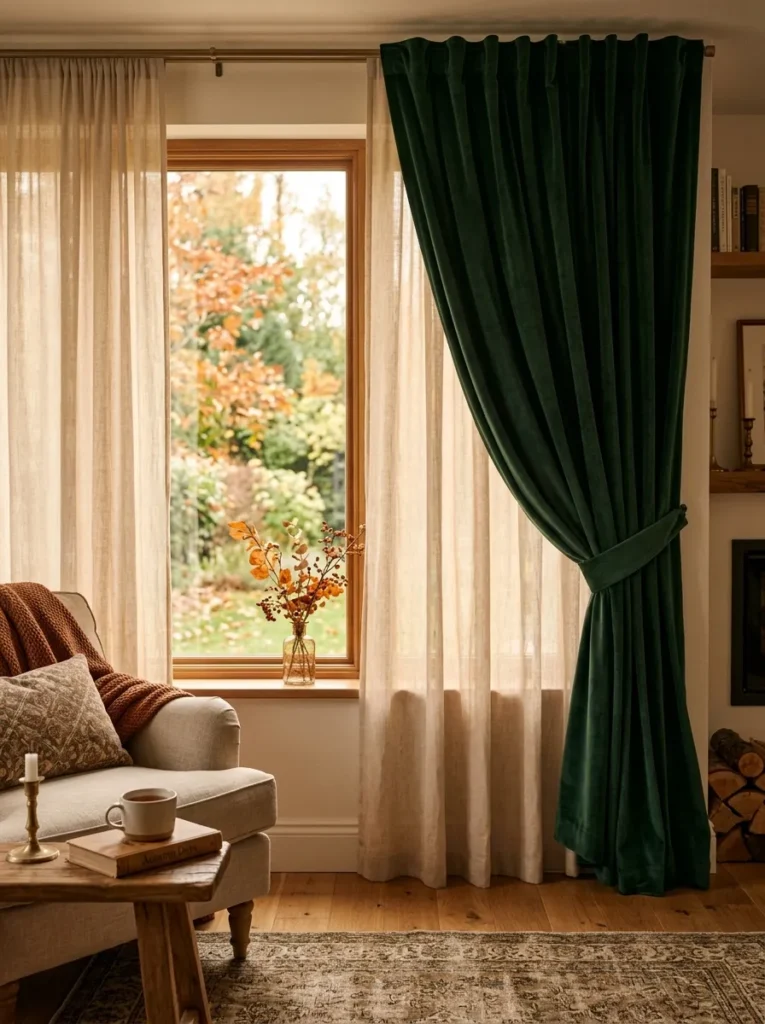
Vibe: The autumn window treatment feels like the room is drawing itself closer against the cooling season — the added velvet panel creating visual and actual warmth at the window without replacing what was already working.
Why it works: Adding a velvet panel over existing window treatments applies the seasonal overlay principle — rather than replacing summer curtains entirely (a significant financial and installation commitment), adding a single heavy velvet panel (clipped to the existing rod using curtain ring clips) creates the layered window treatment that autumn requires at minimal cost and effort. The velvet panel drawn to one side of the existing curtains creates a layered look (the sheer or linen curtain remaining visible on the other side) that is both practical (allowing light control) and compositionally interesting (the two layers at different depths add visual dimension to the window). The velvet’s weight and deep color provides the visual enclosure and warmth that autumn evenings specifically create the desire for.
Shop The Look
| Product |
|---|
| Velvet curtain panel forest green |
| Velvet panel burgundy single |
| Curtain ring clip set addition |
| Curtain rod extension addition |
| Curtain weight hem tape velvet |
11. Children’s Room — Cozy Autumn for Young Inhabitants
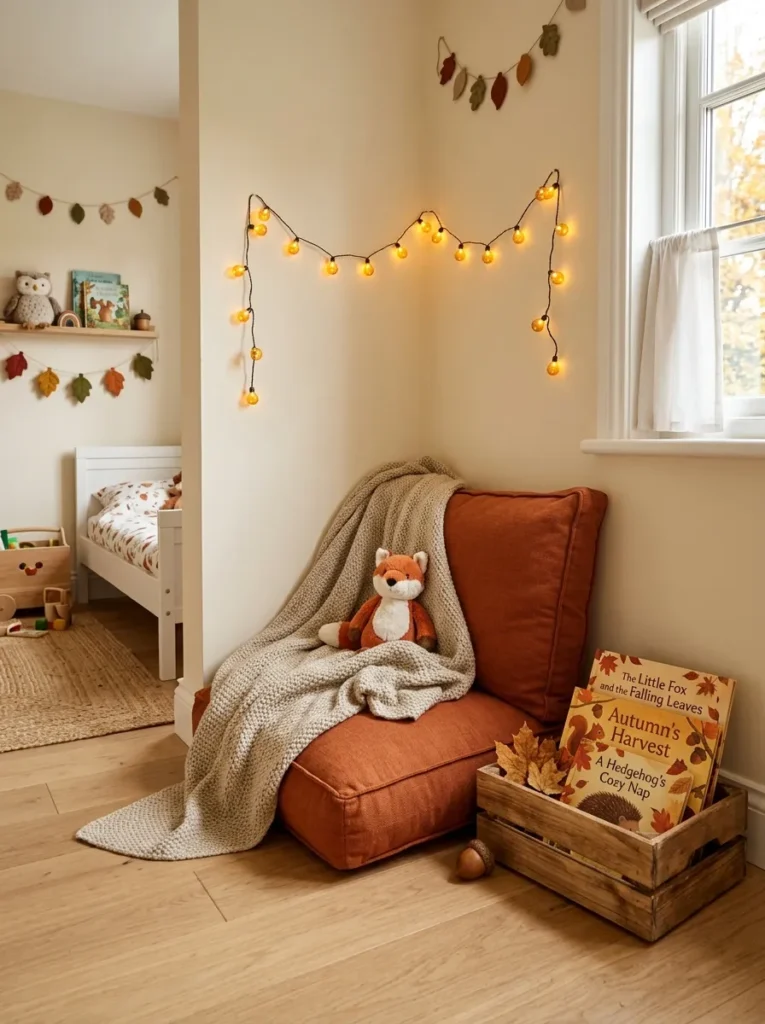
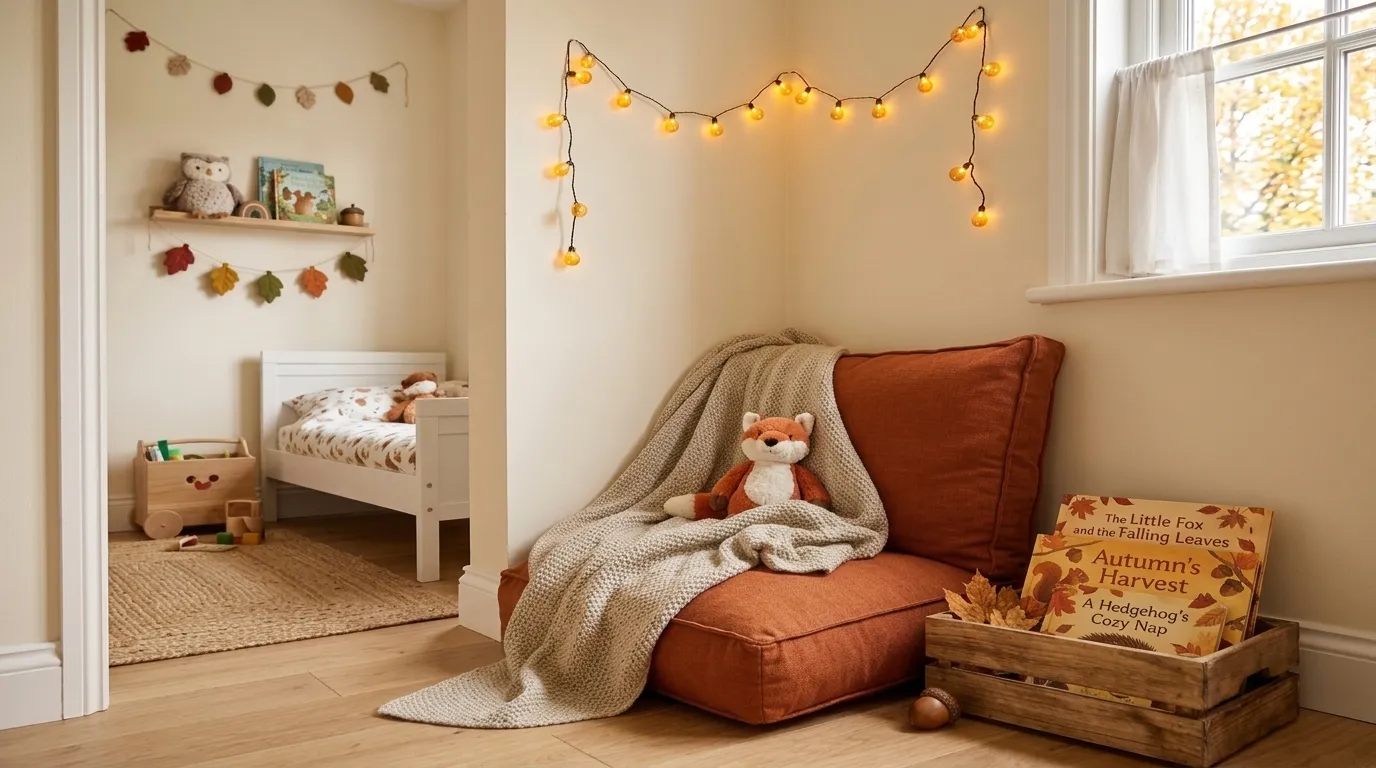
Vibe: The autumn children’s reading nook feels like the season created a specific geography of warmth just for small people — the accumulated elements creating a cozy corner that acknowledges the child’s need for seasonal comfort.
Why it works: A children’s autumn reading nook applies the child-scale seasonal retreat principle — children’s seasonal comfort needs are qualitatively the same as adults’ (warmth, enclosure, soft light, sensory richness) but are satisfied most effectively at child scale: a large bean bag rather than an armchair, fairy lights rather than a floor lamp, a wooden crate of books rather than a bookshelf, a plush woodland animal rather than a dried botanical arrangement. The specific autumn reading nook also supports the increased indoor time that autumn and winter create for children, making the indoor environment as genuinely engaging and comfortable as the outdoor summer environment that it replaces.
Shop The Look
| Product |
|---|
| Bean bag floor cushion rust |
| Oat knit small child blanket |
| Warm white fairy light string |
| Autumn picture book set children |
| Plush fox woodland toy |
12. Outdoor Space — The Autumn Transition Zone
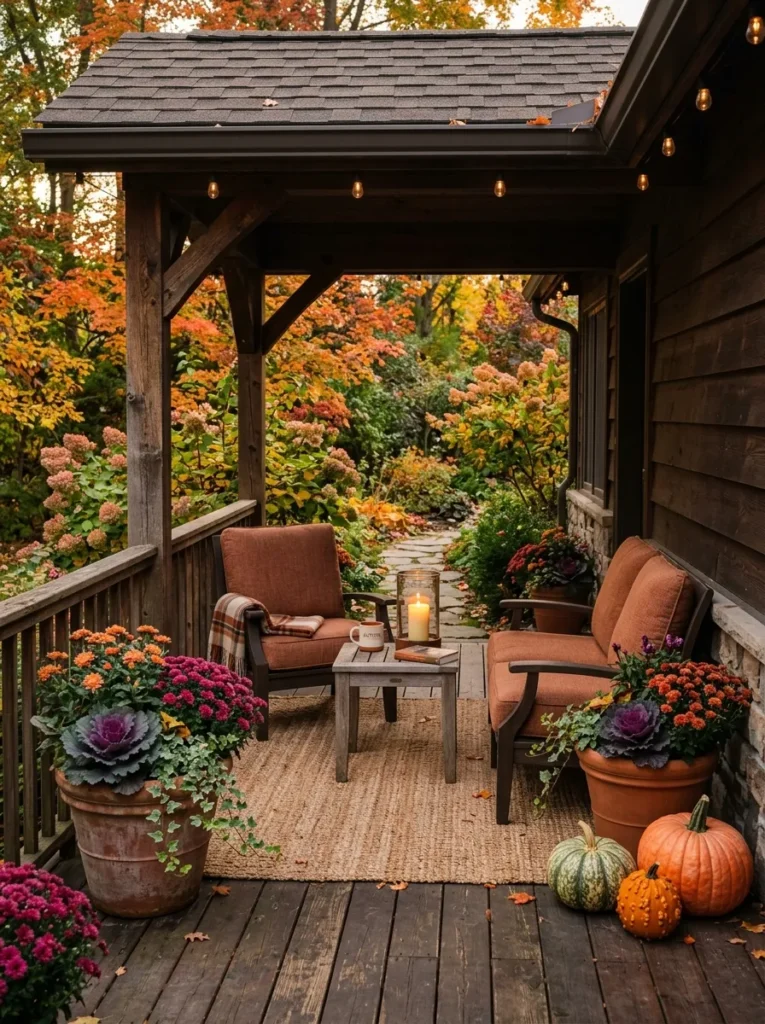
Vibe: The autumn outdoor space feels like the garden’s refusal to fully concede the season — the hurricane lantern and the seasonal planting creating a genuinely inviting outdoor space for early autumn evenings before the cold fully arrives.
Why it works: An autumn outdoor transition zone applies the seasonal outdoor extension principle — the natural response to autumn’s cooling temperatures is to abandon the outdoor space that summer made central. The autumn porch or patio dressed for the transitional early autumn months (September and October in the northern hemisphere) extends the outdoor living season by several weeks by making the outdoor space genuinely comfortable and visually inviting during those specific weeks. The hurricane lantern (which protects the candle flame from wind while providing the warm amber light that makes any outdoor space feel evening-habitable) is the single most important element — without the candlelight, an autumn porch is simply a cold outdoor space; with it, it becomes a destination for an early evening glass of wine or a morning coffee in the lower autumn sun.
Shop The Look
| Product |
|---|
| Hurricane lantern large outdoor |
| Large pillar candle outdoor |
| Terracotta pot large patio pair |
| Ornamental kale autumn seasonal |
| Heritage pumpkin gourd set varied |
13. Kitchen Table — The Daily Autumn Centrepiece
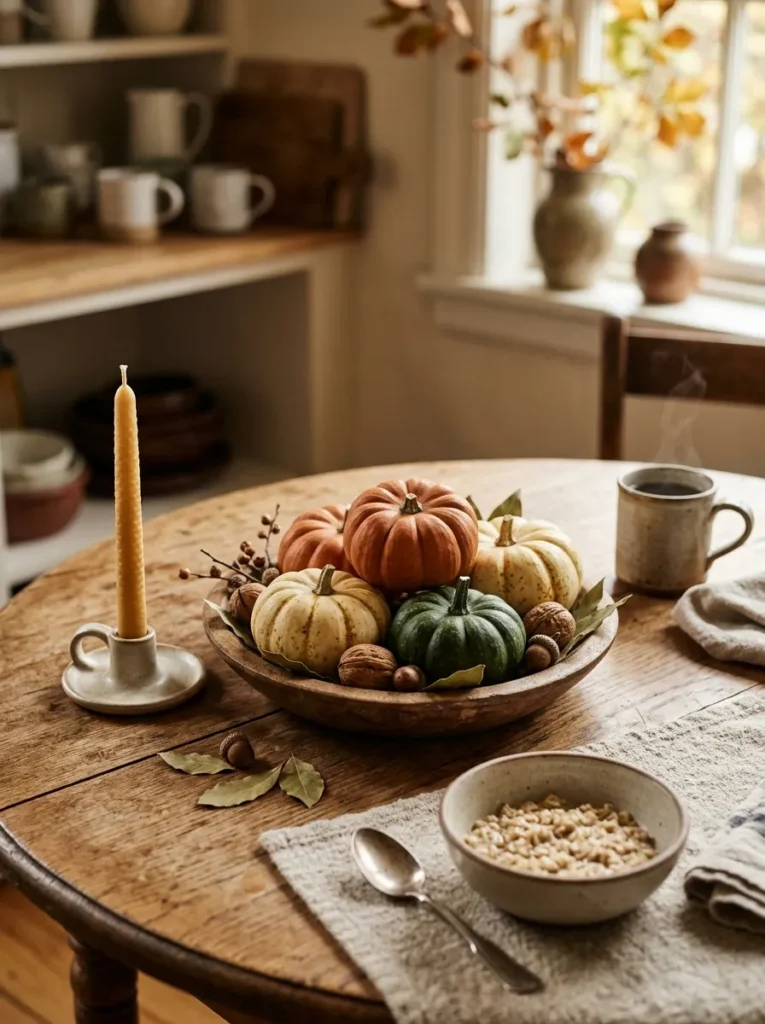
Vibe: The kitchen table autumn centrepiece feels like the season made itself practically useful — the mini pumpkins, walnuts, and dried bay leaves creating a centrepiece that belongs in a kitchen rather than being borrowed from a living room.
Why it works: A practical kitchen table autumn centrepiece applies the daily-use beauty principle — the kitchen or breakfast table is used multiple times daily for meals, homework, morning coffee, and kitchen activity, making it the highest-frequency domestic surface. An autumn centrepiece on this surface should be low enough not to impede across-table communication or sight lines, small enough to be easily moved when the table needs its full surface, and composed of materials that are genuinely at home in a kitchen context (seasonal produce, dried culinary herbs, natural nuts) rather than decorative objects that feel out of place beside a coffee cup. The wooden bowl or tray provides the organizing vessel that prevents the grouping from reading as scattered items placed on the table, and it allows the whole centrepiece to be moved as a single unit when the table needs clearing.
Shop The Look
| Product |
|---|
| Mini pumpkin set six varied autumn |
| Low wooden bowl tray centrepiece |
| Dried bay leaf bunch culinary |
| Natural walnut set seasonal |
| Small beeswax taper candle |
14. Hallway or Landing — The Transitional Autumn Moment
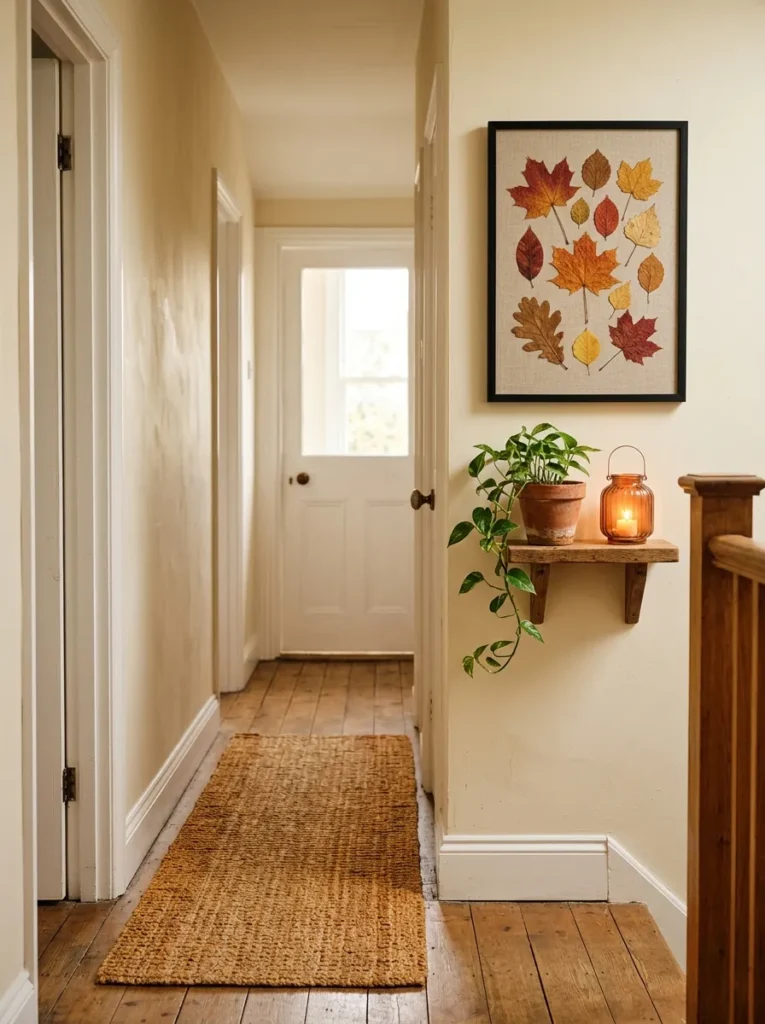
Vibe: The autumn hallway feels like a seasonal moment between rooms — the pressed autumn leaf artwork and the copper lantern creating a transitional seasonal warmth in a space usually treated as a utility corridor.
Why it works: A hallway or landing autumn arrangement applies the transitional space enrichment principle — hallways and landings are the most-traversed domestic spaces (experienced multiple times daily by every person in the household) and the most consistently under-decorated (because their transitional purpose is typically prioritized over their atmospheric quality). A single autumn artwork (pressed autumn leaves professionally framed, or a large-format botanical seasonal poster) converts the hallway wall from a navigation space to a moment of seasonal visual engagement. The copper lantern at the shelf level below the artwork adds the warm metallic autumn tone that references the season’s own palette while providing a small ambient light source in a space that is often dark in the early autumn evenings.
Shop The Look
| Product |
|---|
| Pressed autumn leaf frame black |
| Small wall shelf mounting autumn |
| Small terracotta pot trailing plant |
| Copper lantern small hallway |
| Natural fiber hall runner warm |
15. The Scent of Autumn — Olfactory Decor Throughout
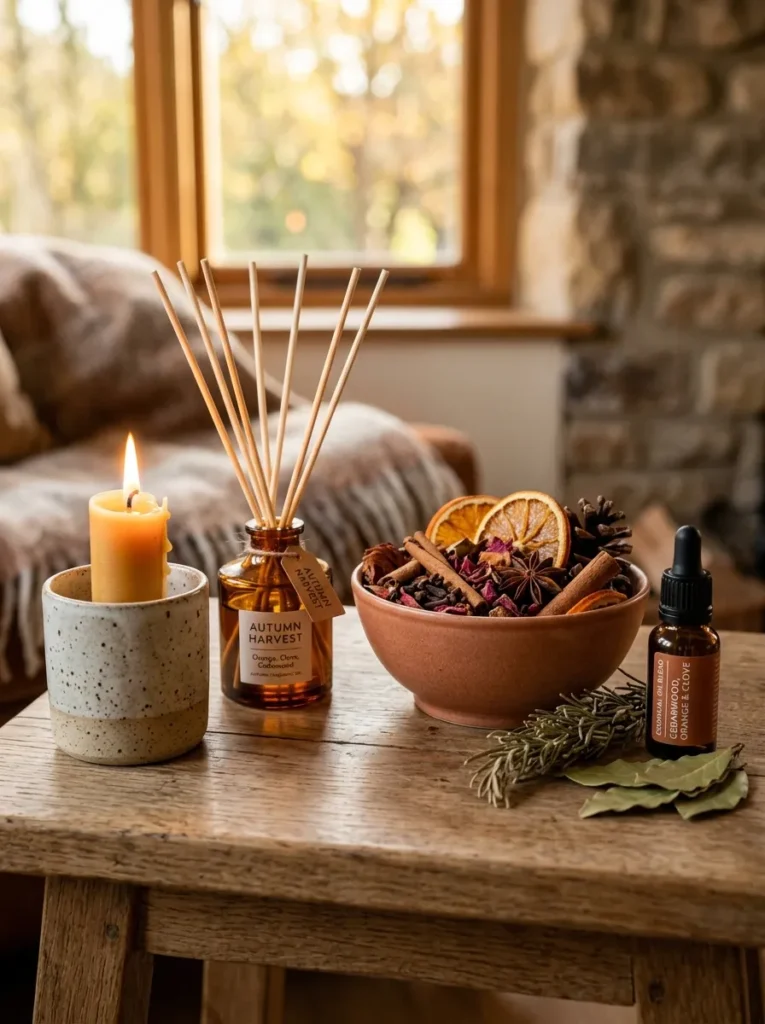
Vibe: The autumn scent collection feels like the season has been translated into something that can be breathed — the accumulated warm spice, citrus, and botanical fragrance creating an olfactory autumn environment that functions independently of any visual decoration.
Why it works: A comprehensive autumn scent layer applies the multi-source olfactory environment principle — the most powerful single contribution to a room’s seasonal atmosphere is frequently not visual but olfactory, because the sense of smell is processed in the limbic system (the brain’s emotional center) and creates the most immediate and most persistent mood associations of any sense. Autumn’s specific olfactory vocabulary (warm spice — cinnamon, clove, star anise; warm resin — cedarwood, amber; warm citrus — dried orange, bergamot; warm botanical — dried rosemary, bay, sage) produces the specific emotional association of cozy seasonal warmth more immediately than any visual decoration. The three-source approach (beeswax candle for occasional warm burning fragrance, reed diffuser for continuous background autumn scent, potpourri for visual and passive scent presence) creates a layered olfactory environment that covers the three primary fragrance exposure pathways simultaneously.
Making autumn potpourri: Combine dried orange slices (dried in a 100°C oven for two hours), cinnamon sticks, whole cloves, dried star anise, dried rose petals, and dried bay leaves in a ceramic or glass vessel. Add 5–10 drops of cedarwood and sweet orange essential oil. Stir weekly to refresh the fragrance as it gradually diffuses.
Shop The Look
| Product |
|---|
| Natural beeswax candle autumn |
| Amber glass reed diffuser autumn |
| Dried orange slice set craft |
| Cinnamon stick bundle natural |
| Cedarwood essential oil autumn blend |
How to Start Your Autumn Decor Transformation
The single best first move for an autumn decor transformation is spending thirty minutes gathering the existing home’s autumn-adjacent materials before purchasing anything new — walking through every room and collecting: any existing cushion covers in warm tones (forest green, rust, burgundy, amber), any existing throws or blankets in heavier or warmer materials, any candles in warm-toned or natural wax, any dried botanicals from previous seasons, any natural objects (pinecones, smooth stones, dried seed heads) from outdoor spaces. This gathering exercise typically reveals that the home already contains most of the materials needed for a compelling autumn transformation — they are simply distributed across rooms and storage spaces rather than composed into seasonal arrangements. A throw that has been stored since last winter, a velvet cushion cover that was retired for summer, a candle that was half-burned in February — these existing materials, retrieved and composed into the autumn arrangements in this list, create the seasonal transformation more authentically than any new purchase.
The most common mistake in autumn decor is purchasing quantities of commercial autumn decoration (plastic orange pumpkins, synthetic autumn leaf garlands, commercially scented “harvest” candles in synthetic fragrance) that simulate the season’s visual vocabulary without using the season’s own materials. These commercial seasonal products read as decoration about autumn rather than decoration from autumn — they are the visual equivalent of a word for warmth rather than the warmth itself. The corrective is to use the actual season’s materials: the actual small pumpkin from the farmers’ market, the actual dried oak leaf from the garden, the actual beeswax candle (not the synthetic “pumpkin spice” paraffin equivalent), the actual dried botanical from last summer’s garden. These materials cost the same or less than their commercial simulacra while producing a genuinely different atmospheric quality.
Three specific items under $40 that immediately create autumn atmosphere in any room: a bunch of dried pampas grass or dried seed head botanicals ($8–15 from a dried flower supplier or florist, providing the large-scale neutral botanical form that reads as luxuriously natural at any scale); a set of three beeswax taper or pillar candles ($10–18 from a natural food store, health store, or specialist candle retailer, providing the warm amber color temperature and natural honey fragrance that no synthetic candle replicates); and a set of three varied small heritage pumpkins or squash ($5–12 from a farmers’ market or supermarket in season, providing the genuine seasonal produce that any surface or bowl receives as its most authentic autumn element). These three additions combined for under $40 address the botanical, the light, and the produce dimensions of autumn decor simultaneously.
Frequently Asked Questions About Autumn Decor
What colors make a room feel most cozy in autumn?
The autumn colors that most reliably create cozy warmth in a domestic interior are the warm, muted, mid-to-deep value colors that share the undertone of the season’s own palette: deep forest green (the color of late summer leaves holding their last green before turning), warm burgundy (the color of grape and berry, of turning vine leaves), warm terracotta (the color of dry earth, of clay pottery, of autumn brickwork in afternoon sun), warm amber (the color of honey, of turning leaves backlit by low autumn sun), and warm oat or cream (the color of dried grass, of natural unbleached cotton, the neutral that makes all the jewel tones glow around it). The common property is warmth — all autumn colors that read as genuinely cozy have a warm undertone (yellow, orange, or red) rather than the cool blue or green undertone that reads as fresh and summery.
How do you avoid autumn decor looking like Halloween or Thanksgiving rather than genuinely seasonal?
The specific difference between autumn decor that reads as genuinely cozy and seasonal versus autumn decor that reads as themed for a specific holiday is material authenticity and palette restraint. Halloween-specific decoration uses orange-and-black high-contrast combinations, artificial objects (plastic bats, synthetic cobwebs), and cartoon iconography; Thanksgiving-specific decoration uses the harvest gold-and-brown palette with pilgrim and corn imagery. Genuinely seasonal autumn decor uses the actual materials of the actual season (real dried botanicals, real small pumpkins in heritage colors, real beeswax candles) in the actual palette of the actual season (forest green, burgundy, terracotta, amber, oat) without the symbolic iconography of either holiday. The simplest guide: if it could have been the decor of a beautiful home in October before either holiday was commercially developed, it reads as genuinely seasonal.
How long can autumn decor stay up before it reads as overdue?
Autumn decor is most appropriate from early September (when the first genuine signs of the season appear in the natural landscape) through late November (when the outdoor signs of autumn have largely resolved into winter). Within this window, the specific timing depends on the climate — in warmer climates, the autumn decor window may be compressed to October and November; in northern climates, it may extend from September through December. The practical guide: autumn decor that features fresh seasonal produce (pumpkins, apples, chrysanthemums) should be updated or replaced as the produce fades or ages; dried botanical elements (pampas, seed heads, preserved leaves) can remain through the autumn and into winter; heavy textiles (wool, velvet, mohair) are appropriate from mid-September through April in most northern climates and should not be removed simply because a specific autumn holiday has passed.
What is the most sustainable approach to seasonal home decor?
The most sustainable approach to seasonal home decor is using genuinely natural, biodegradable materials that can be composted at the season’s end rather than stored as synthetic decoration. Small pumpkins and seasonal produce are fully compostable after their decorative life; dried botanical elements (pampas, seed heads, dried leaves) are biodegradable and can be added to garden compost; beeswax candles consume fully and leave no synthetic residue. The materials to avoid for sustainability are: plastic and synthetic seasonal decorations (produced from petroleum, non-biodegradable, typically single-use), synthetic fragrance products (which contain volatile organic compounds of concern for indoor air quality), and fast-fashion seasonal textiles (throw pillows and blankets produced from synthetic fibers for the seasonal market). The most sustainable seasonal decor is also, not coincidentally, the most beautiful — the genuinely natural materials are always more visually compelling than their manufactured equivalents.
How do you transition autumn decor to winter without starting over?
The most efficient autumn-to-winter transition retains the autumn decor’s foundation elements (the warm textiles, the candlelight, the dried botanicals, the warm wall colors) and replaces only the specifically autumn-seasonal elements with winter equivalents. In practice: the pumpkins and gourds are replaced with small potted evergreen arrangements, pinecones, or clementines studded with cloves; the dried autumn leaf arrangements are replaced with or augmented by evergreen sprigs and dried seed heads that work through winter; the chrysanthemums in the entryway are replaced with forced paperwhite narcissus or small potted hyacinths; and one or two seasonal scent additions (the specific autumn spice blend in the reed diffuser) are shifted toward a warmer, more festive register (cedarwood, pine, frankincense). The wool and velvet textiles, the beeswax candles, and the warm lighting all continue unchanged through the winter — they are autumn foundations that become winter foundations without any transition required.
Ready to Welcome Autumn Into Every Room?
These 15 inspirations move through every dimension of what makes an autumn home genuinely cozy and genuinely seasonal — from the foundational warmth of layered living room textiles and a dried botanical dining table runner, through the intimate atmospheres of a bedroom with a heavier duvet and a beeswax bedside candle, to the kitchen’s genuine seasonal produce display and the bathroom’s spa-like candle and eucalyptus additions, to the comprehensive olfactory autumn environment of a multi-source scent layer that makes the season present in every breath. Starting with the gathering exercise — walking through every room and collecting the existing warm materials before purchasing anything new — is the beginning that makes every subsequent decorating decision a composition rather than an accumulation. Gather what is already there. Light a beeswax candle in the living room tonight with no other change. Notice how much the room shifts in its specific atmosphere from the warm amber light alone. Then layer in the velvet cushions, the dried botanicals, and the seasonal produce one element at a time, stepping back after each addition to assess the contribution before adding the next. When the room is genuinely warm — when the autumn light comes through the linen curtains at four in the afternoon and finds a room that has already dressed for the season — the work is done.