13 Stunning Florida Exterior House Colors for Coastal Charm
A fresh coat of paint can make a tired house look brand new, but the wrong shade fades fast in Florida sun. Choosing Florida exterior house colors that suit the light, the landscape, and the coast takes more than a pretty swatch.
Many homeowners stall at the paint aisle because every sample looks different outdoors. This article shares 13 ideas, from seafoam green and sandy stucco to navy trim and Key West pastels. Each one includes simple steps, practical finish tips, and ways to match your roof and landscaping.
In my experience, testing a sample patch at three times of day saves the most money and regret. I’ve seen homeowners pick a favorite from a tiny chip, then repaint a year later. Scroll on, save your favorites, and find the shade that suits your home.
Soft Seafoam Green
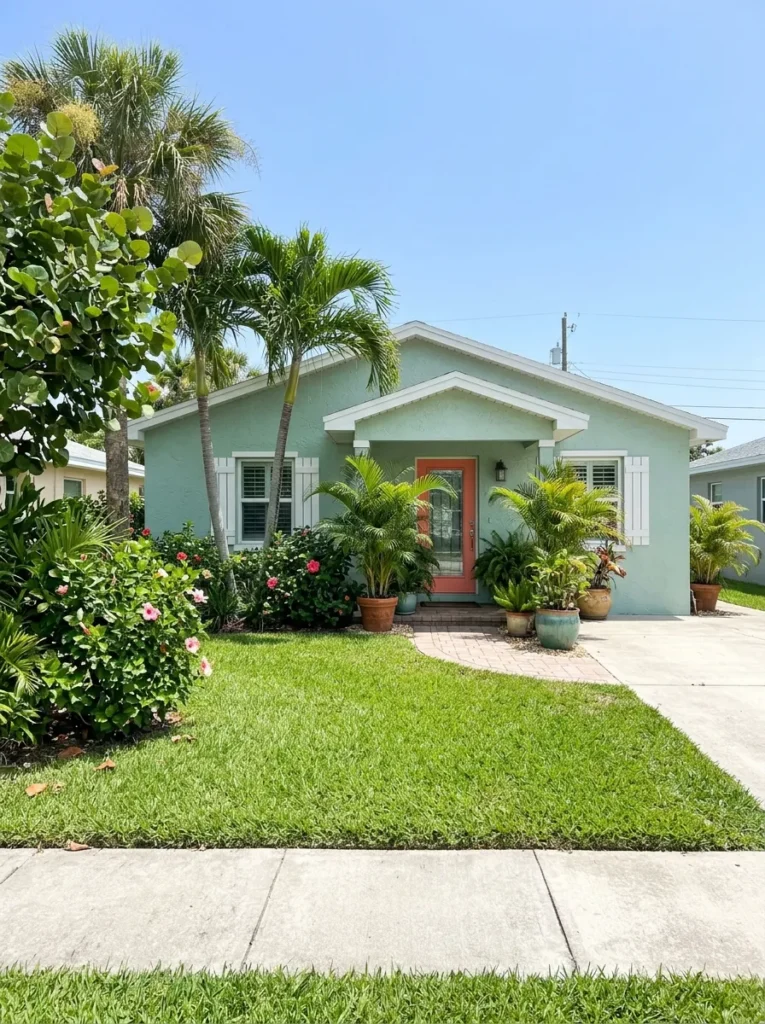
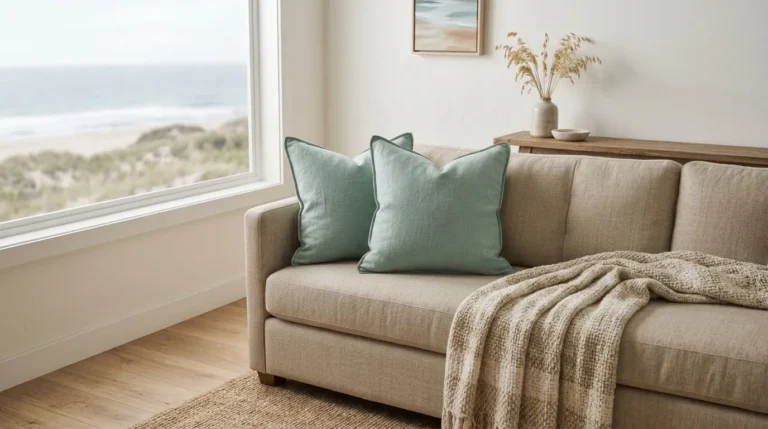
Seafoam green is the shade that makes a house look like it grew out of the shoreline. It reads soft in strong Florida sun instead of washing out like pale yellow. Pair it with bright white trim and shutters, and the color stays crisp against blue sky.
In my experience, always test a sample on the sunniest wall first. Seafoam can lean minty at noon and gray at dusk. Paint a three foot square, then check it at three times of day. A coral or navy front door adds a pop that guests remember.
Sandy Beige Stucco
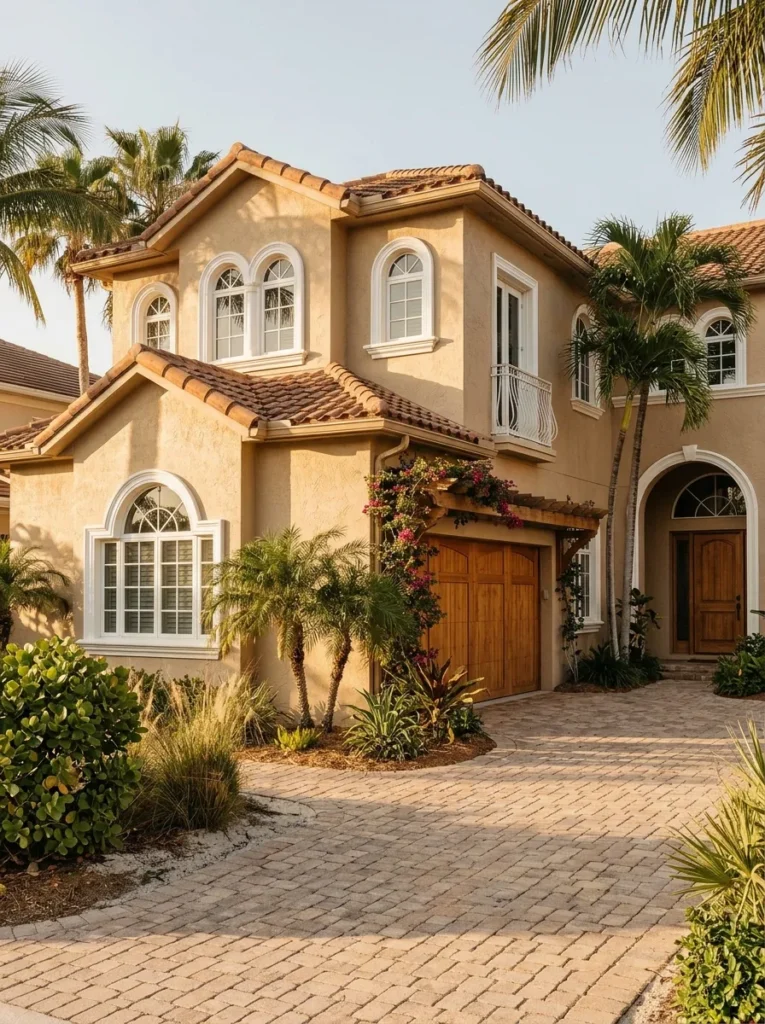
- Neutral never looks boring when it matches the sand outside. Pick a beige with a warm yellow undertone, not a gray one, so it glows in strong sun.
- Stucco hides small cracks and dust better than smooth siding. Choose a flat or low sheen finish to keep the wall texture soft.
- Add contrast with white window frames or deep bronze trim. Two trim colors at most keeps the look calm.
- Let the roof guide the shade. Terracotta tile pairs best with creamy sand, while gray tile suits a cooler beige.
- Plant bright bougainvillea or hibiscus near the entry for color without repainting.
Beige holds up well against Florida humidity because it hides streaks and chalky buildup between washes. Buyers also read a neutral wall as a clean slate, which helps if you plan to sell. Ask for exterior grade, mildew resistant paint, and rinse the walls every spring.
Also view: 18 House Colors to Enhance a Grey Roof That Feel Bright
White With Navy Trim
Quick Tip:
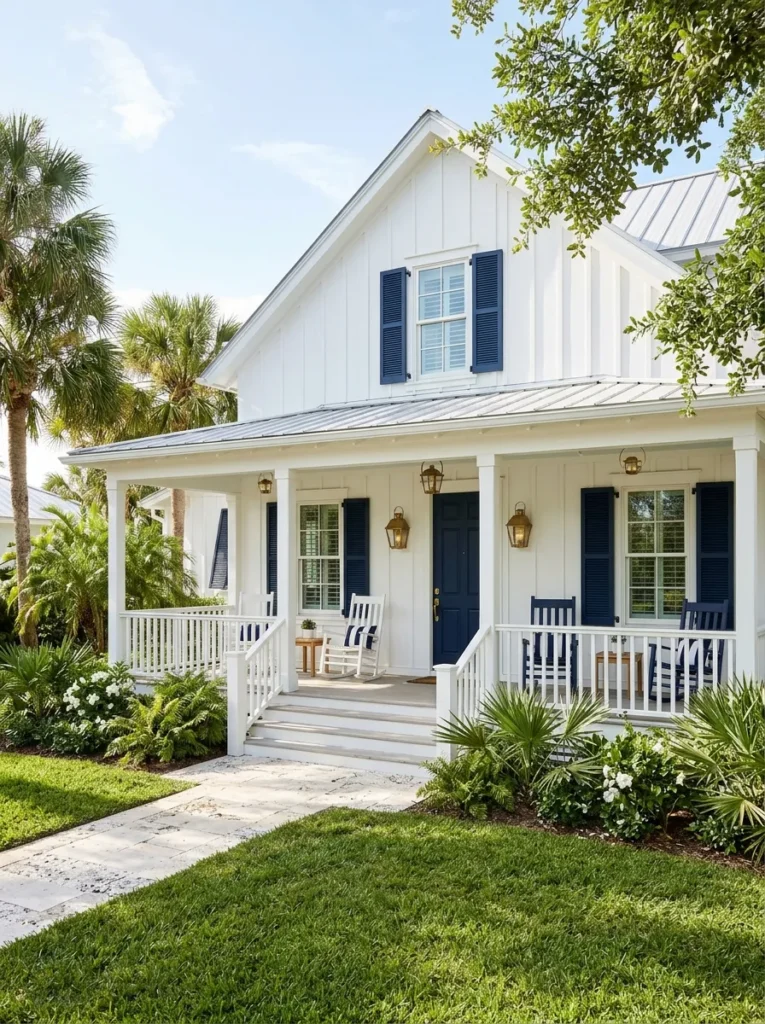
Navy looks sharpest when the white is not too stark. Choose a soft white with a hint of warmth for the siding, and save the deep navy for shutters and the front door. This keeps the contrast bold without feeling cold.
White and navy is the oldest coastal pairing, and it still works because it reflects heat while staying easy to repaint. White siding can keep walls cooler under strong sun. I’ve seen this combo hold its look for years with only a yearly wash. Brass hardware finishes the entry nicely.
Warm Coral Pink
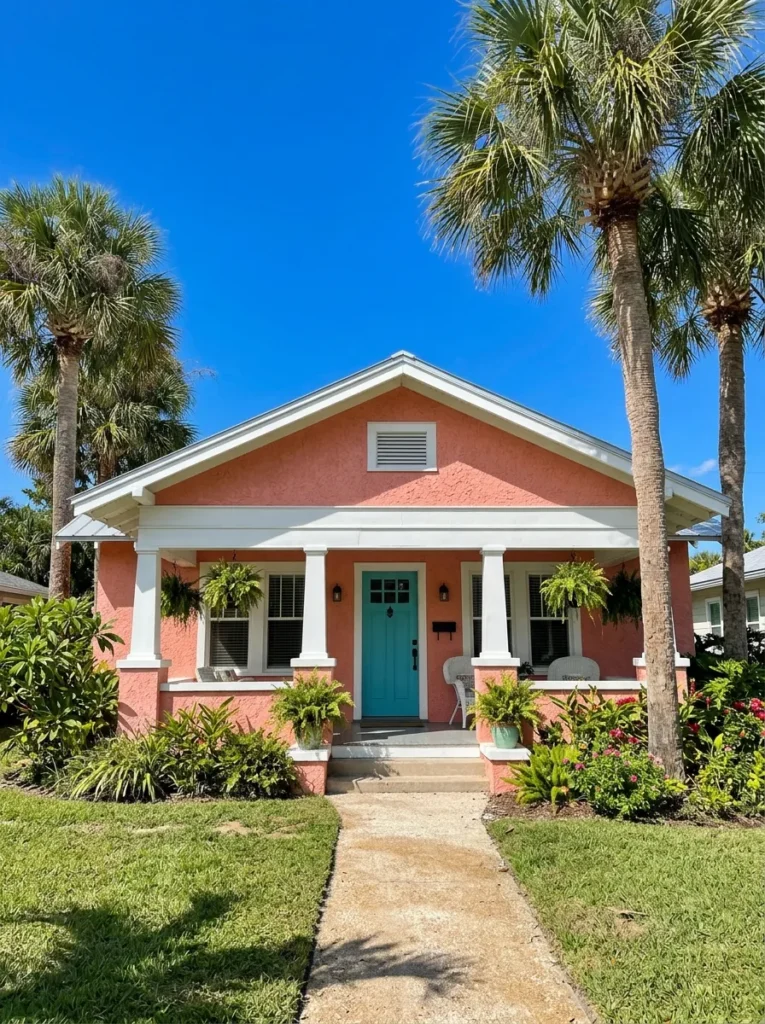
BEFORE: A tired gray exterior fades into the sidewalk and looks flat in bright sun. Guests walk past without noticing the house at all.
AFTER: Warm coral pink gives the same walls a sunset glow that matches the palms and sky. The house now looks welcoming from the street.
Coral is bold, so choose a muted version with a touch of peach, not a neon one. I’ve noticed that softer coral ages better under strong sun and holds its warmth. Pick white trim and a teal or navy door for contrast. Sample two shades first, because coral shifts a lot by hour.
Butter Yellow Cottage
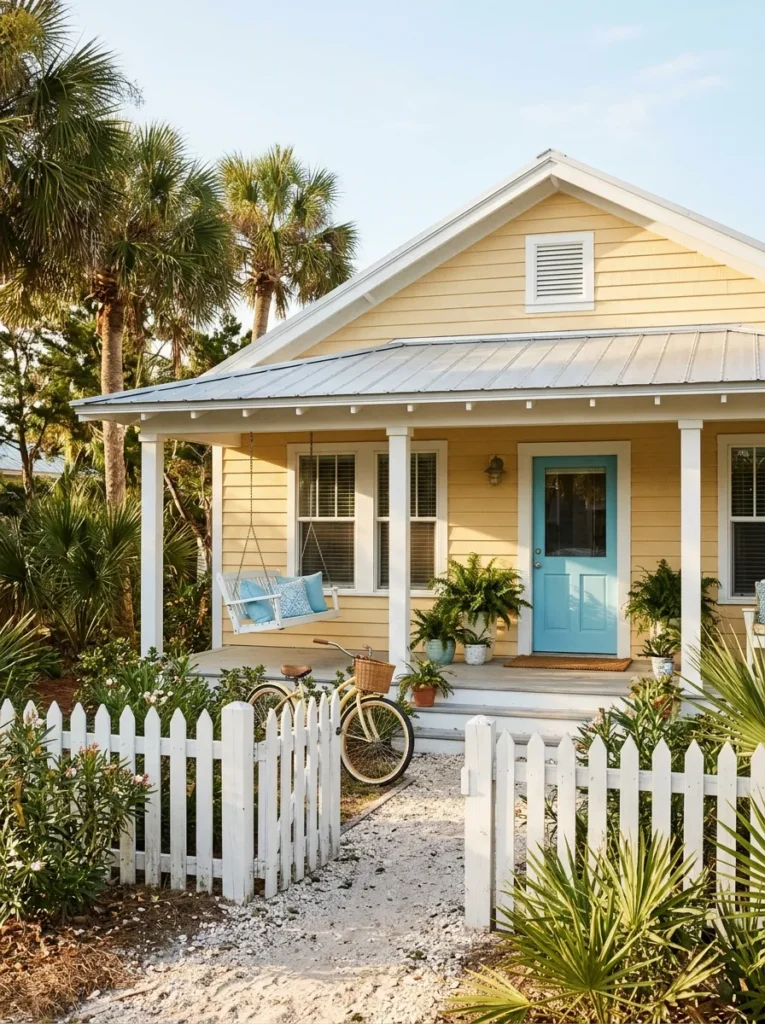
- Pale butter shades with a creamy base work best, since strong Florida sun brightens every yellow.
- Paint a sample board and hold it against the house at noon and again at sunset.
- Choose a bright white for the trim, so the yellow looks fresh instead of dingy.
- Roll on two coats of exterior satin paint and let each coat dry fully.
- Finish with a blue or green door for contrast.
Butter yellow reads cheerful without looking loud, and it hides sand and salt dust better than pure white. A whole street of yellow cottages looks sunny even on cloudy days. Avoid lemon tones, which turn harsh by afternoon. Planting blue hydrangeas or agapanthus near the steps ties the whole front together.
Gray Blue Siding
| Flat Gray | Gray Blue | |
|---|---|---|
| Mood | Cold and heavy | Calm and airy |
| Sun response | Looks dull | Picks up sky tones |
| Best trim | Black or white | Crisp white |
| Pairs with | Concrete and metal | Wood porches and ferns |
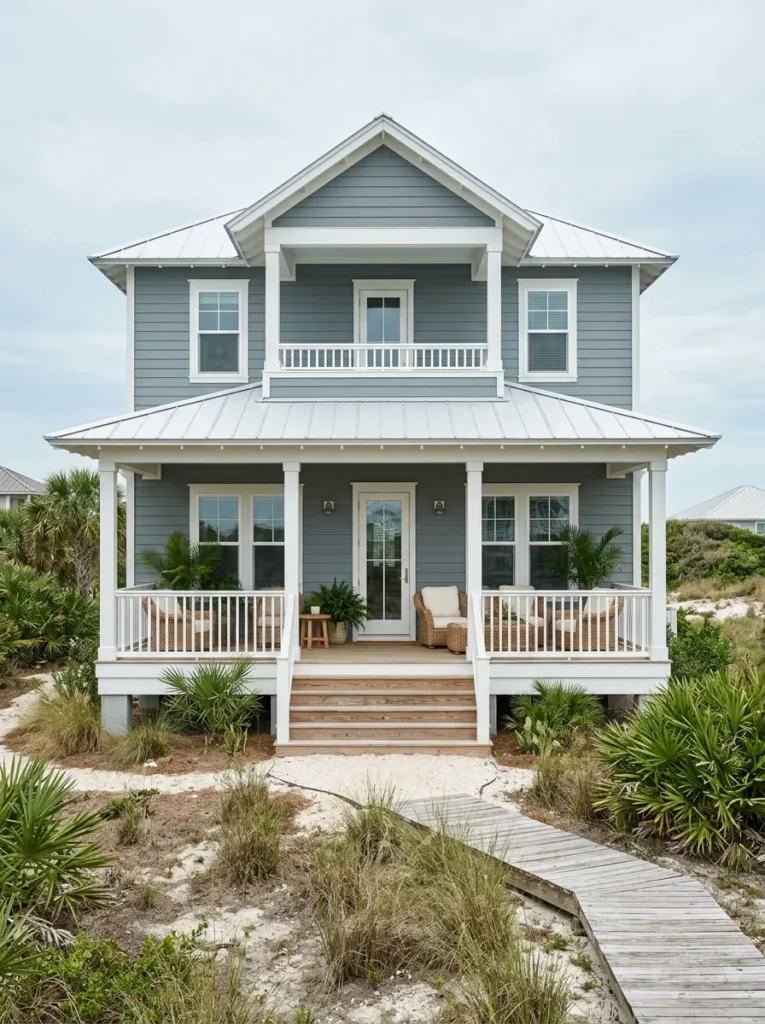
Gray blue echoes the water, so the house belongs to its surroundings. Choose a shade with a bit of green in it to keep it from turning cold. Spray a small test patch on siding and watch it on a cloudy day too. Wicker chairs and wood decking warm it up.
Bold Teal Front Door
DO:
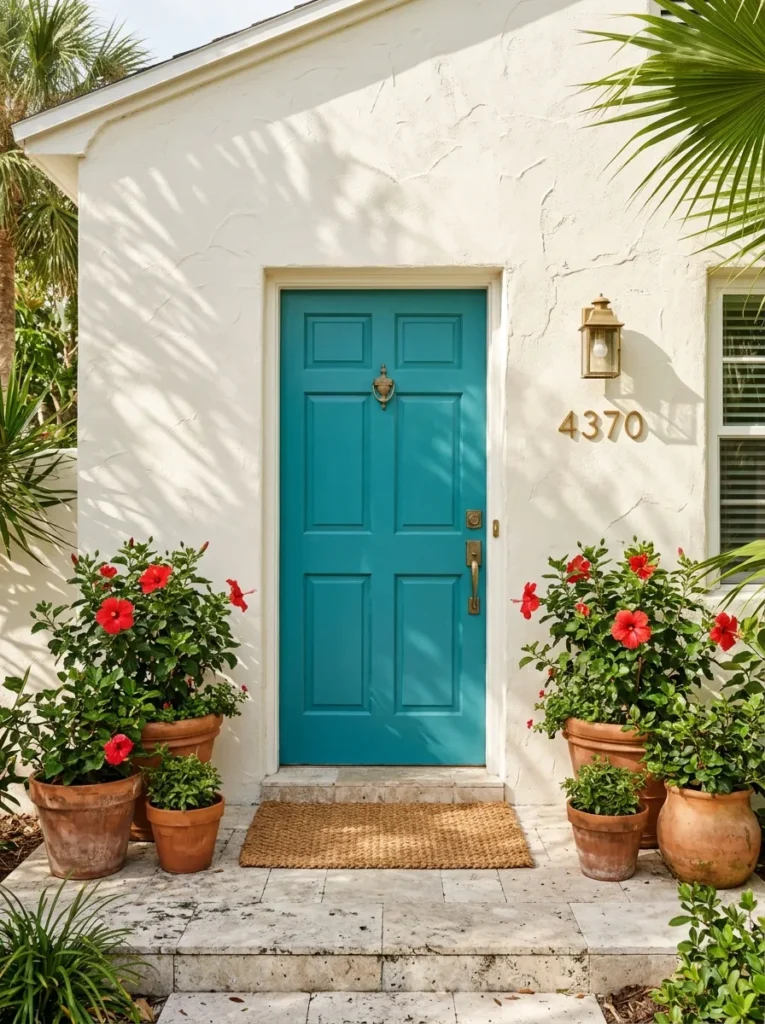
- Pick a teal with a hint of green, so it matches ocean water.
- Choose exterior door paint in a satin or semi gloss finish.
- Pair the door with brass or matte black hardware.
- Sand and prime the door before the first coat.
DON’T:
- Don’t paint teal on the walls and the door together.
- Don’t paint in direct midday sun, because the paint dries too fast.
- Don’t use interior paint on an outdoor door.
- Don’t skip sanding, since glossy old paint will peel.
A single bold door is the quickest color move on any house. A quart of paint covers one door and costs far less than repainting walls. I’ve tried teal on a plain white entry, and it instantly made the house look planned. Finish in a weekend and let it cure for several days.
Creamy White Stucco
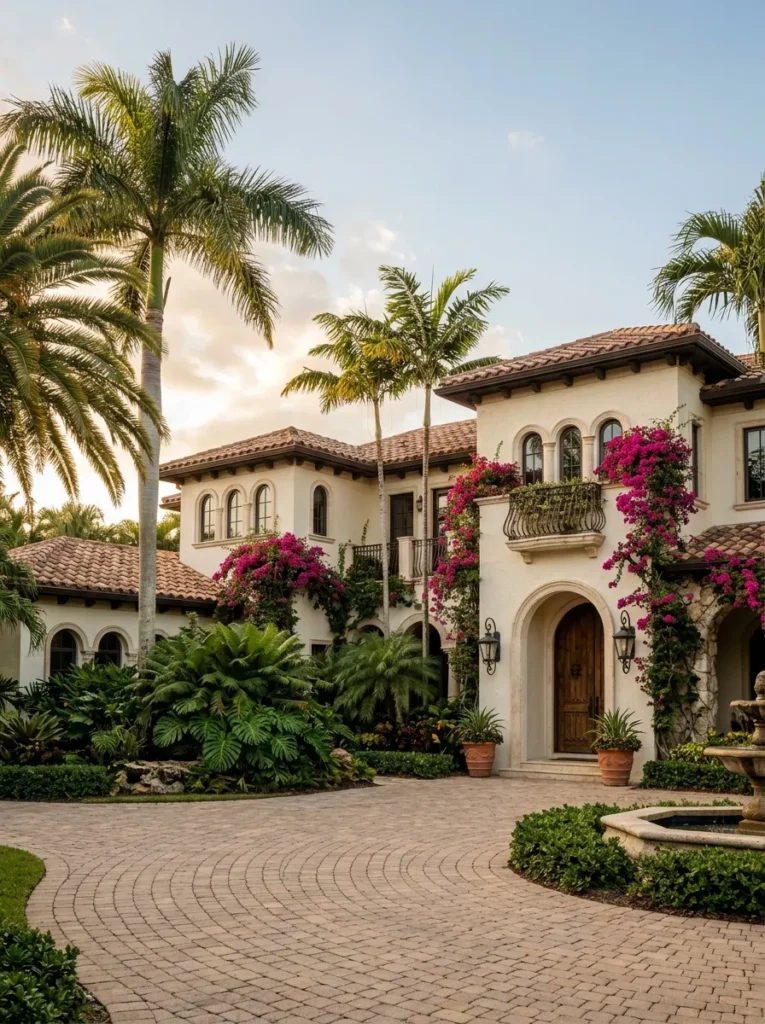
Cost: Moderate | Time: 2 to 4 days
Skill Level: Pro recommended for two story homes
Best For: Stucco homes with tile roofs
Result: Bright, clean looking walls
Light walls reflect more sun, which keeps the outside of a home looking fresh and clean. Pick a cream with a touch of warmth, not stark white, to avoid glare. Hire a pro for two story stucco, since lifts and spraying need experience. Rinse walls yearly to keep the shade bright.
Key West Pastels
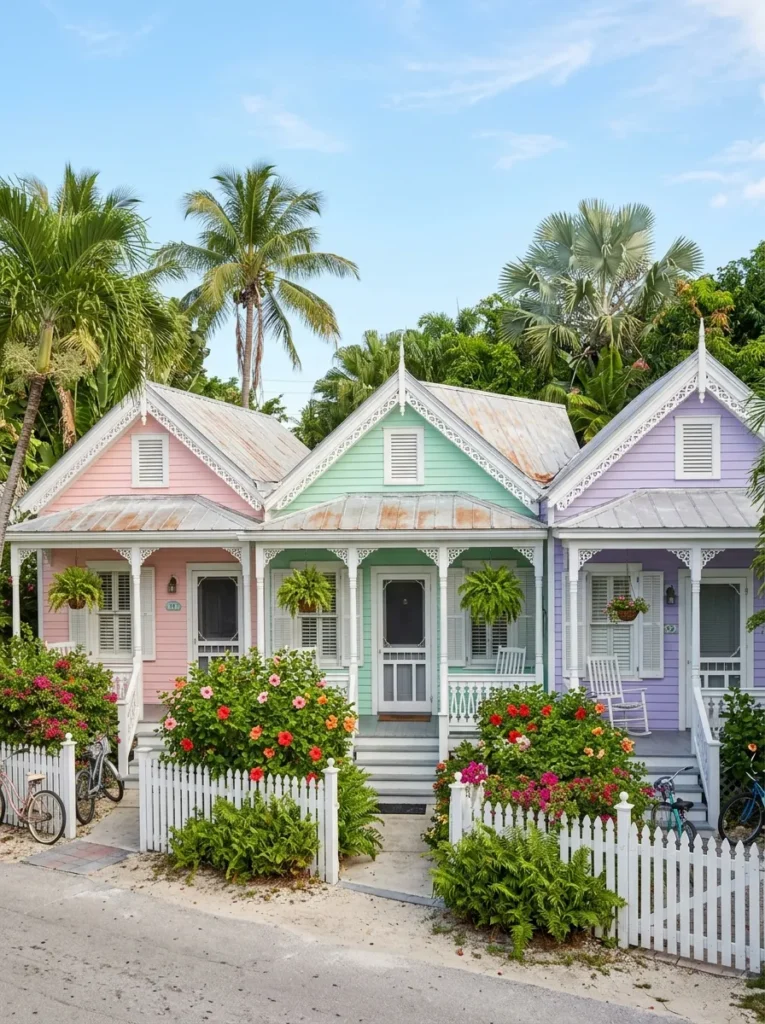
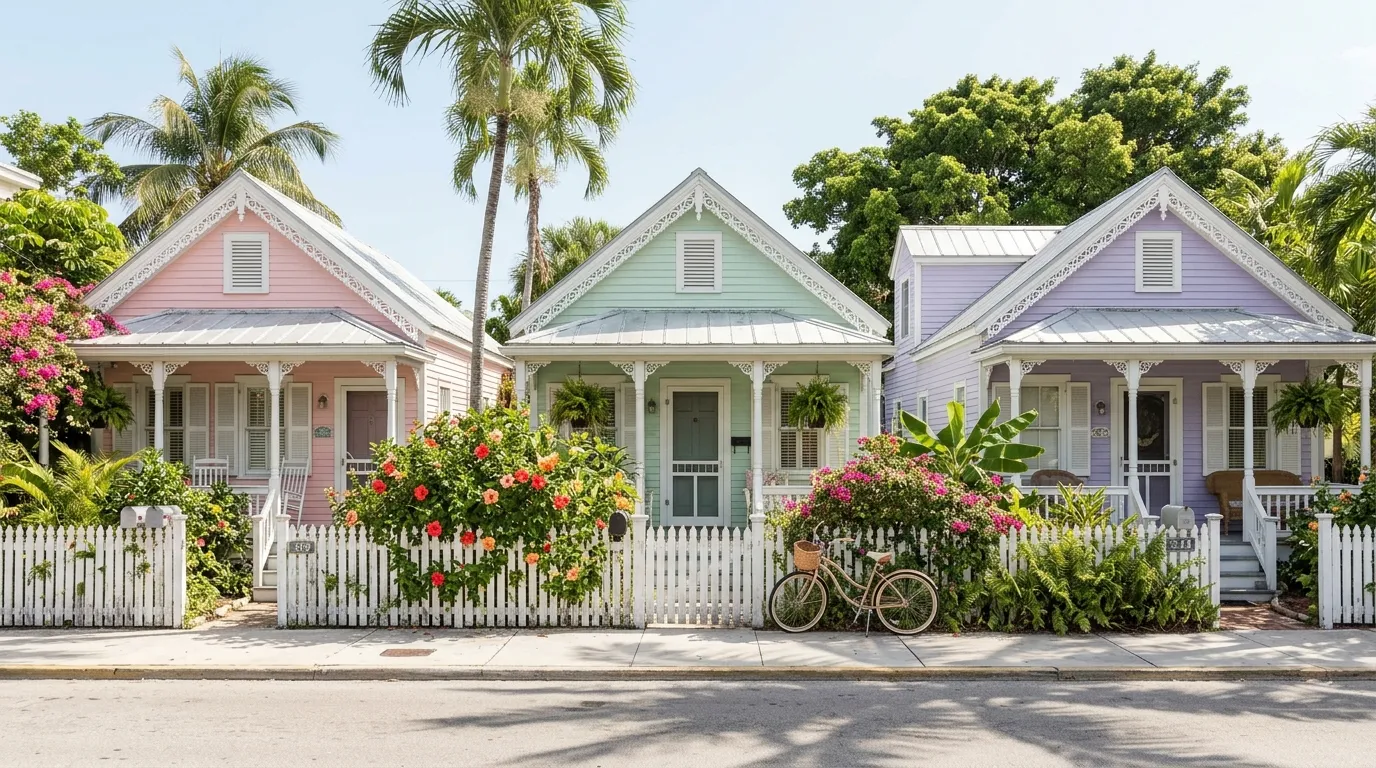
Walk any street in Key West and you will see why pastel houses never feel out of place. Soft pink, mint, and lavender look happy under bright sun, and white gingerbread trim ties them together. Pick one pastel for the body and keep the trim white.
Fade is the main enemy of pastels, so buy exterior paint with UV protection and a satin finish. Two full coats give the richest, most even color, so budget for extra paint. Keep neighboring houses in mind, and choose a shade that complements them instead of copying.
Sage Green Backdrop
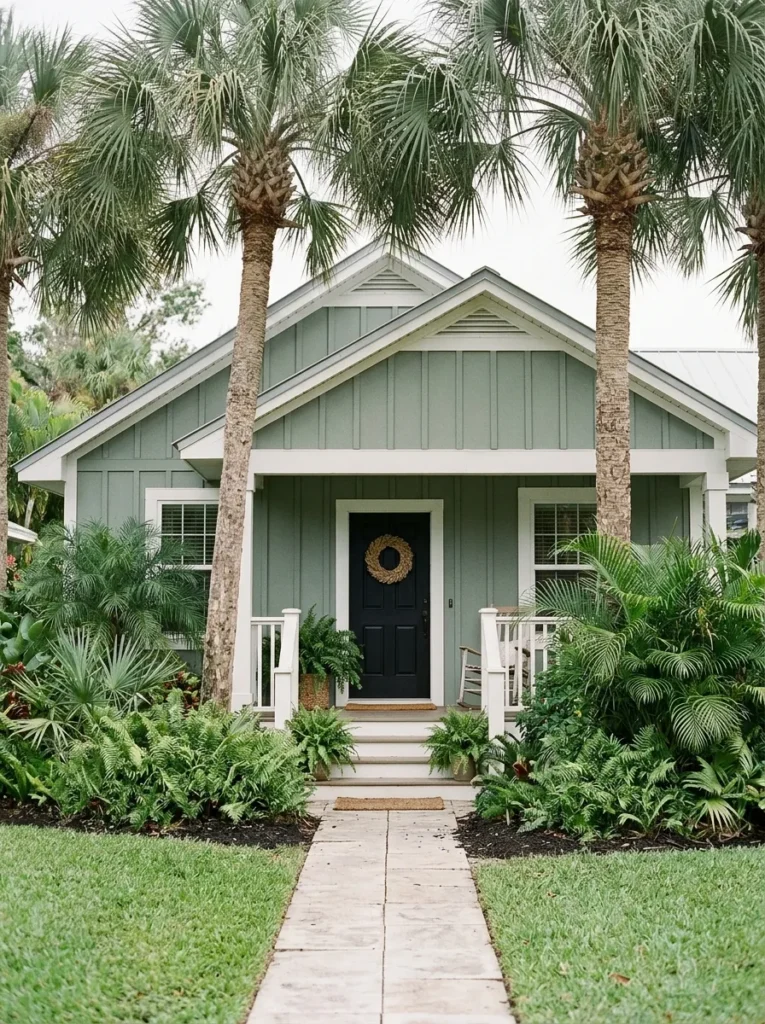
- Green blends into Florida landscaping instead of fighting it. Choose a gray leaning sage with low saturation.
- Keep the trim bright white, so the walls look crisp and not muddy.
- Paint the front door black or deep charcoal for a grounded focal point.
- Repeat the accent with black light fixtures and house numbers.
- Plant ferns and palms near the foundation for layered depth.
Sage green works for homeowners who want color without attention. It stays calm next to bright blooms and tropical leaves. In my experience, a gray leaning sage looks more refined than a yellow leaning one. Test your sample against the greenery outside, since plants change how paint looks.
Terracotta and Cream
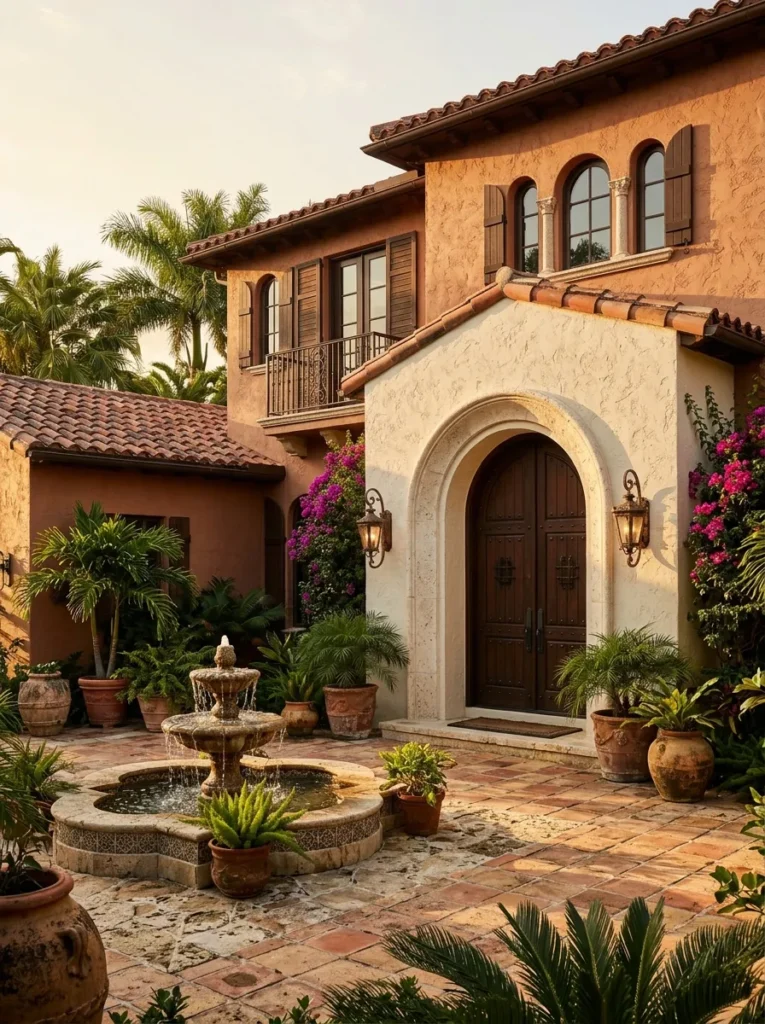
Quick Tip:
Use terracotta on the main walls and cream on the arches, so the colors frame the entry. Keep the door a deep wood tone for warmth. Add wrought iron lanterns to finish the Spanish look.
Earthy tones echo the clay roofs seen across Florida and look at home near palms. Terracotta also hides dust and rain splash better than light colors. That’s why many experts recommend a matte finish for textured plaster. Test the shade on a hidden wall before committing to the whole house.
Modern Charcoal Gray
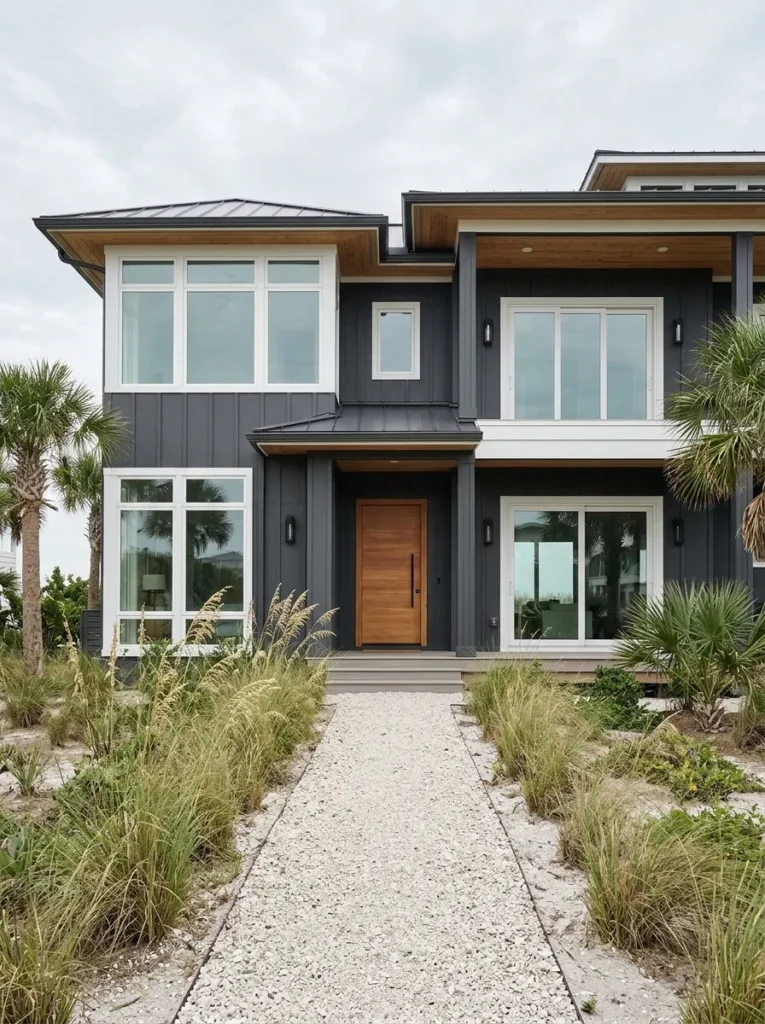
BEFORE: Dated tan siding fades into the background and the house feels stuck in another decade. Sun bleached paint and mildew streaks make it look worn.
AFTER: Deep charcoal gives the same home sharp lines and a modern look. White trim and a wood door add warmth, so it never feels heavy.
Dark colors absorb more heat, so choose exterior paint with heat reflective pigments for Florida sun. Medium charcoal hides dust better than near black. Keep trim white and landscaping green for a clean finish. Test one wall first and check it after a week of sun.
Aqua Shutter Accent
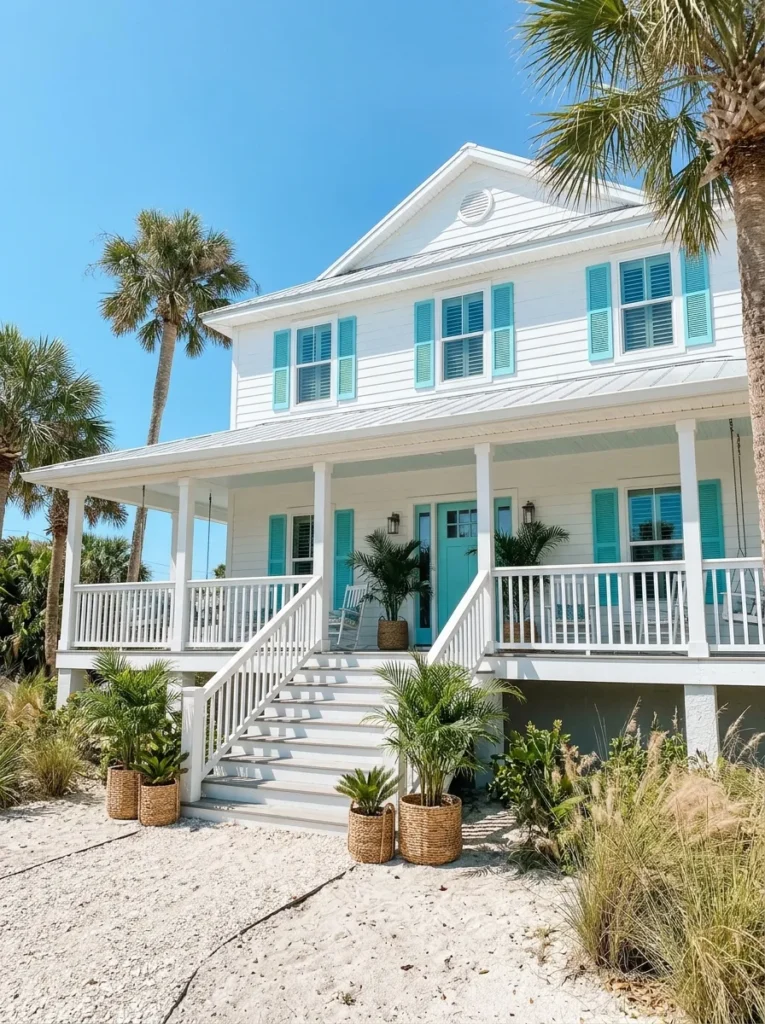
- Remove the shutters from the house and lay them flat on sawhorses.
- Scrub them with a mild cleaner and let them dry fully.
- Sand lightly, then apply an exterior primer.
- Brush on two coats of aqua exterior paint, drying between coats.
- Rehang the shutters and paint the porch ceiling a similar aqua for a classic Southern touch.
Shutters are one of the cheapest changes here, yet they color the whole front. A full set and one door usually take a weekend. Pick an aqua with some green in it, and avoid chalky pastels that wash out in sun. Paint in shade so the finish dries evenly.
Conclusion
The right color does more than update a house. It makes the whole street feel brighter and your home feel like yours. Start small if a full repaint feels big, with a teal door or aqua shutters, and build from there. I’ve seen how small changes like these can completely shift the way a home looks from the curb. Save this post on Pinterest so your favorite Florida exterior house colors are easy to find later. Test a sample this weekend, then share the article with a friend who is ready for a fresh coat. Your coastal charm is one swatch away.