15 Japandi Transitional Living Room Ideas You Can Copy
Dreaming of a calm, balanced space that feels both modern and cozy? This Japandi Transitional Living Room guide will show you exactly how to create a home that looks effortlessly refined.
If your living room feels cluttered, mismatched, or lacking warmth, you’re not alone. Many people struggle to find the perfect balance between minimal design and everyday comfort. That’s where this style truly shines—blending clean lines with soft textures to create a peaceful and functional space.
In my experience, the beauty of this design lies in simplicity and intention. I’ve noticed that when you focus on natural materials, neutral tones, and thoughtful layouts, the room instantly feels more relaxing and complete. These ideas will help you transform your space into something calm, stylish, and easy to live in.
1. Low Profile Seating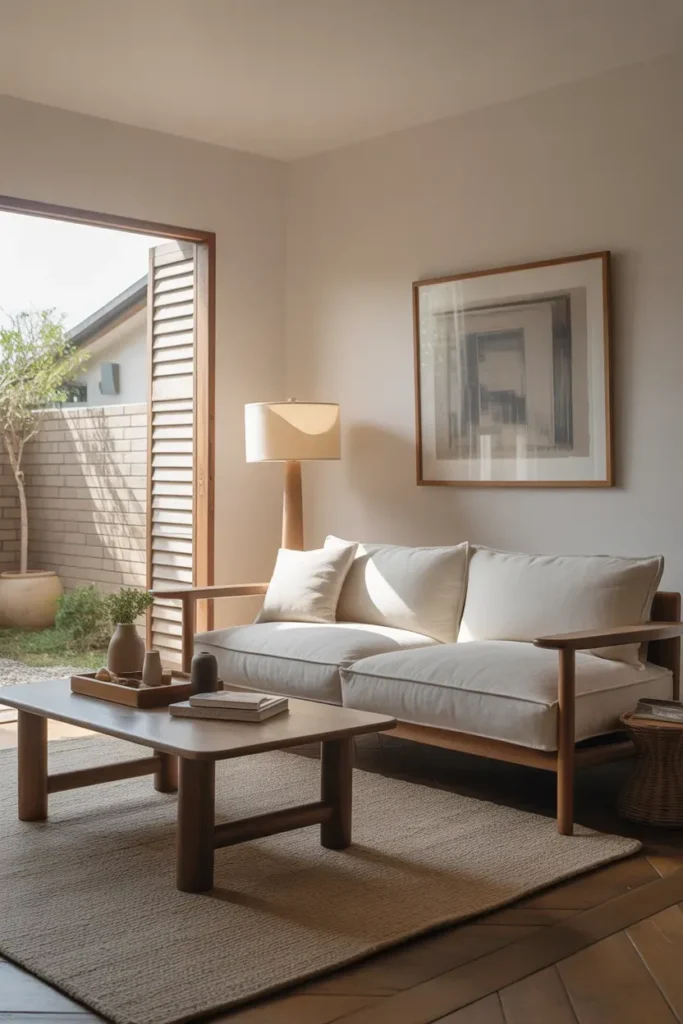
- Creates a grounded and calming atmosphere
- Makes ceilings feel higher and space more open
- Reflects minimalist Japanese influence
- Keeps the room visually light and uncluttered
- I’ve noticed low seating instantly feels more relaxed
Low profile seating is one of the defining features of a Japandi transitional living room. It brings a sense of calm and balance by visually lowering the room’s center of gravity. In real homes, this approach helps make the space feel more open and less crowded. I’ve noticed that when furniture sits lower, the room naturally feels more breathable and serene, especially in smaller living areas.
The simplicity of these pieces also enhances the overall design. Clean lines and soft neutral tones allow the focus to remain on texture and form rather than excess detail. That’s why many designers recommend low seating for creating a peaceful environment. This style not only improves visual flow but also creates a cozy and inviting space that feels effortlessly modern and timeless.
Also view: 20 Contemporary Wall Art Decor Options for Modern Style
2. Light Wood Tones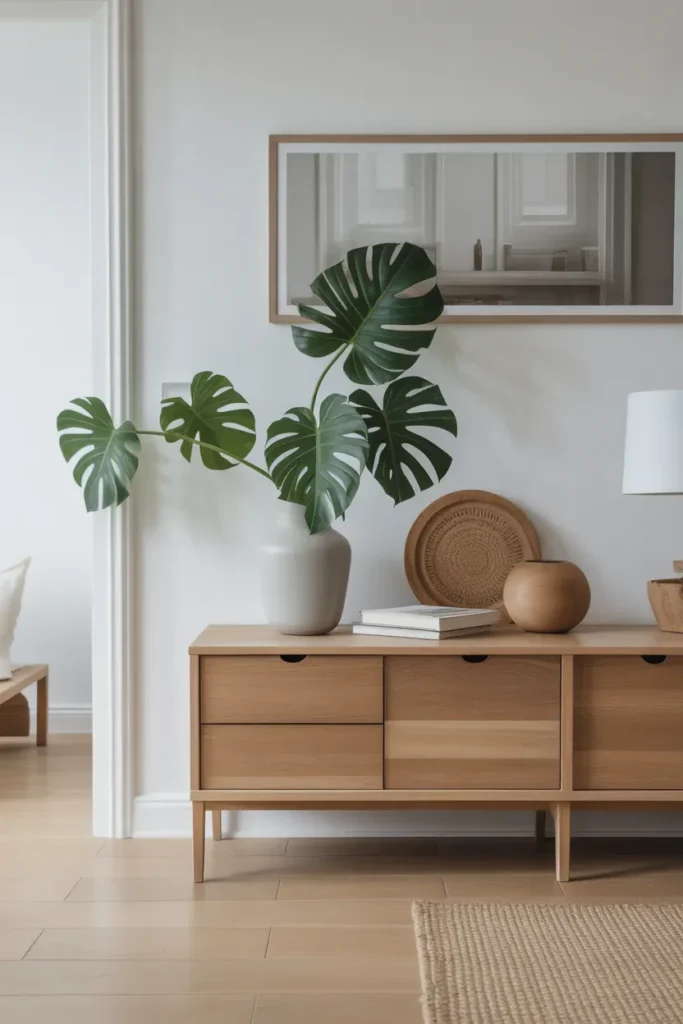
- Adds warmth without heaviness
- Balances minimal and cozy elements
- Enhances natural and organic feel
- Works beautifully with neutral palettes
- I’ve seen light wood brighten small spaces
Light wood tones are essential for creating that perfect blend of warmth and simplicity. They bring a natural element into the space without making it feel heavy or dark. In real homes, this helps balance the clean lines of minimal furniture with a softer, more inviting feel. I’ve noticed that light wood surfaces reflect light beautifully, making the entire room feel brighter and more open.
Pairing wood with neutral fabrics and soft textures creates a harmonious look that feels both modern and timeless. That’s why many designers recommend sticking to lighter finishes like oak or ash. I’ve seen this approach work well in various spaces, where it creates a calm and cohesive atmosphere. This simple choice adds depth and warmth without overpowering the overall design.
3. Neutral Textured Layers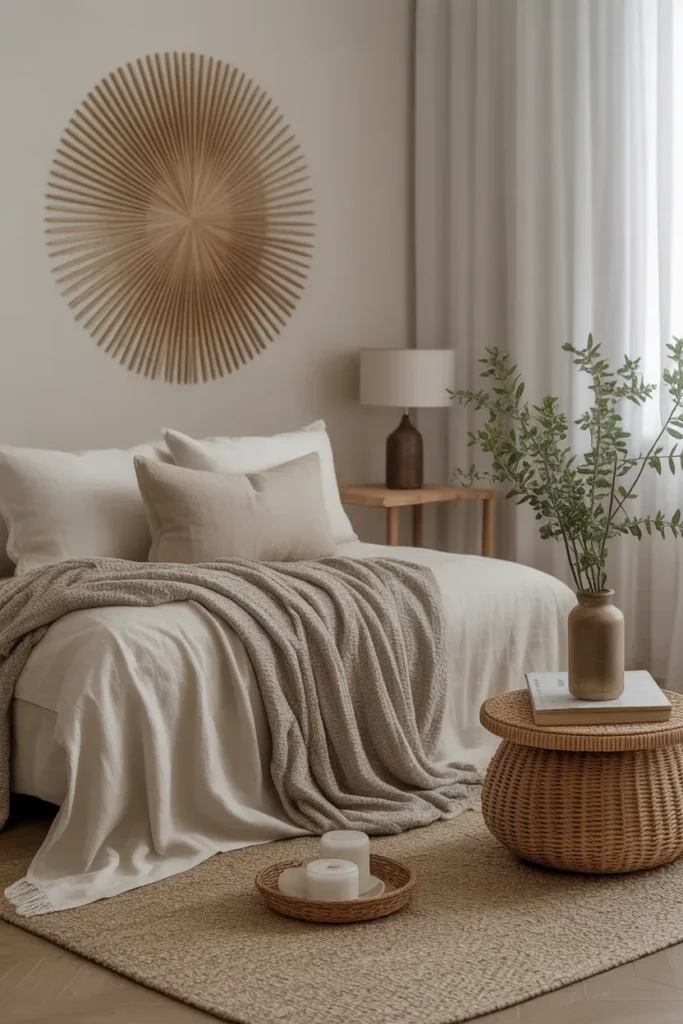
- Adds depth without bold colors
- Keeps the space visually interesting
- Enhances comfort and softness
- Prevents minimal design from feeling flat
- I’ve noticed texture is key in neutral spaces
Layering textures is what brings life into a neutral Japandi-inspired space. Without it, the room can feel too flat or unfinished. Combining materials like linen, wool, and cotton creates subtle variation that adds richness. In my experience, even the simplest room feels more complete when different textures are thoughtfully layered together.
This approach allows the space to stay calm while still feeling visually engaging. That’s why many designers recommend focusing on texture instead of color contrast. I’ve seen this work beautifully in real homes, where it creates a cozy yet minimal atmosphere. These layers not only improve the look but also make the space feel more comfortable and inviting for everyday living.
4. Minimal Coffee Tables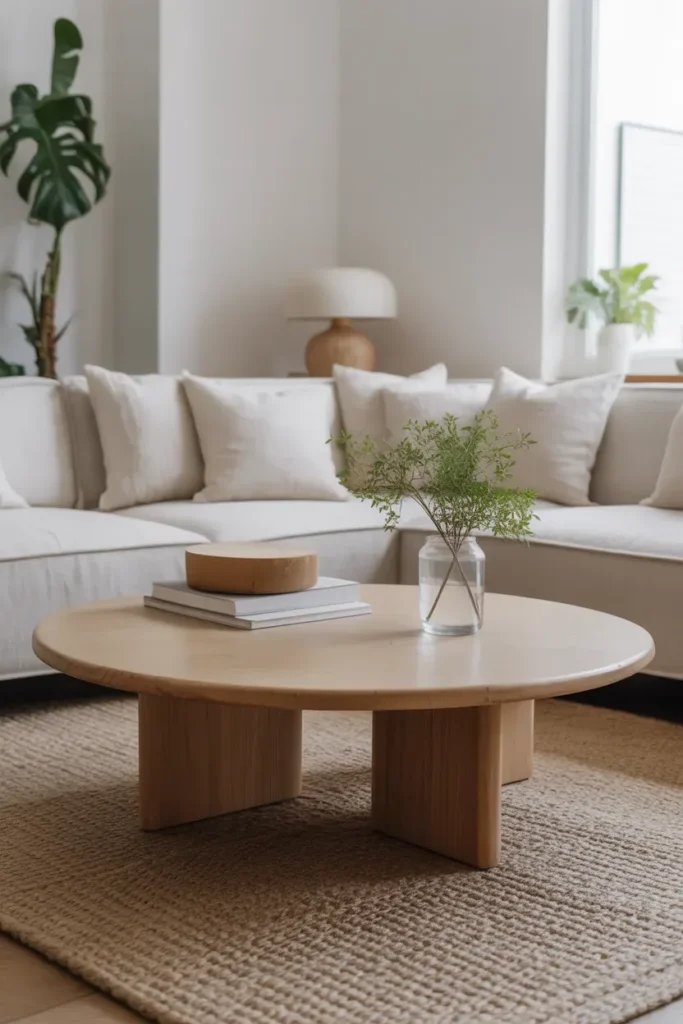
- Keeps the space clean and uncluttered
- Highlights natural materials and form
- Supports a calm and balanced layout
- Works well with low seating designs
- I’ve noticed simple tables feel more intentional
A minimal coffee table helps maintain the calm and uncluttered feel that defines this design style. With clean lines and natural materials, it becomes a subtle focal point without overwhelming the room. In real homes, this keeps surfaces tidy and easy to manage. I’ve noticed that when tables are kept simple, the entire space feels more open and thoughtfully arranged.
The beauty lies in restraint. Instead of overdecorating, a few carefully chosen items create a more refined look. That’s why many designers recommend limiting tabletop decor to essentials. I’ve seen this approach work especially well in smaller spaces, where too many objects can quickly feel chaotic. A minimalist table keeps the room grounded while enhancing both functionality and visual harmony.
5. Soft Linen Curtains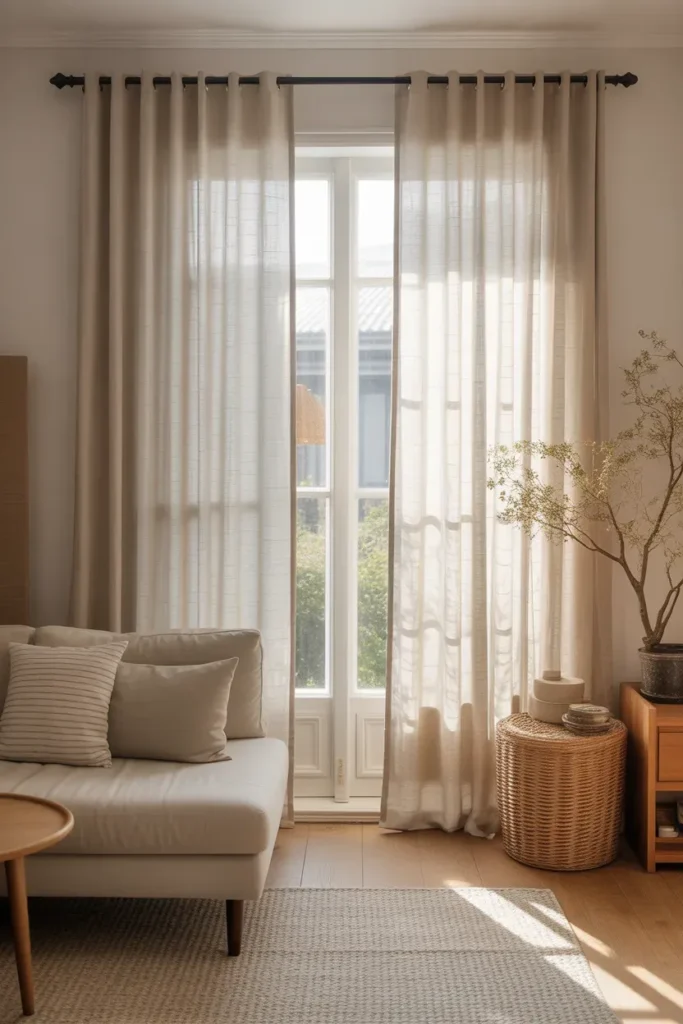
- Softens natural light beautifully
- Adds movement and texture
- Keeps the space airy and relaxed
- Enhances the neutral palette
- I’ve seen linen curtains change the whole mood
Soft linen curtains bring a gentle and calming presence to a Japandi-inspired living room. They filter light in a way that creates a warm and diffused glow throughout the space. In real homes, this helps soften harsh sunlight while maintaining brightness. I’ve noticed that rooms with linen curtains feel more relaxed and inviting, especially during daytime.
The natural texture of linen adds depth without overpowering the design. That’s why many designers recommend it for minimalist interiors. I’ve seen this work beautifully in spaces where simplicity is key, as the fabric introduces softness without clutter. This small detail enhances both the visual and functional aspects of the room, creating a peaceful and balanced environment.
6. Black Accent Contrast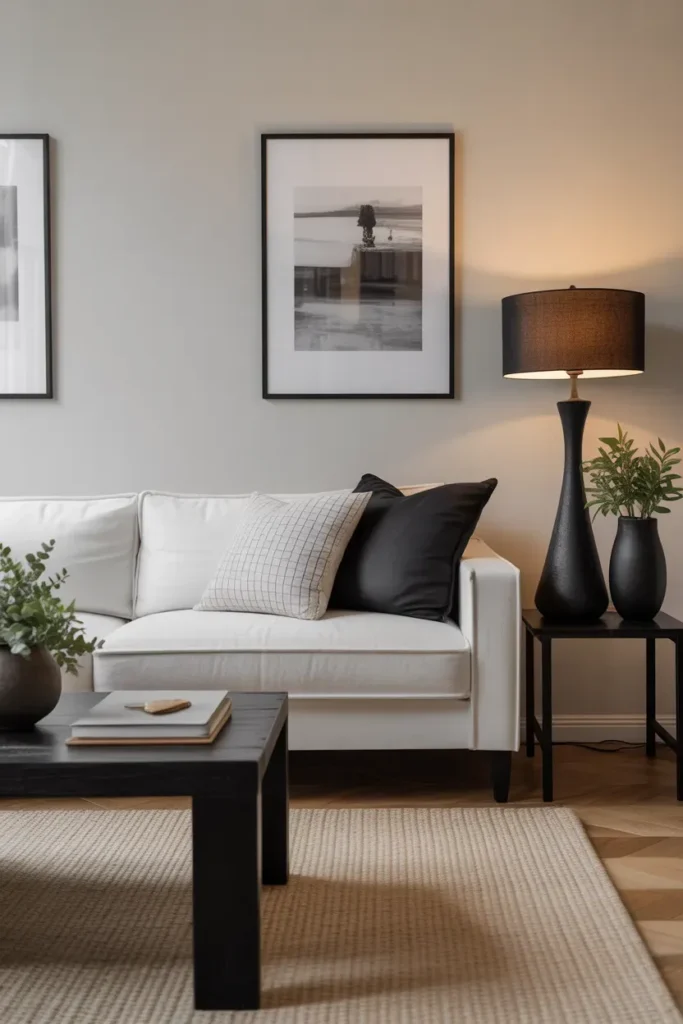
- Adds subtle contrast to neutral tones
- Defines shapes and structure in the room
- Keeps the design from feeling too soft
- Works well in small doses
- I’ve noticed contrast brings balance
Black accents introduce just enough contrast to keep a neutral living room visually interesting. Small touches like a lamp, frame, or decor piece help define the space without overwhelming it. In real homes, this creates a sense of structure that balances the softness of lighter tones. I’ve noticed that adding even a few dark elements makes the overall design feel more complete.
The key is to use black sparingly so it enhances rather than dominates. That’s why many designers recommend limiting it to a few focal points. I’ve seen this approach work especially well in Japandi-inspired spaces, where balance is essential. This subtle contrast adds depth and clarity, making the room feel more refined and thoughtfully styled.
7. Open Space Layout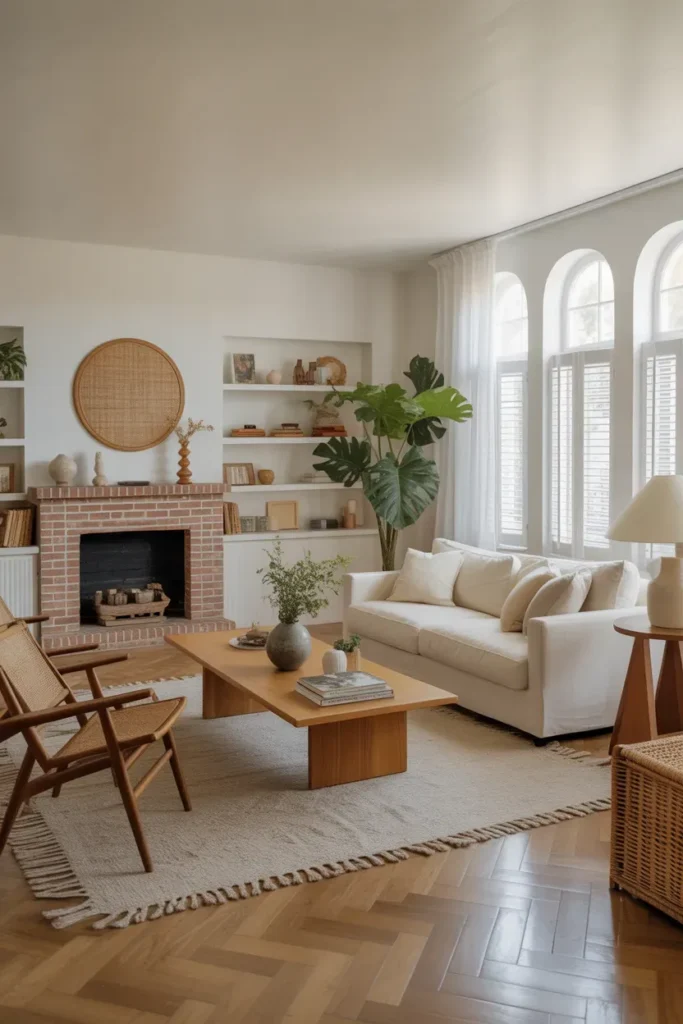
- Makes the room feel calm and breathable
- Improves movement and flow
- Reduces visual clutter instantly
- Highlights key furniture pieces
- I’ve noticed open layouts feel more peaceful
An open space layout is essential for creating a calm and balanced living room. By allowing furniture to breathe, the space feels lighter and more inviting. In real homes, this approach helps reduce visual stress and makes the room easier to move through. I’ve noticed that when furniture is spaced thoughtfully, each piece stands out more clearly, creating a more intentional and relaxed environment.
The key is to avoid filling every corner. That’s why many designers recommend leaving some areas empty to create visual balance. I’ve seen this work especially well in smaller living rooms where overcrowding can feel overwhelming. This simple shift improves both function and aesthetics, making the space feel more open, organized, and naturally harmonious.
8. Woven Natural Decor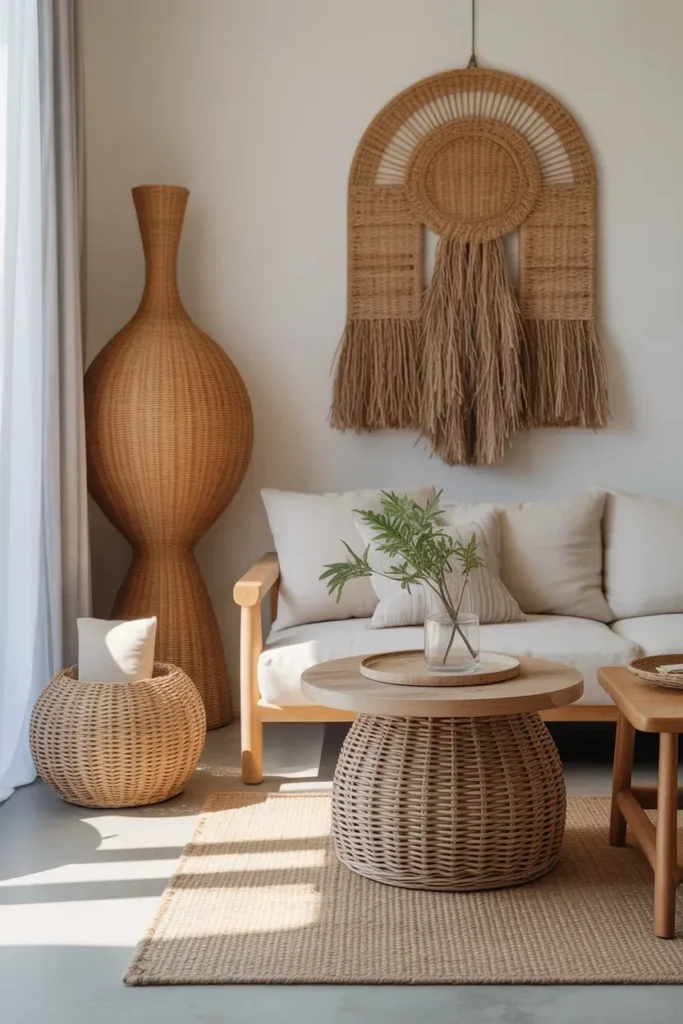
- Adds warmth and organic texture
- Balances clean lines with softness
- Brings a natural, earthy feel
- Works well in neutral interiors
- I’ve seen this soften minimal spaces
Woven decor introduces natural texture that enhances the calm aesthetic of a Japandi-style living room. Materials like rattan, jute, and wicker bring warmth without adding visual clutter. In real homes, these elements help soften the clean lines of minimalist furniture. I’ve noticed that even a few woven pieces can make the space feel more relaxed and welcoming.
The beauty of this approach lies in its simplicity. That’s why many designers recommend adding natural materials to create balance. I’ve seen this work beautifully in neutral spaces where texture becomes the main source of interest. This combination creates a layered look that feels organic, calm, and visually appealing without overwhelming the design.
9. Low Wooden Storage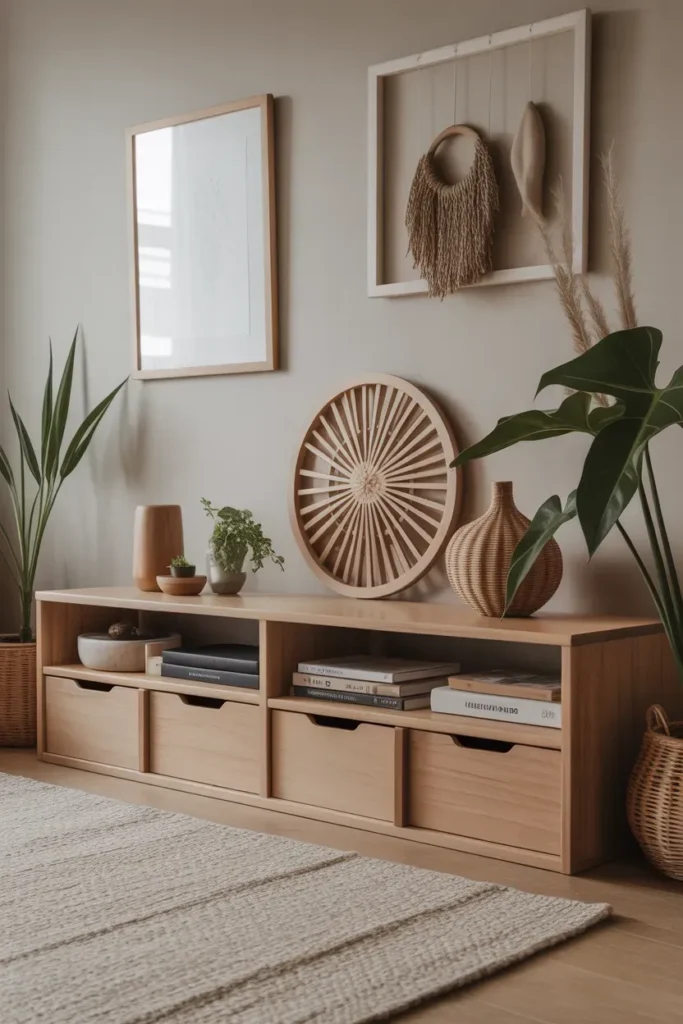
- Keeps storage functional yet minimal
- Maintains a low visual profile
- Blends seamlessly with the design
- Reduces clutter on visible surfaces
- I’ve noticed low storage feels more cohesive
Low wooden storage pieces are both practical and visually calming in a Japandi-inspired space. Their low height helps maintain an open and grounded feel while still offering essential storage. In real homes, this prevents clutter from building up on surfaces. I’ve noticed that when storage stays subtle, the room feels more cohesive and less crowded.
Choosing simple designs with clean lines ensures the furniture blends into the overall aesthetic. That’s why many designers recommend light wood finishes for a softer look. I’ve seen this approach work especially well in small living rooms, where bulky storage can feel overwhelming. This solution keeps the space organized while maintaining a calm and balanced atmosphere.
10. Paper Lantern Lighting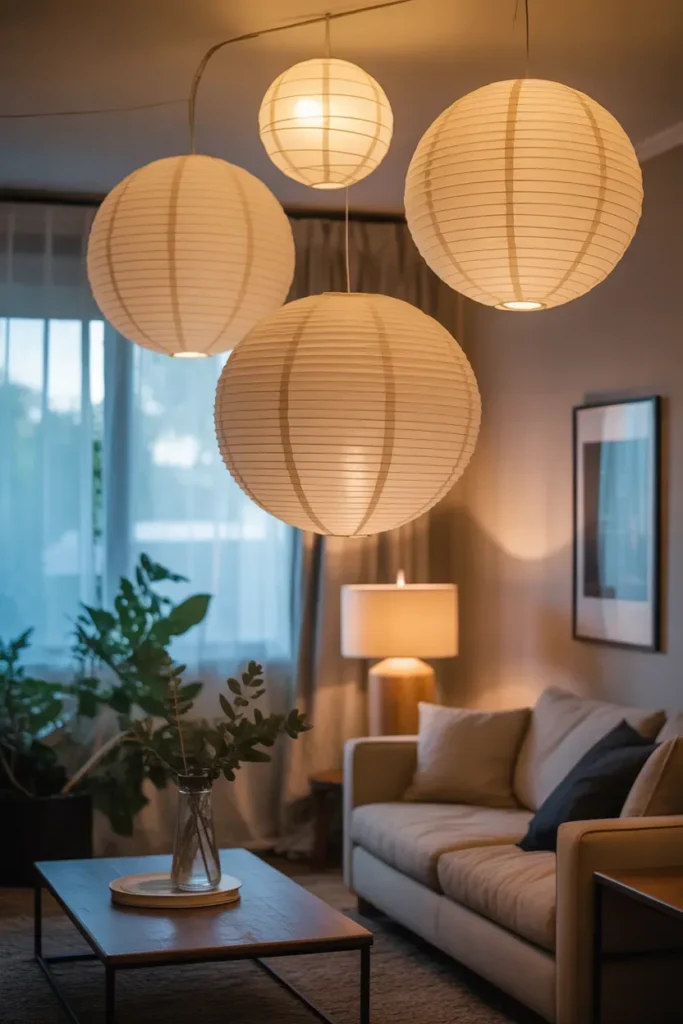
- Creates soft, diffused lighting
- Adds a gentle focal point
- Enhances calm and cozy mood
- Blends perfectly with minimal decor
- I’ve noticed it softens the entire room instantly
Paper lantern lighting brings a soft, calming glow that instantly changes the atmosphere of a living room. The diffused light removes harsh shadows and creates a warm, inviting feel. In real homes, this type of lighting often makes the space feel more relaxed and comfortable, especially in the evenings. I’ve noticed that even a single lantern can transform the mood without needing additional decor.
The simplicity of the design fits perfectly with a Japandi-inspired aesthetic. That’s why many designers recommend using soft lighting instead of bright overhead fixtures. I’ve seen this approach work beautifully in both small and large spaces, where it creates a peaceful and balanced environment. This subtle lighting choice enhances both comfort and visual harmony effortlessly.
11. Stone And Ceramic Decor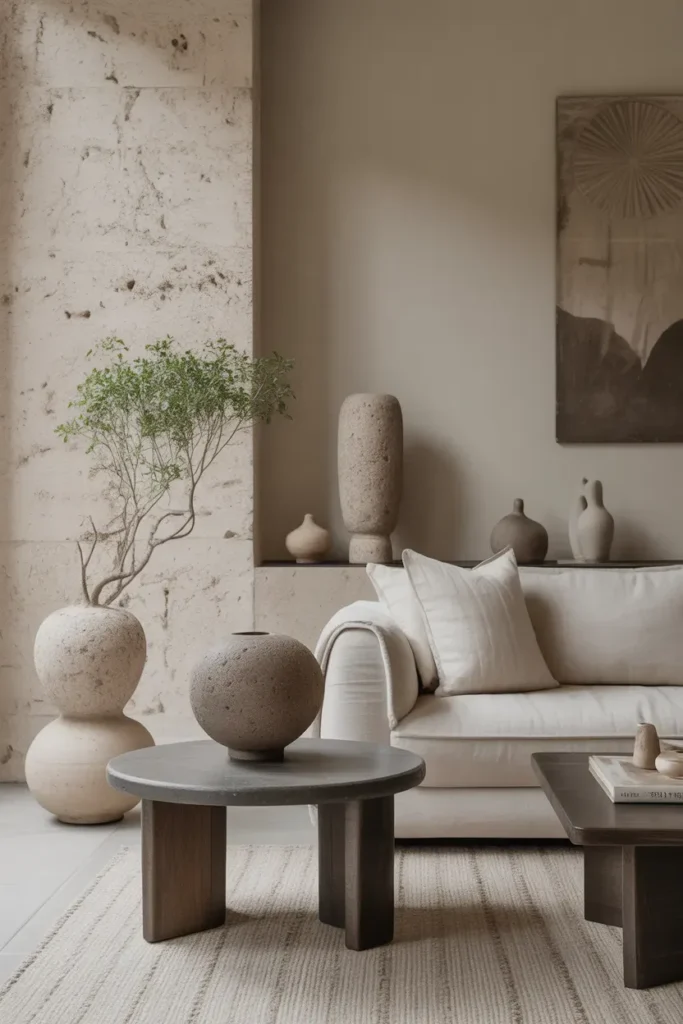
- Adds subtle texture and depth
- Enhances natural material palette
- Keeps decor minimal yet refined
- Brings an earthy, grounded feel
- I’ve seen this elevate simple spaces
Stone and ceramic decor pieces introduce a quiet sense of elegance into a Japandi-style living room. Their natural textures and matte finishes add depth without overpowering the design. In real homes, these materials help create a balanced and grounded atmosphere. I’ve noticed that even a few carefully placed pieces can make the space feel more refined and complete.
The key is to keep the selection minimal and intentional. That’s why many designers recommend focusing on quality over quantity. I’ve seen this approach work especially well in neutral interiors, where subtle details stand out more clearly. These materials bring a timeless feel that enhances the overall aesthetic while maintaining a calm and uncluttered look.
12. Neutral Art Displays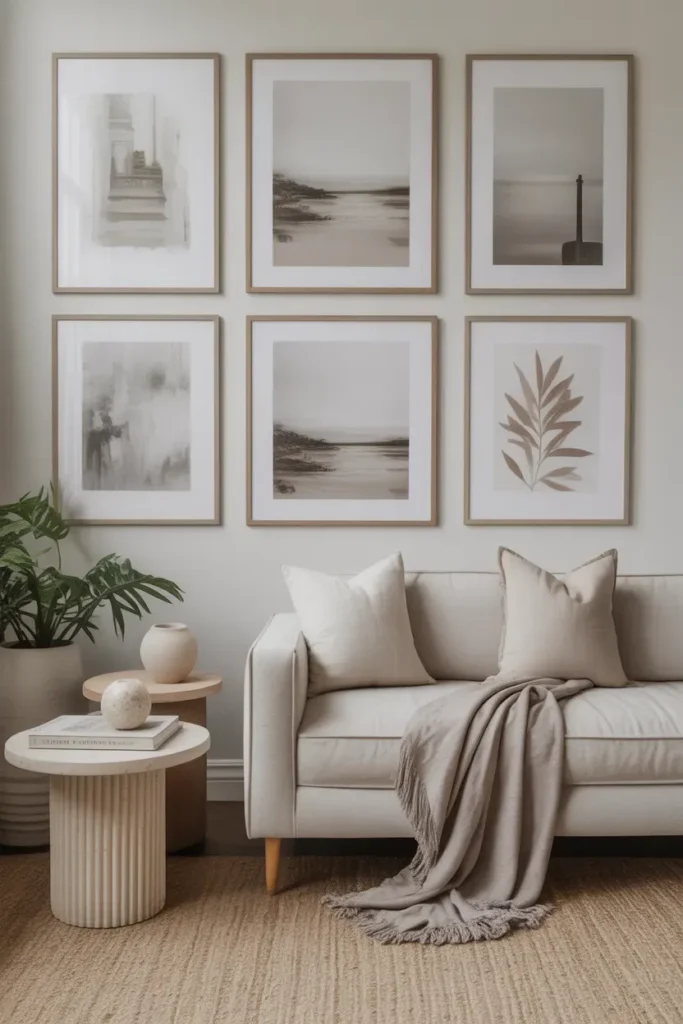
- Adds personality without overwhelming
- Keeps the space visually calm
- Enhances overall design cohesion
- Works well with minimal styling
- I’ve noticed simple art feels more elegant
Neutral art displays are a great way to add personality while keeping the room calm and balanced. Soft tones and simple compositions blend seamlessly into the overall design. In real homes, this helps avoid visual clutter while still adding interest. I’ve noticed that when artwork stays within the same palette, the space feels more cohesive and thoughtfully styled.
The placement of art is just as important as the piece itself. That’s why many designers recommend keeping spacing clean and balanced. I’ve seen this approach work beautifully in Japandi interiors, where simplicity is key. This subtle addition enhances the room without distracting from its overall harmony, creating a refined and peaceful environment.
13. Soft Earth Tone Palette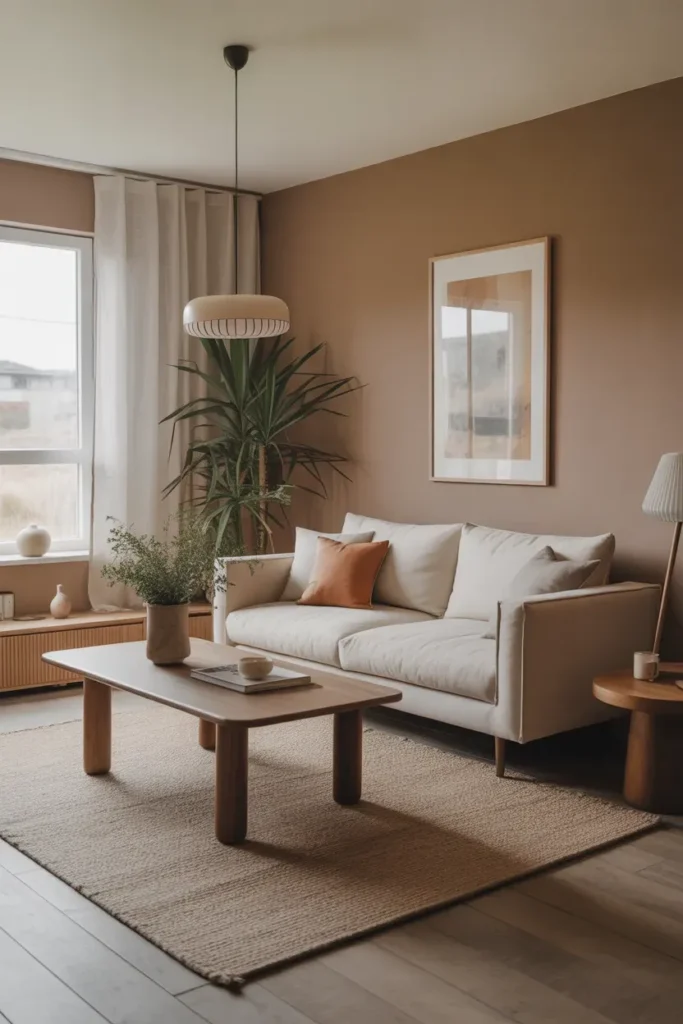
- Creates a calm and grounded atmosphere
- Blends warmth with minimal design
- Keeps the space cohesive and soft
- Works well in both small and large rooms
- I’ve noticed earth tones feel instantly relaxing
A soft earth tone palette is what gives a Japandi-inspired living room its signature calm and grounded feel. Using shades like beige, taupe, and muted brown creates a warm yet minimal environment. In real homes, this helps reduce visual noise and makes the space feel more relaxing. I’ve noticed that when colors stay within this range, the room naturally feels more balanced and easy to live in.
The beauty of this palette lies in its versatility. That’s why many designers recommend layering similar tones instead of introducing bold contrasts. I’ve seen this approach work beautifully in everyday spaces where comfort and simplicity matter. This color scheme enhances the overall design while maintaining a soft, cohesive look that feels timeless and inviting.
14. Minimal Floor Decor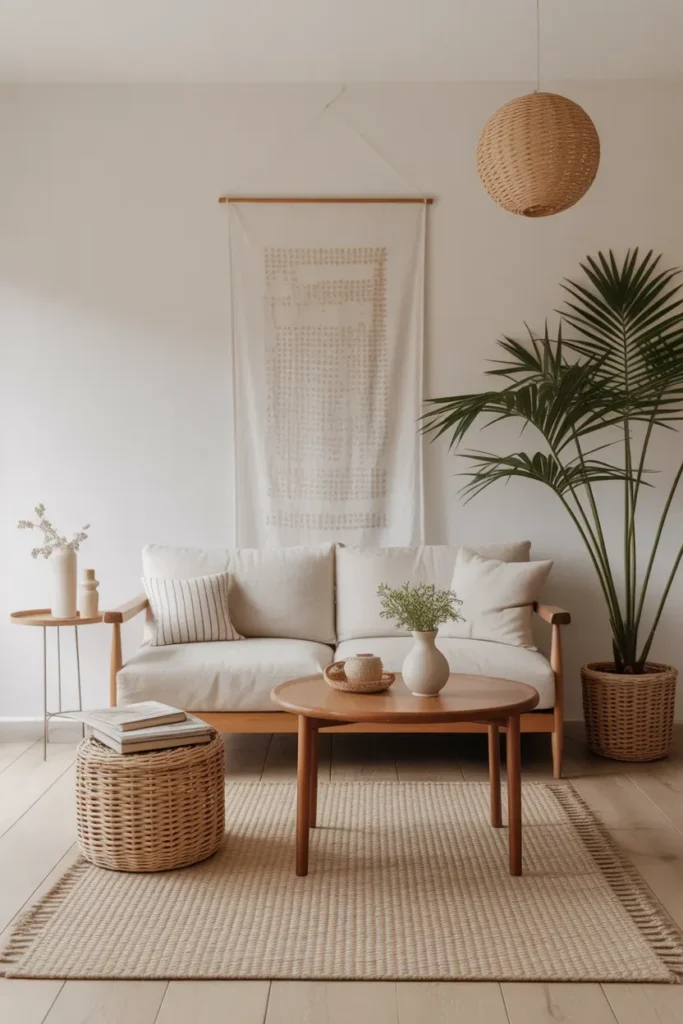
- Keeps the space uncluttered and open
- Highlights key design elements
- Enhances visual flow across the room
- Makes the layout feel intentional
- I’ve noticed less decor feels more refined
Minimal floor decor helps maintain the clean and open feel that defines a Japandi-style living room. By limiting items on the floor, the space feels more breathable and visually calm. In real homes, this approach prevents clutter from building up and keeps movement easy. I’ve noticed that when the floor area is kept simple, the entire room feels more organized and balanced.
Choosing one or two meaningful pieces creates a stronger visual impact than filling the space with multiple objects. That’s why many designers recommend focusing on intentional placement. I’ve seen this work especially well in smaller spaces where too much decor can feel overwhelming. This simple approach enhances clarity and creates a refined, peaceful environment.
15. Balanced Symmetry Layout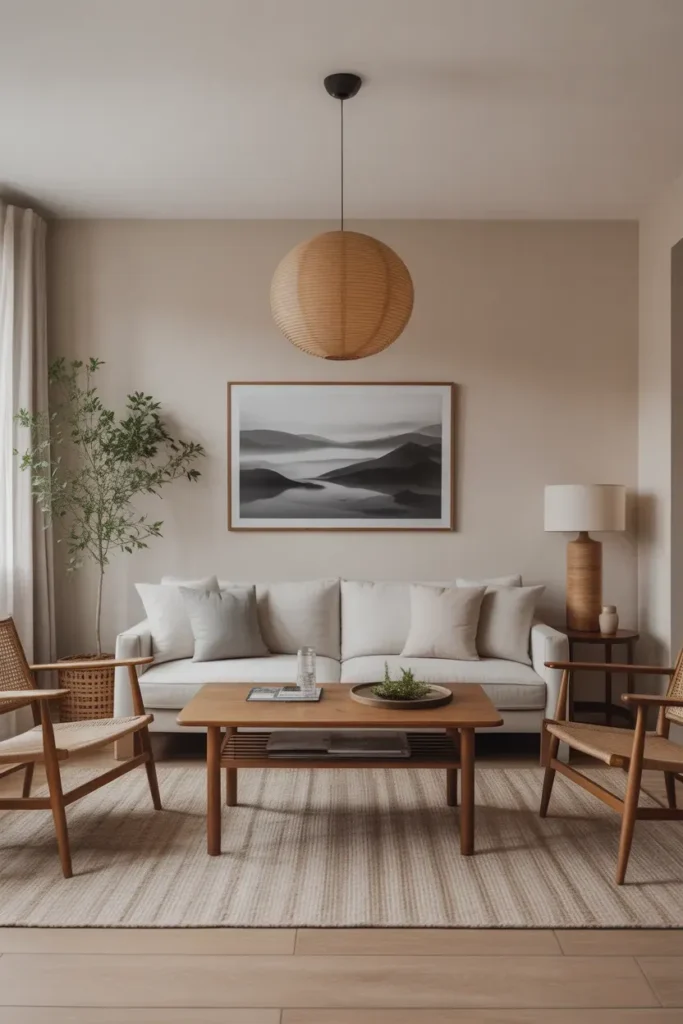
- Creates a sense of order and calm
- Makes the room feel more structured
- Enhances visual balance instantly
- Works well in both small and large layouts
- I’ve noticed symmetry feels naturally pleasing
A balanced symmetry layout is a simple way to bring harmony into a Japandi-inspired living room. Arranging furniture evenly around a focal point creates a sense of order that feels calming and intentional. In real homes, this approach helps guide the eye and makes the space easier to understand. I’ve noticed that even small symmetrical adjustments can instantly improve how a room feels.
The key is to keep the arrangement clean and not overly rigid. That’s why many designers recommend soft symmetry rather than perfect matching. I’ve seen this work beautifully in everyday spaces where comfort is just as important as design. This method enhances both function and aesthetics, creating a room that feels balanced, peaceful, and effortlessly styled.
Conclusion
Creating a peaceful and stylish home doesn’t require a full redesign—just the right balance of simple, thoughtful choices. These Japandi Transitional Living Room ideas show how small changes can bring calm, warmth, and clarity into your space.
I’ve seen how even one or two updates can completely shift the atmosphere of a room. Start with what feels right for your space and build from there. Don’t forget to save this post on Pinterest, try your favorite ideas at home, and share it with others looking to create a more relaxed and beautiful living space.