16 Creative Living Room Artwork Ideas for Stylish Interiors
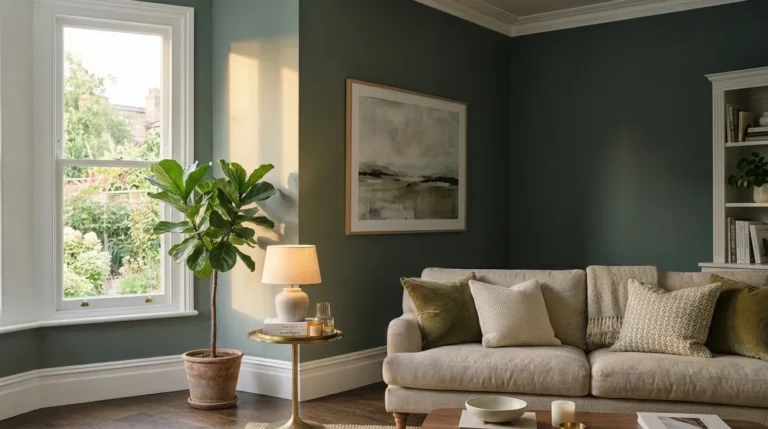
Living room artwork is any visual element — painting, print, photograph, textile, sculpture, or mixed-media piece — intentionally chosen and placed to anchor, energize, or define a living space’s aesthetic identity. Here are 16 ideas for using artwork in your living room in ways that feel genuinely considered, not just filled-in.
Art is where a living room stops performing and starts meaning something. The right piece doesn’t decorate a wall — it changes the room’s emotional register entirely, shifts how the furniture reads, and tells anyone who walks in something true about the people who live there. Done well, living room artwork feels inevitable, like it could never have been anywhere else. Here are 16 ideas worth saving — and stealing.
Why Living Room Artwork Works So Well
What is living room artwork, really? Living room artwork sits at the intersection of interior design and personal expression — it is the category of home decor most resistant to pure trend because the best choices are always partly autobiographical. As a design discipline, art placement draws from principles established by museum curators (sightline, scale, lighting, negative space) and adapted for domestic use by interior designers who understand that a living room is not a gallery. The distinction matters: gallery art is meant to be contemplated in isolation; living room art is meant to coexist with furniture, conversation, and daily life, which changes every rule about how it should be chosen and hung.
Core materials and colors. The material vocabulary of living room artwork is broader than most homeowners realize: oil and acrylic canvas, watercolor and gouache on paper, photography on archival matte or metallic paper, textile art in linen and wool, ceramic wall pieces, hand-cast plaster relief panels, reclaimed wood assemblages, and printmaking in etching, lithograph, and screen print. Frame materials run from slim raw brass and blackened steel to wide natural oak, painted white wood, and unframed canvas with gallery-wrapped edges. The most versatile artwork palettes for living rooms lean toward warm neutrals — raw linen, warm charcoal, dusty terracotta, sage, ochre — because they bridge furniture upholstery and wall color without competing with either.
Why it’s trending now. Several converging forces have elevated artwork’s priority in the living room. The shift to more time at home post-pandemic made people more attuned to the emotional quality of their interior spaces — and art is the element most directly connected to emotional resonance. Simultaneously, accessible art platforms (Saatchi Art, Etsy, Society6, local art fairs) have made original and high-quality artwork available at price points that were previously impossible, removing the perception that real art requires gallery-level budgets. Pinterest data consistently shows that gallery wall and statement art searches peak in January and September — the two moments when people most actively reconsider their living spaces.
Can small living rooms use statement artwork? Not only can they — they often should. A single large-format piece (36×48 inches or above) on the primary wall of a small living room creates a focal point that makes the space feel intentionally designed rather than space-constrained. The common small-room mistake is choosing artwork that is too small, which leaves the wall feeling bare even when something hangs on it. In a small room, one confident piece almost always outperforms a cluster of small ones.
Style at a Glance
| Element | Detail |
|---|---|
| Philosophy | Art anchors a room’s identity — choose for feeling, not just color |
| Key Materials | Canvas, archival paper, linen textile, brass frame, raw oak, plaster |
| Key Colors | Warm charcoal, dusty terracotta, ochre, sage, raw linen, warm cream |
16 Creative Living Room Artwork Ideas for Stylish Interiors
1. Oversized Abstract Canvas Above the Sofa
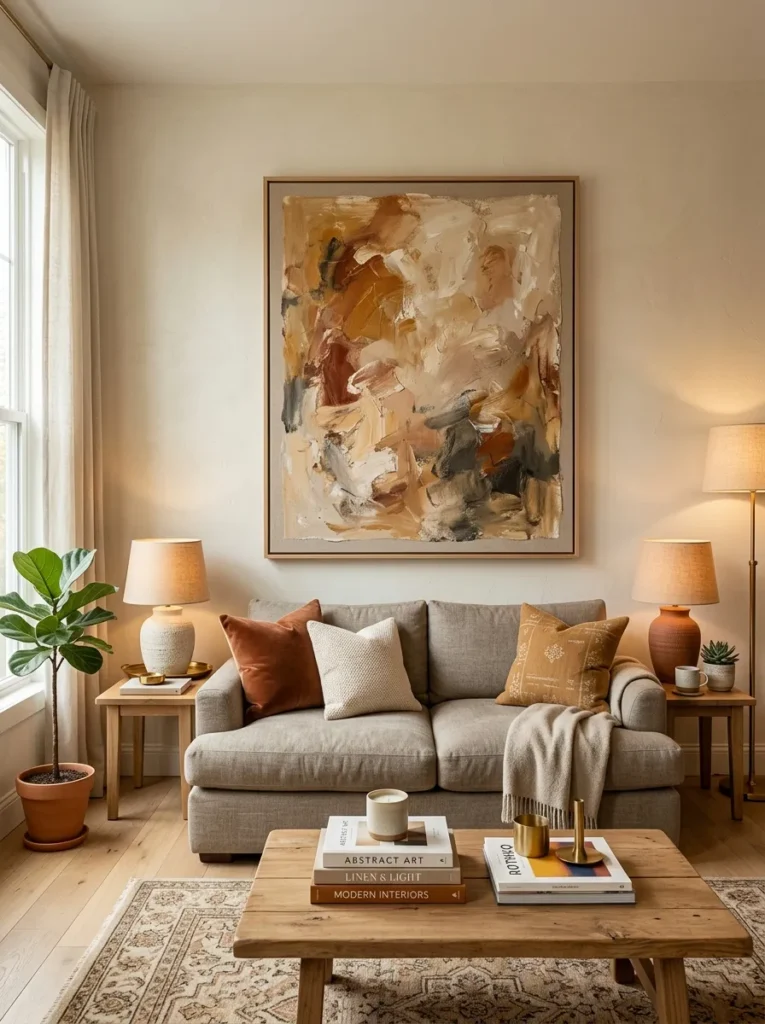
Vibe: An oversized abstract above the sofa feels anchoring — the room organizes itself around it without being asked.
Why it works: Scale is the most misunderstood variable in living room artwork placement, and above the sofa is where under-scaling is most common and most damaging. A canvas that spans at least two-thirds of the sofa’s width — for a standard 84-inch sofa, that means a minimum of 56 inches wide — creates a visual mass that properly anchors the seating zone. The design principle at work is proportional relationship: the artwork and the sofa should read as a composed unit, not as separate objects that happen to share a wall. Abstract work in warm ochre and sienna tones also performs a specific function: it introduces color without committing to a literal subject, allowing the room’s other elements to respond to it freely.
How to get it: Measure your sofa width and multiply by 0.67 to find your minimum canvas width. Hang so the center of the canvas sits at 57 inches from the floor — the standard museum hanging height that works for seated and standing viewing simultaneously. Gap between the top of the sofa back and the bottom of the canvas frame: 6–8 inches, never more than 10.
Quick Win: A large-format abstract print on canvas (not framed paper) from Society6 or Etsy in the 36×48-inch range costs $80–$160 and immediately establishes the proportional anchor above any sofa — start here before investing in original work.
Shop The Look
| Product |
|---|
| Large abstract canvas print ochre burnt sienna 48×60 |
| Slim natural oak picture frame large format |
| Deep grey linen sofa throw pillow cover set |
| Ceramic table lamp warm white drum shade pair |
| Low profile indoor fiddle leaf fig tree potted |
Also view: 14 Wooden Wall Decor Ideas to Transform Your Home
2. Gallery Wall with Matching Brass Frames
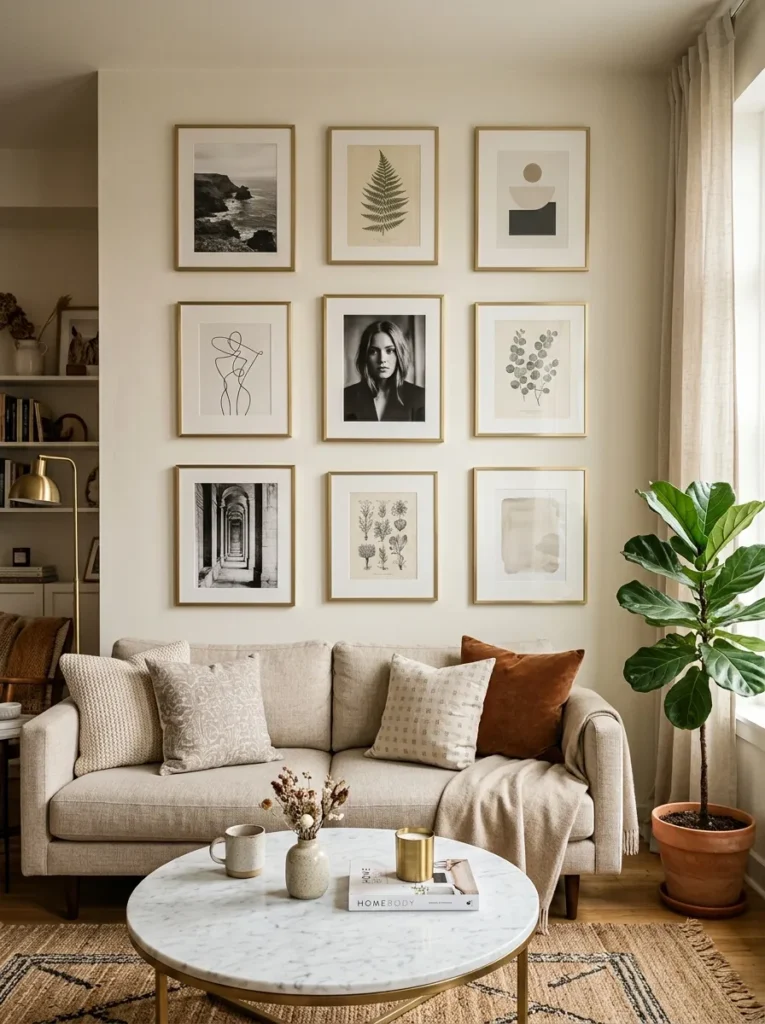
Vibe: A matched-frame gallery wall feels curated — the cohesion of the frames gives the collection a single voice.
Why it works: The gallery wall’s most common failure point is mixed framing — a combination of black, white, gold, and wood frames that creates visual noise before any of the art can register. Committing to a single frame finish — brushed brass is the most versatile current choice — unifies the entire collection into a coherent composition regardless of how varied the artwork inside the frames is. The design principle is visual system: the frames create the system, and the art populates it. Equal spacing (3 inches between all frames, measured consistently) is the second discipline that separates a gallery wall that reads as designed from one that reads as accumulated. Brass frames also age gracefully, developing a gentle patina that adds character rather than showing wear.
How to get it: Lay all frames on the floor first and arrange until the grouping feels balanced — typically with the largest piece at center and smaller pieces radiating outward, or a strict grid for a more architectural effect. Photograph the floor arrangement, then use the photo as reference for the wall. Use a laser level rather than a tape measure for horizontal alignment — it saves significant time and eliminates the most common hanging error.
Shop The Look
| Product |
|---|
| Slim brushed brass picture frame set 5×7 8×10 11×14 |
| White mat board pre-cut assorted sizes |
| Laser level wall hanging tool self leveling |
| Picture hanging strip damage free set of 12 |
| Botanical art print set of 3 archival quality |
Also view: 17 Gold Wall Mirror Ideas for Elegant Homes
3. Textile Wall Art in Woven Linen and Wool
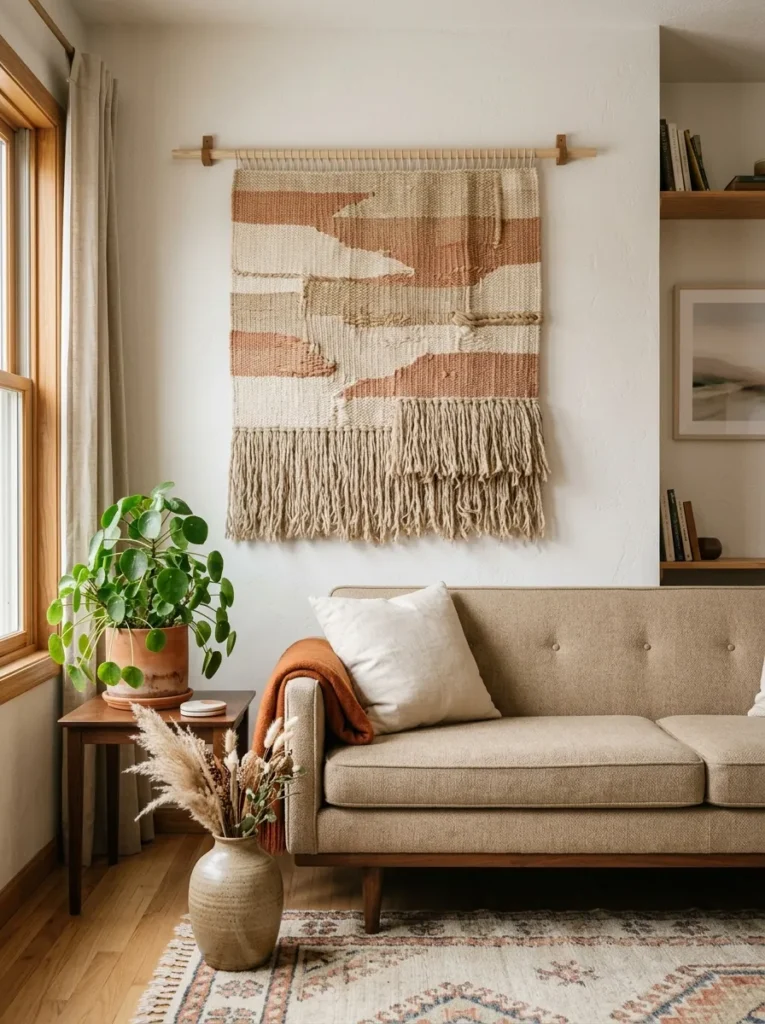
Vibe: A woven textile on the wall feels warm in a way no canvas can — texture that reads differently in every quality of light.
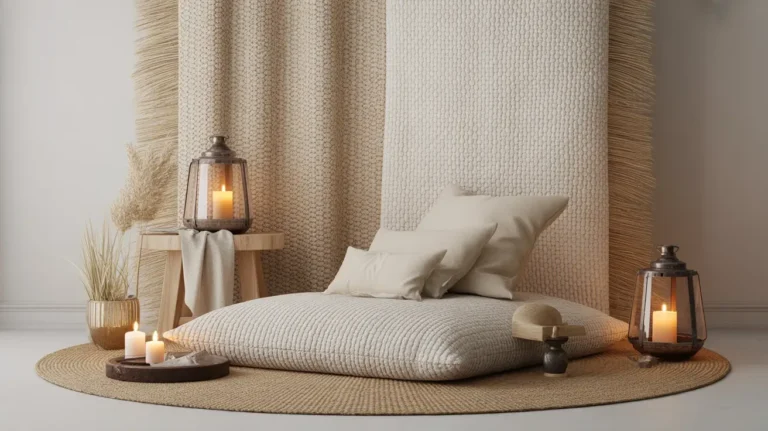
Why it works: Textile wall art introduces a material dimension to living room artwork that framed prints and canvases cannot achieve: genuine tactile texture that casts its own shadows, absorbs sound, and changes appearance across different light conditions and times of day. This is the design principle of material contrast — a woven linen and wool piece on a smooth plaster wall creates a surface tension between materials that makes both more interesting. Natural fringe at the base adds movement and softness that further distinguishes textile art from its framed counterparts. For rooms that already have significant hard surfaces (concrete floors, glass tables, painted walls), a textile piece provides essential warmth and acoustic dampening alongside its visual contribution.
How to get it: Source hand-woven textile art from Etsy’s maker community — original woven wall hangings in natural linen, wool, and cotton range from $80 to $400 depending on size and complexity. Hang using a slim ash, walnut, or brass dowel rod in the sleeve or loop that most weavers build into the top of their pieces. Position at the same 57-inch center-height standard as framed art.
Shop The Look
| Product |
|---|
| Woven wall hanging linen wool natural large |
| Slim ash wood dowel rod 36 inch wall hanging |
| Ceramic floor vase tall white matte |
| Woven wool throw blanket terracotta cream |
| Trailing indoor plant in woven pot cover |
4. Black and White Photography Triptych
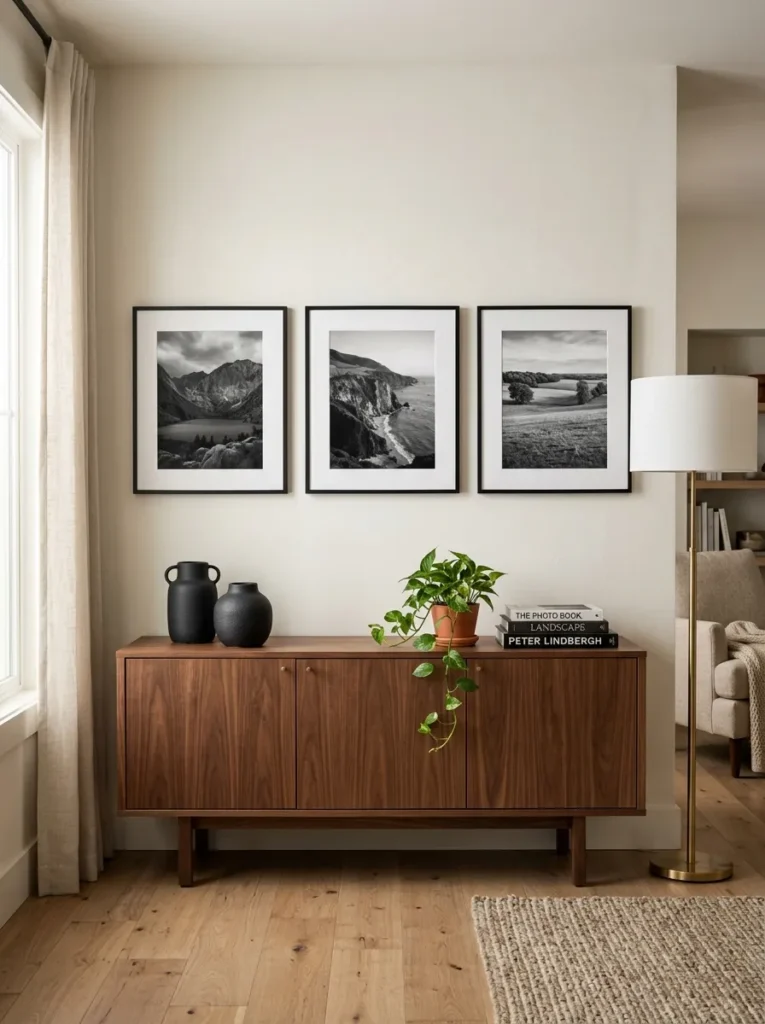
Vibe: A black and white triptych feels calm — the restraint of a single palette applied across three images creates profound visual quiet.
Why it works: The triptych format — three works of identical size and framing presented as a horizontal unit — is one of the most architecturally satisfying living room artwork arrangements because it mirrors the structural logic of a building’s proportional system: repetition with variation. Three landscape photographs in consistent black and white tonal register read as a coherent statement rather than three separate images, which is the key distinction between a triptych and a random grouping of three similar pieces. The generous white mat (2.5–3 inches on all sides) is non-negotiable here — it gives each photograph visual breathing room and unifies the three pieces into a composed horizontal band.
How to get it: Print three images from your own photography archive at 16×20 inches on archival matte paper, or commission prints from a fine art photography platform such as Artifact Uprising or Mpix. Frame identically in slim matte black or natural wood frames. Hang with 3 inches of spacing between frames, all centered at 57 inches from the floor.
Quick Win: Three identically sized and framed black and white prints from a personal photography collection printed at a local print shop (approximately $15–$25 per print) produce a triptych that reads as gallery-quality for under $100 total — personal imagery at scale is consistently more interesting than purchased generic photography.
Shop The Look
| Product |
|---|
| Slim matte black picture frame 16×20 set of 3 |
| White mat board pre-cut 16×20 opening 2.5 inch border |
| Archival matte photo paper 16×20 for printing |
| Matte black ceramic vessel set of 2 |
| Monograph photography hardcover book set |
5. Oversized Vintage-Style Map as Statement Wall Art
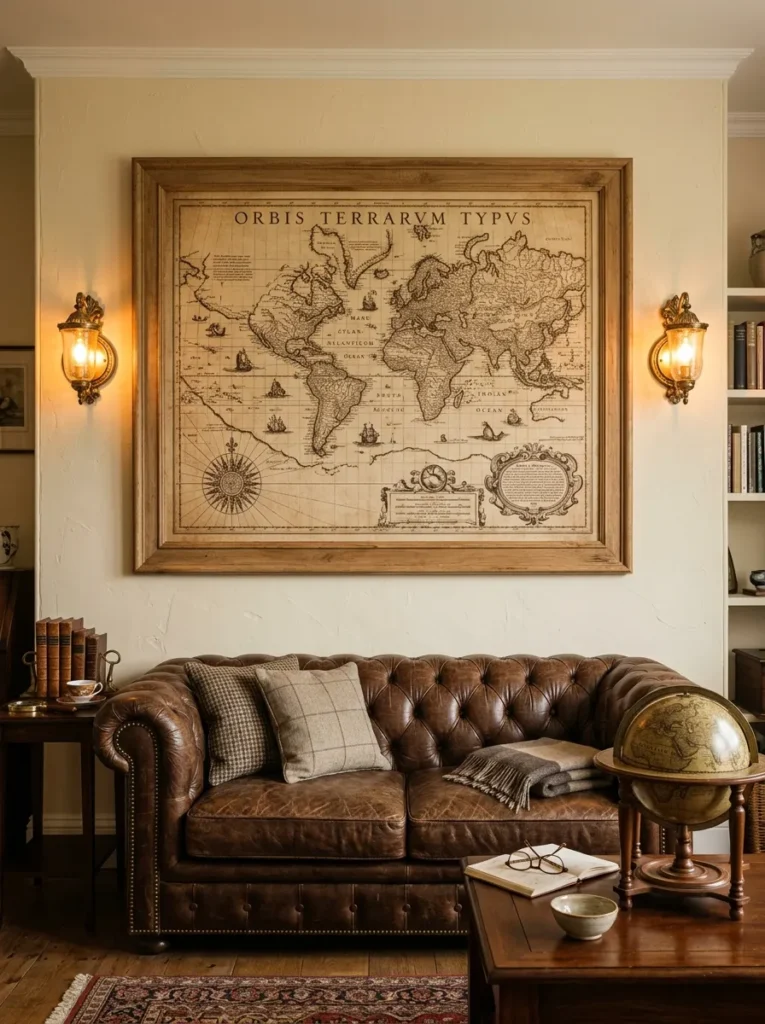
Vibe: A large vintage map feels intellectual — a room that suggests its inhabitants are curious about the world.
Why it works: Cartographic art occupies a unique position in the living room artwork spectrum: it is simultaneously decorative and informational, personal (if the map references a meaningful place) and universal, historical and contemporary in its appeal. A map at statement scale — 40 inches wide and above — carries the visual weight of abstract art while retaining a legibility and narrative specificity that pure abstraction lacks. The design principle at work is conversational anchor: a large, detailed map becomes the piece that every guest moves toward for closer examination, making it one of the most socially active artwork choices for a living room. The aged sepia palette integrates naturally with warm wood tones and leather furniture.
How to get it: Source large-format vintage map prints from David Rumsey Map Collection (free high-resolution downloads), the Library of Congress digital archive, or Etsy print sellers who specialize in cartographic reproductions. Print at 40×50 inches or larger on archival matte paper through a large-format print service. Frame in a wide (2.5–3-inch) natural oak or walnut frame for appropriate visual weight.
Shop The Look
| Product |
|---|
| Large format vintage map print antique sepia |
| Wide natural oak picture frame 40×50 inch |
| Decorative globe brass accent desk or table |
| Wall sconce set of 2 warm brass finish |
| Leather-bound decorative journal set hardcover |
6. Ceramic Wall Plates in Artisan Arrangement
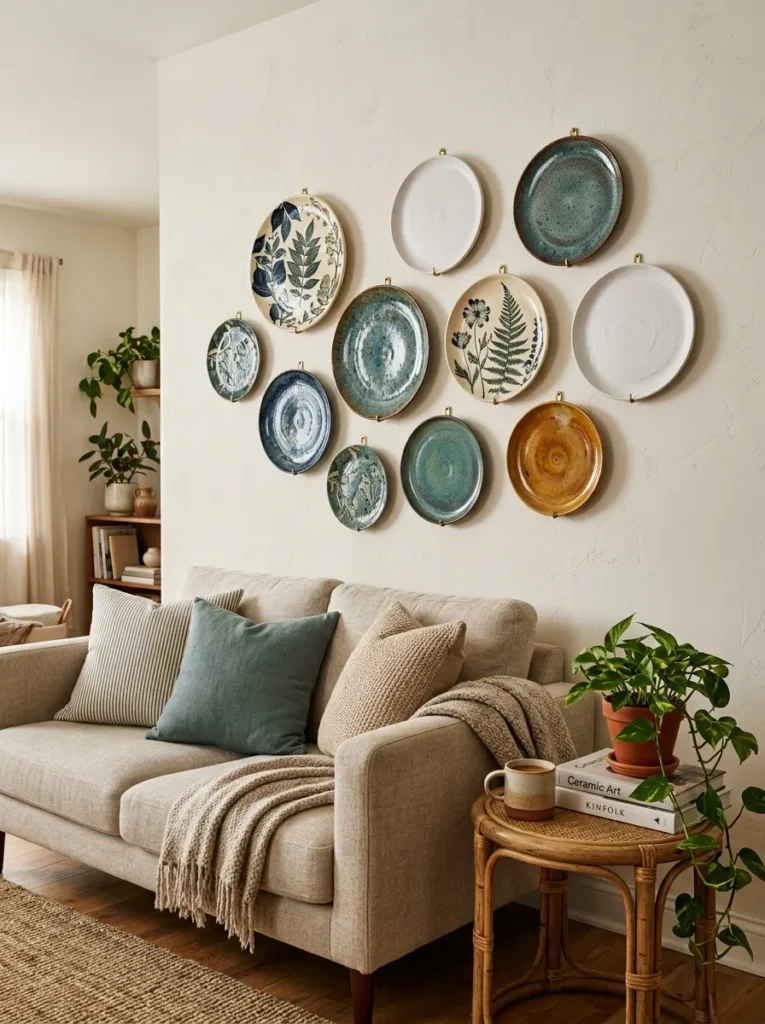
Vibe: Ceramic wall plates feel artisanal — three-dimensional art that catches light differently at every hour of the day.
Why it works: Ceramic wall plates bring a sculptural dimension to living room artwork that flat framed pieces cannot — their shallow three-dimensionality creates actual shadows on the wall surface, which shift with changing light throughout the day, making the arrangement genuinely dynamic. The design principle here is organic clustering: unlike the rigid grid of a matching-frame gallery wall, a ceramic plate arrangement follows an organic grouping logic where circles of different diameters create their own visual rhythm without needing imposed structure. The key is scale variation — mixing 6-inch, 10-inch, and 14-inch plates in a single arrangement prevents the cluster from reading as a matched set, which would undermine the handcrafted quality that makes ceramic wall art compelling.
How to get it: Collect artisan ceramic plates from Etsy makers, local ceramic studios, or pottery markets — handmade pieces with reactive glazes and botanical hand-painting in the $25–$80 per plate range. Arrange on the floor first in an organic cluster before marking the wall. Use plate hangers or Command adhesive plate hangers (rated for the plate’s weight) for damage-free installation.
Quick Win: Three ceramic plates in graduated sizes (6, 10, and 14 inches) from a local pottery studio or Etsy, arranged in a simple triangle cluster, costs $60–$120 and creates a three-dimensional wall moment more interesting than most framed prints at twice the price.
Shop The Look
| Product |
|---|
| Ceramic wall plate hanger adhesive damage free |
| Artisan reactive glaze ceramic plate set |
| Hand-painted botanical ceramic plate 10 inch |
| Matte white ceramic plate wall display 8 inch |
| Linen throw pillow cover neutral set of 2 |
7. Plaster Relief Panel as Sculptural Wall Feature
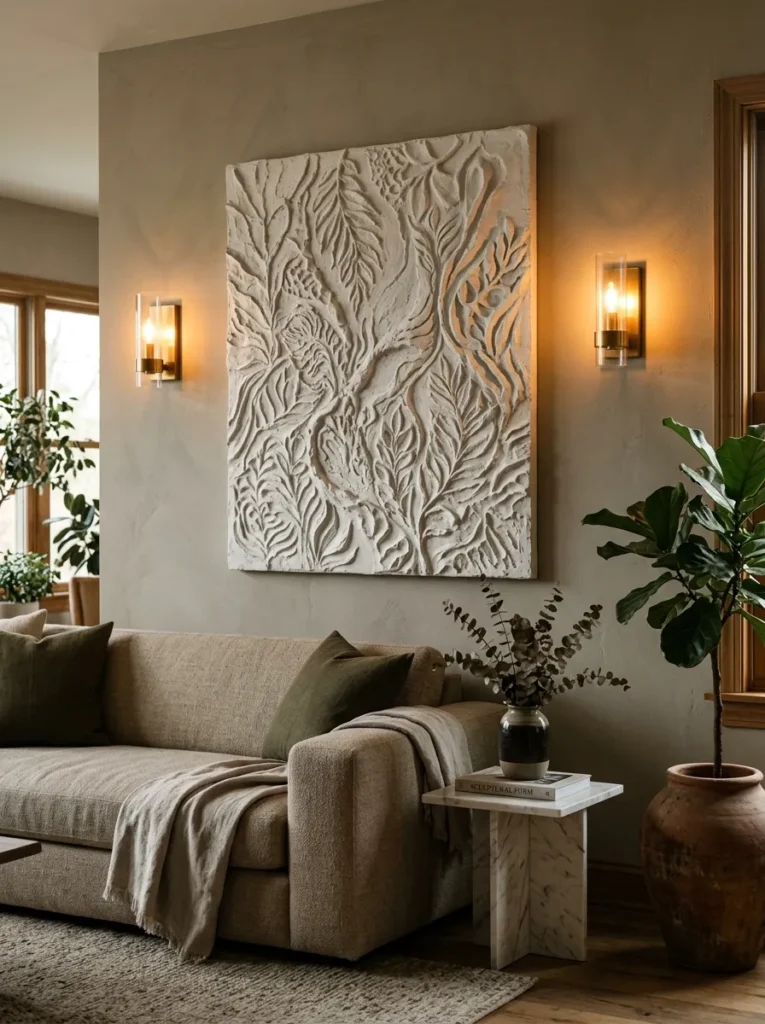
Vibe: A plaster relief panel feels sculptural — wall art that belongs to architecture as much as decoration.
Why it works: Plaster relief panels are the living room artwork choice that most consistently surprises designers with its impact-to-cost ratio. Because they are monochromatic — raw plaster white or a single painted tone — they read as purely sculptural rather than decorative, which elevates their perceived value dramatically. The design principle is directional light activation: a plaster relief piece is entirely transformed by side lighting (wall sconces or a directed track light), which rakes across the raised surface and creates a constantly shifting pattern of shadows that flat artwork cannot produce. The same panel in flat overhead lighting reads as modest; under directional side lighting, it reads as architecture.
How to get it: Source hand-cast plaster panels from Etsy artisans or small-batch art studios specializing in sculptural wall art — prices range from $120 to $400 for pieces in the 18×24 to 24×36-inch range. Mount using heavy-duty picture hanging hardware rated for the piece’s weight (plaster panels typically weigh 8–15 lbs). Position wall sconces or a directional picture light 8–12 inches above the panel to activate the relief texture with raking light.
Shop The Look
| Product |
|---|
| Hand cast plaster wall panel botanical relief |
| Wall sconce pair warm brass adjustable arm |
| Picture light LED warm brass finish |
| Heavy duty picture hanging hook set |
| Low profile linen sofa cushion cover replacement |
8. Leaning Oversized Print for Relaxed, Layered Look
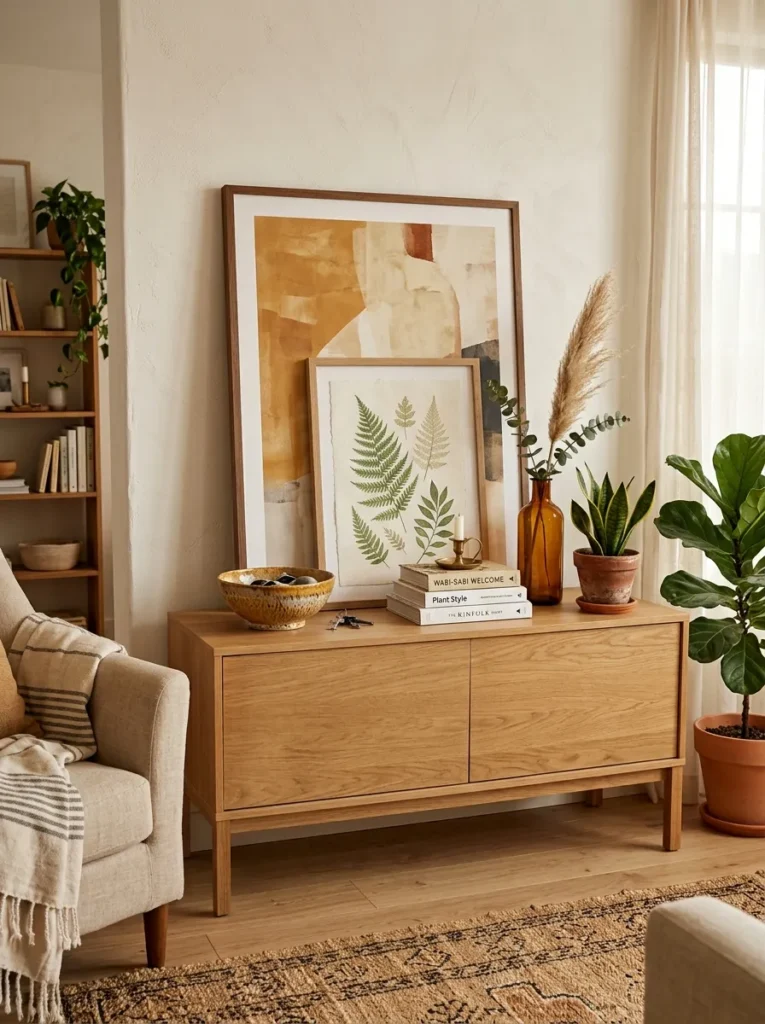
Vibe: Leaning art feels relaxed — a room that holds its aesthetic lightly, as if the arrangement might shift tomorrow.
Why it works: Leaning artwork rather than hanging it is the styling move that most directly signals a home that is comfortable with its own taste — it suggests the artwork arrived because it was loved, not because a wall needed filling. The design principle is layered depth: when a large piece leans against the wall and a smaller piece leans in front of it, the two pieces create a physical depth that hung art cannot, pulling the wall forward into the room’s three-dimensional space. This technique works best above a credenza, console table, or low dresser that creates a display surface in front of the leaning pieces — without that foreground surface, leaning art reads as art waiting to be hung rather than art intentionally placed.
How to get it: Choose a primary leaning piece large enough to extend above the furniture below by at least 12 inches — for a standard 30-inch-high credenza, that means the print should reach at least 42 inches from the floor. Add a secondary piece at half to two-thirds the scale of the primary, leaned 4–6 inches in front of it and slightly offset to one side. Style the credenza surface with three to five objects that visually bridge between the furniture and the art above.
Shop The Look
| Product |
|---|
| Large format abstract art print canvas 36×48 |
| Medium botanical art print framed 18×24 |
| Natural oak credenza mid century style |
| Ceramic decorative bowl large neutral |
| Tall slim ceramic vase for dried stem |
9. Monochromatic Art Wall in Tone-on-Tone Neutrals
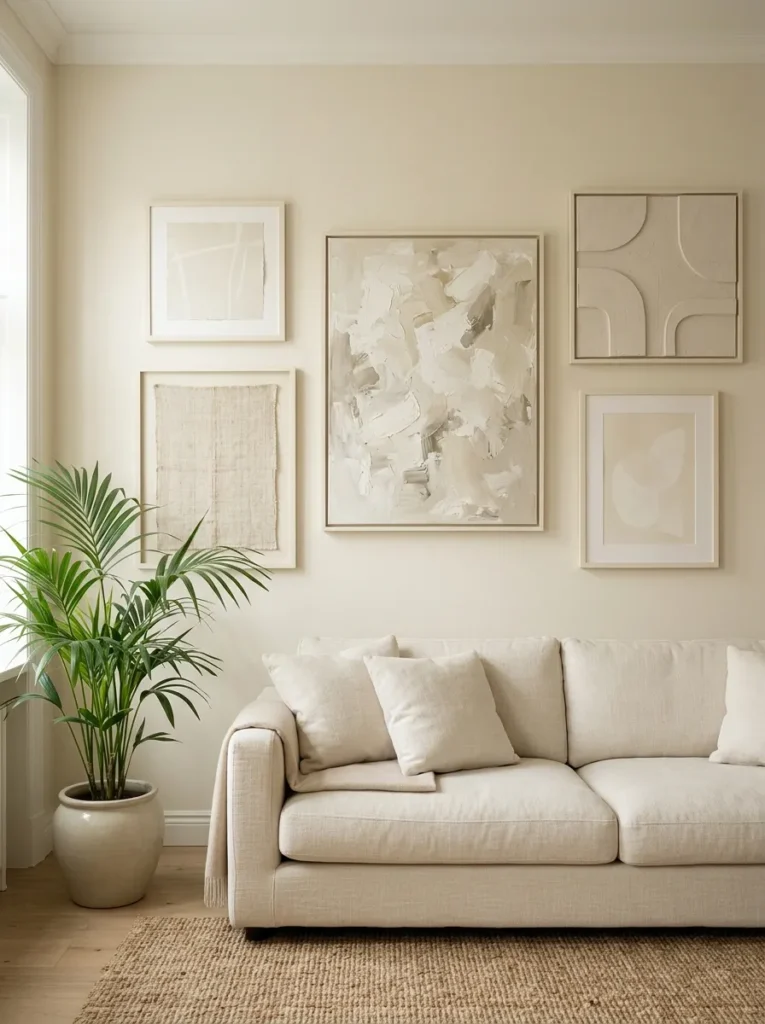
Vibe: A monochromatic art wall feels serene — sophistication that reveals itself slowly, through texture rather than color.
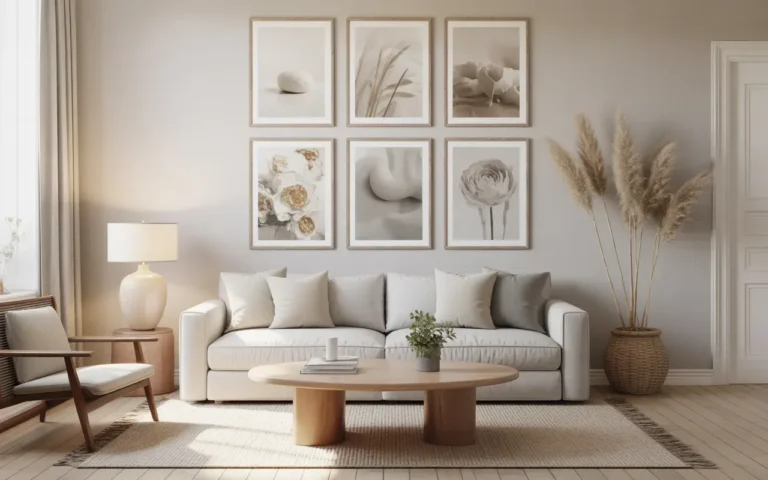
Why it works: Tone-on-tone artwork arrangement is the most advanced living room artwork technique because it relies entirely on material and textural variation rather than color contrast to create visual interest — which is the mark of genuinely confident interior design. When frames are painted to match the wall color, the art pieces appear to float directly on the wall surface, eliminating the frame as a visual interruption and allowing the artwork itself (its texture, surface quality, and subtle tonal variation) to be the entire composition. This technique requires that the individual pieces be genuinely interesting in their materiality — a mix of oil paint texture, plaster relief, woven linen, and matte paper print creates enough surface variation to sustain visual engagement without color.
How to get it: Select five pieces in a strictly warm-neutral palette — cream, raw linen, warm white, pale greige. Mix materials deliberately: one textile, one sculptural or relief piece, two prints, one painted canvas. Paint all frames the exact wall color using the same paint, same finish. Arrange in a loose organic grouping rather than a grid, with varying spacing between pieces.
Quick Win: Spray painting existing frames the exact wall color using matte spray paint ($6–$10 per can) costs almost nothing and creates the floating-frame effect of a professional monochromatic installation in an afternoon.
Shop The Look
| Product |
|---|
| Matte white spray paint for frames |
| Linen abstract textile art panel natural |
| Cream abstract oil painting canvas small original |
| White plaster wall art relief panel small |
| Natural jute area rug 8×10 living room |
10. Statement Neon Sign as Contemporary Art Piece
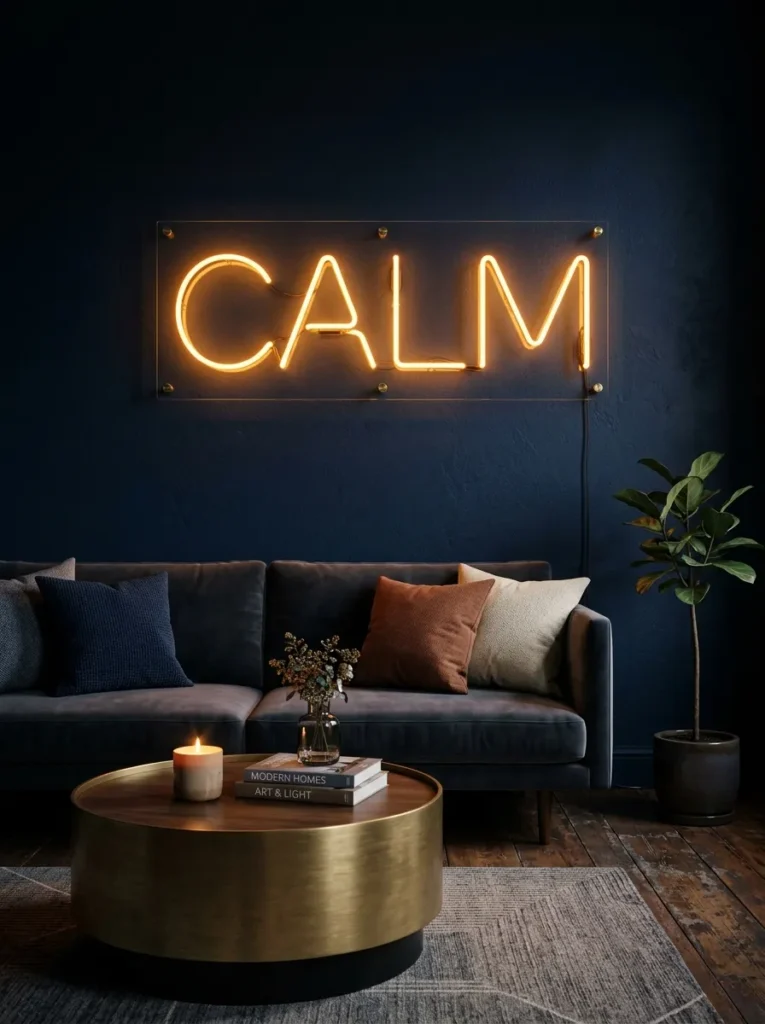
Vibe: A neon sign in warm amber feels contemporary — art that generates its own atmosphere rather than responding to the room’s.
Why it works: A neon or LED neon sign occupies a unique position in the living room artwork spectrum because it is simultaneously a light source and an art object — two functions no other artwork category combines. The design principle is atmospheric generation: where framed art reflects the room’s existing light, a neon sign actively creates its own light environment, which means it changes the room’s atmosphere most dramatically when the ambient light is low. Warm amber (2200–2700K equivalent) is the correct tone for a living room application — it reads as intimate and warm rather than commercial. Mounting against a dark wall (navy, charcoal, forest green) maximizes the glow’s impact and creates the highest contrast for the sign’s form.
How to get it: Commission a custom LED neon sign from an online neon maker in a word, phrase, or abstract form meaningful to the household — custom pieces typically cost $80–$200 depending on size and complexity. Mount against the darkest wall in the room using the included mounting hardware. Install on a dimmer switch so the sign can be adjusted from accent element to primary light source depending on the occasion.
Shop The Look
| Product |
|---|
| Custom LED neon sign warm amber word phrase |
| Dimmer switch plug in for LED neon sign |
| Deep navy matte paint accent wall quart |
| Low profile modern sofa charcoal |
| Round brass coffee table living room |
11. Floating Shelves Styled as Art and Object Display
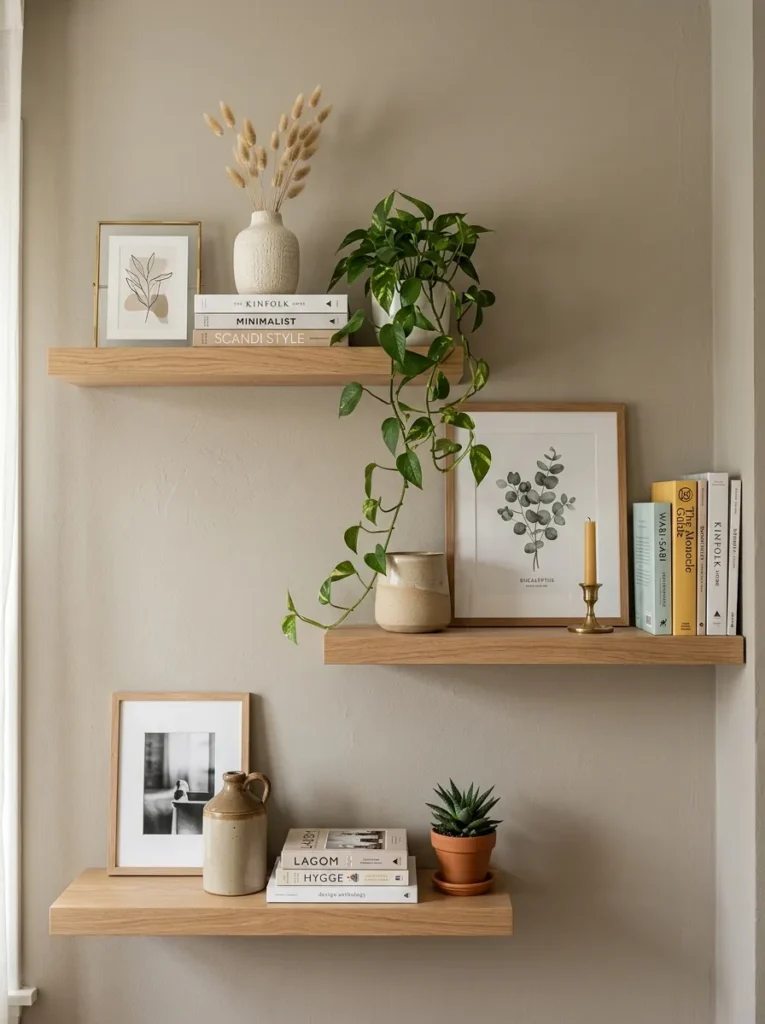
Vibe: Staggered art-and-object shelves feel layered — a living display that evolves rather than a wall that is simply hung.
Why it works: Floating shelves styled as art and object displays collapse the boundary between artwork and the decorative objects that typically surround it — the shelf becomes the frame, and everything on it (the small leaning print, the ceramic vessel, the dried botanical, the art book spine) contributes equally to the composition. This approach works because of the principle of grouped visual weight: three staggered shelves create a wall composition with the same visual mass as a large single piece, but with the flexibility to evolve and rotate elements seasonally. Staggering the shelf heights (rather than aligning them horizontally) adds visual dynamism and prevents the arrangement from reading as a bookcase.
How to get it: Install three floating shelves at staggered heights — the lowest at 48 inches, the middle at 62 inches, the highest at 72 inches — offset slightly to the left or right of each other rather than perfectly centered. Style each shelf with a maximum of five elements: one leaning small frame, one ceramic vessel, one plant, one book, one small object. Fewer elements per shelf read as more considered.
Shop The Look
| Product |
|---|
| White oak floating shelf 24 inch set of 3 |
| Invisible floating shelf bracket set heavy duty |
| Small framed art print for shelf leaning 5×7 |
| Ceramic vessel sand matte small set of 2 |
| Trailing pothos small plant for shelf |
12. Vintage Poster Art in Aged Linen Frames
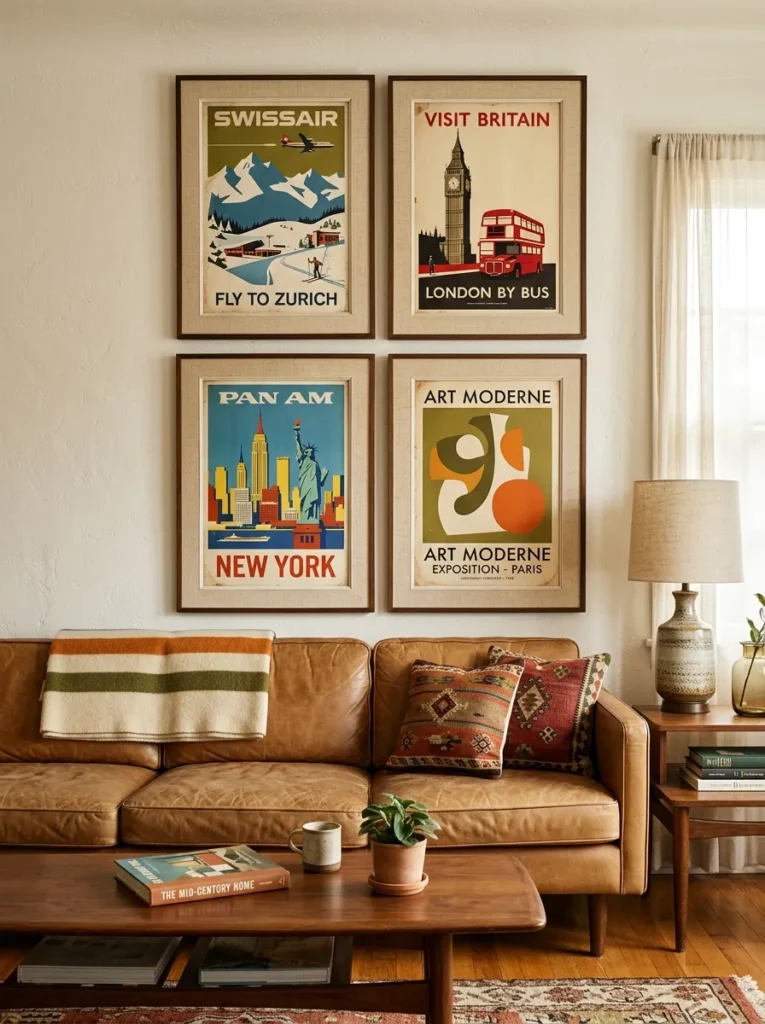
Vibe: Vintage poster art in linen frames feels nostalgic in the most elegant sense — history that has been genuinely chosen, not simply inherited.
Why it works: Vintage exhibition and travel posters — particularly mid-century European printing with its limited color palette, bold typography, and graphic simplicity — occupy a specific aesthetic territory that reads simultaneously as art and artifact. Framing them in linen-wrapped frames (fabric-covered mat board used as the frame material) rather than conventional wood or metal frames gives the pieces a softness and warmth that metal or lacquered wood cannot, while referencing the tactile materiality of the printing era. A 2×2 grid arrangement with matching frame styles converts four individual posters into a single composed installation — the most architecturally coherent arrangement for an even number of pieces.
How to get it: Source vintage exhibition poster prints from International Poster Gallery, AllPosters, or Etsy vintage sellers — original vintage posters range from $50 to several hundred dollars, while high-quality reproductions print for $15–$40. Frame in matching linen or fabric-wrapped frames, or have custom linen mats made by a local frame shop at $20–$40 per piece.
Quick Win: Four matching frames in any consistent material around four vintage poster reproductions from Etsy (at $15–$20 each) create a 2×2 grid installation for under $150 that reads as a considered collection — the matching frame format does the curation work.
Shop The Look
| Product |
|---|
| Vintage style exhibition poster print set of 4 |
| Linen wrapped picture frame 18×24 set of 4 |
| Warm tan leather sofa accent throw pillow |
| Walnut coffee table mid century living room |
| Ceramic table lamp pair warm white shade |
13. Children’s Artwork Framed as Fine Art Display
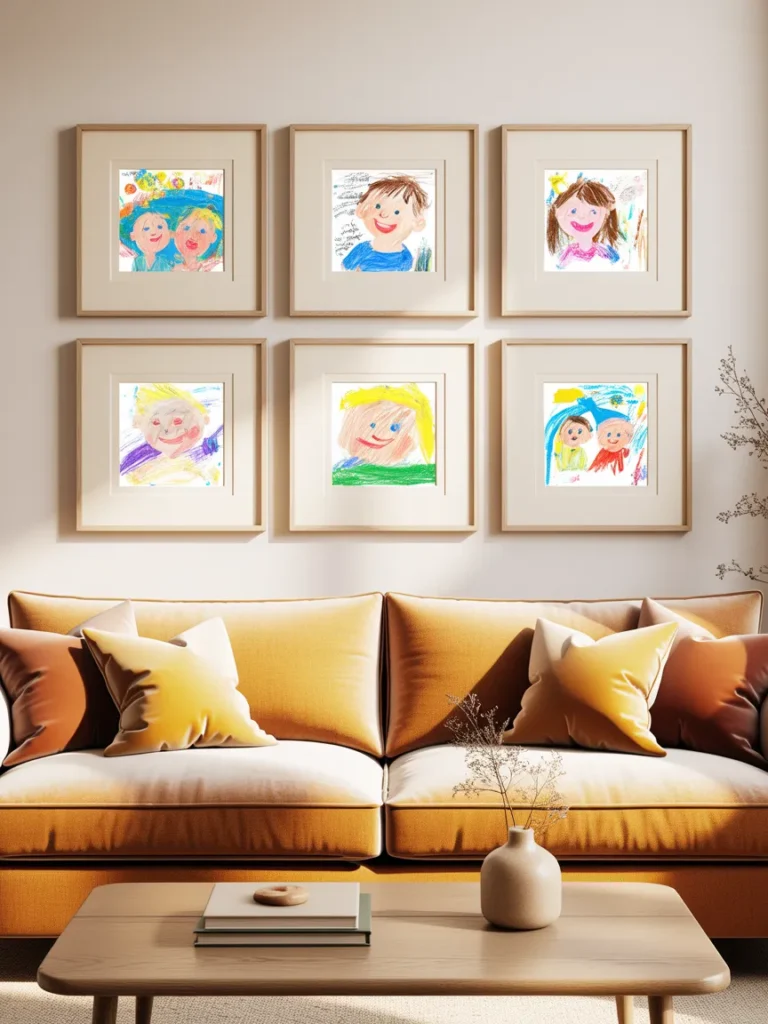
Vibe: Framed children’s art on the living room wall feels personal — a statement that the people who made these marks matter more than the art market.
Why it works: Children’s artwork treated with professional framing discipline — consistent frames, generous white mats, precise alignment — reads as genuinely interesting rather than sentimental, because the framing system signals that the work has been taken seriously. The design principle is contextual elevation: the same drawing that reads as refrigerator art in a magnetic clip reads as contemporary mark-making in a slim white frame with a 2-inch mat. This is one of the most emotionally resonant living room artwork choices available precisely because it makes no attempt to be sophisticated — its sophistication comes entirely from the decision to treat the personal as worthy of careful presentation.
How to get it: Photograph or scan children’s artwork and print at a consistent size (8×10 or 11×14 work well for most marks). Frame all pieces identically in slim white frames with matching white mats. Hang in a grid or horizontal row with consistent 3-inch spacing. Rotate the collection seasonally to display current work while archiving previous pieces in a portfolio box.
Shop The Look
| Product |
|---|
| Slim white picture frame 11×14 set of 6 |
| White mat board pre-cut 11×14 opening |
| Archival photo paper 11×14 for art printing |
| Flat art portfolio storage box 18×24 |
| Colorful linen sofa throw pillow set |
14. Large-Format Nature Photography as Singular Focus
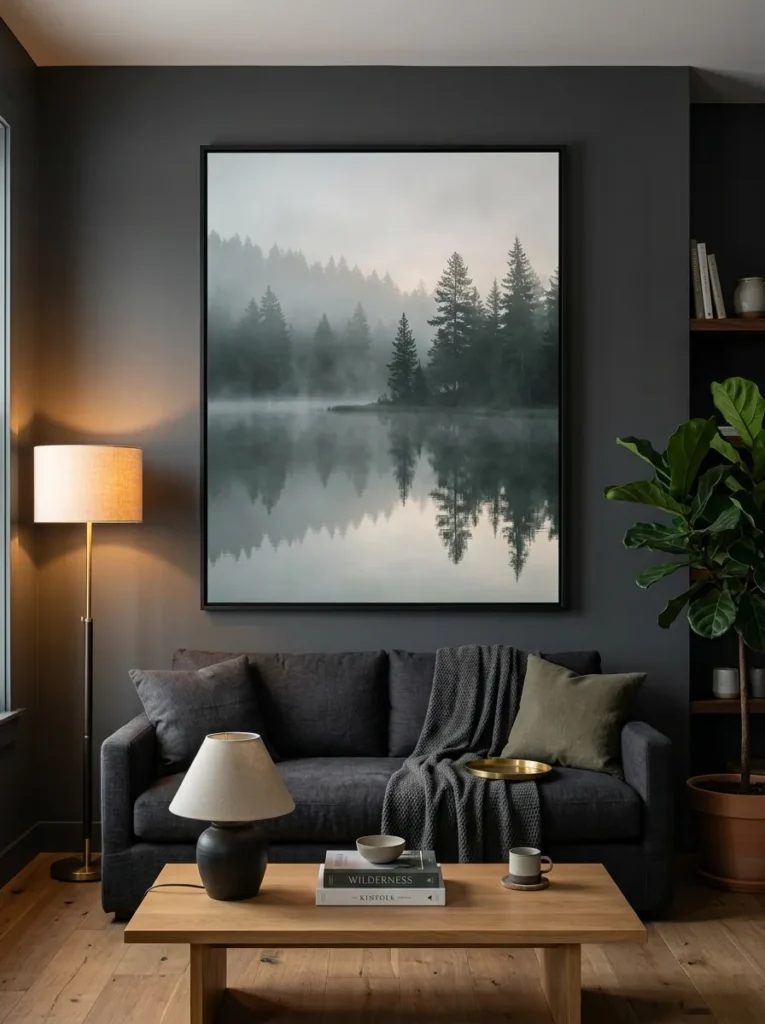
Vibe: A single large nature photograph feels immersive — the room opens a window to somewhere else entirely.
Why it works: Large-format nature photography functions differently from other living room artwork categories because its content creates a spatial illusion — a misty forest at 48×60 inches creates genuine depth perception, making the wall appear to recede and the room feel larger. The design principle is focal singular: one large piece commanding an entire wall creates a calm that a gallery wall of similar total area cannot, because the eye settles rather than moving. Float mounting (where the print is mounted with a small gap between the print and the frame backing, creating a shadow line around the image edge) elevates photographic prints to a gallery presentation standard without the visual weight of a traditional mat and frame.
How to get it: License a large-format nature photograph from Unsplash (free), 500px, or a fine art photography platform. Print at 48×60 inches on archival matte or lustre paper through a professional large-format print service — expect $80–$150 for the print. Mount in a slim float frame in matte black or natural oak, or have the print face-mounted on 3mm acrylic for a sleek, frameless presentation.
Shop The Look
| Product |
|---|
| Large format photo print archival matte 48×60 |
| Slim black float frame large format 48×60 |
| Deep charcoal sofa low profile modern |
| Warm amber tripod floor lamp living room |
| Low profile natural wood coffee table |
15. Abstract Line Drawing in Minimalist Frame
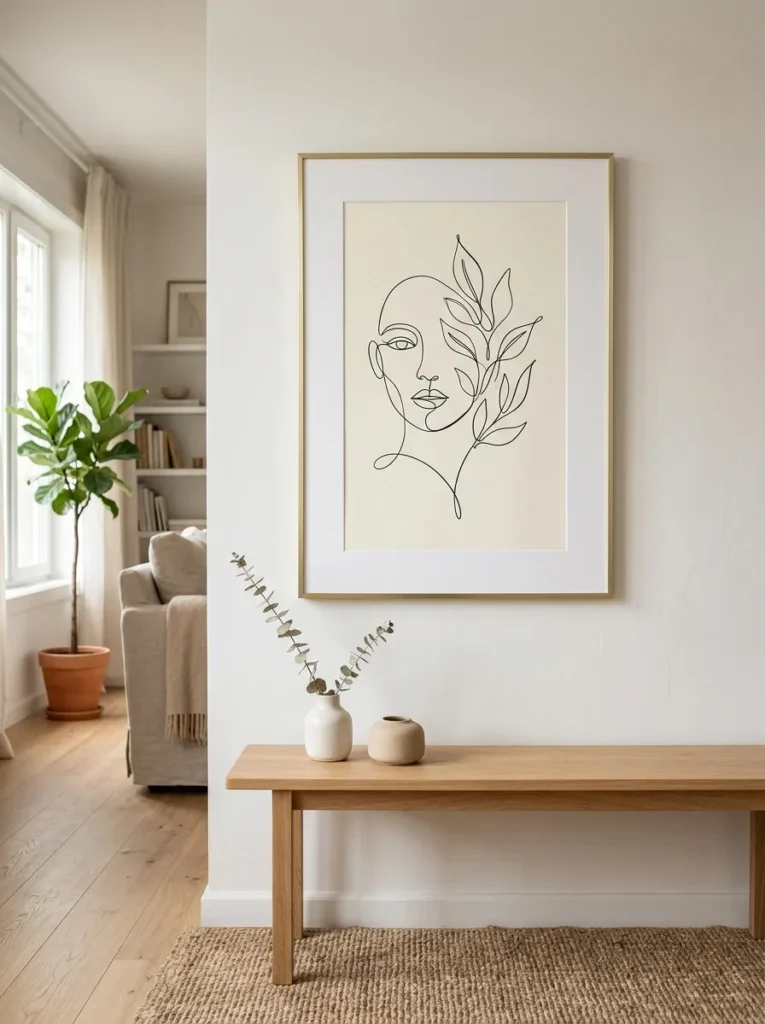
Vibe: A single-line drawing in a large mat feels confident — the assurance of one mark that knows exactly what it is doing.
Why it works: Abstract line drawing — particularly the single-continuous-line style that emerged from mid-century contour drawing practice — is the living room artwork category with the highest visual impact relative to visual complexity. A single black line on cream paper, framed with a 3-inch white mat in a slim brass frame, creates a composition of complete simplicity that requires absolute confidence from both the artist and the owner — which is precisely what makes it read as sophisticated rather than sparse. The design principle is ratio of emptiness: when the mat represents 60–70% of the total framed area, the drawing occupies the visual center with complete authority, commanding attention without competing with anything else in the room.
How to get it: Source single-line abstract drawings from Etsy artists specializing in contour or blind-contour drawing — original works in the 8×10 to 11×14 range cost $40–$120. Frame in a slim brushed brass or natural oak frame with a mat that is disproportionately large relative to the artwork: a 5×7 drawing in an 11×14 frame with a 3-inch mat reads with far more authority than the same drawing in a closely fitting 6×8 frame.
Quick Win: A single-line botanical drawing printed from an Etsy digital download ($5–$10), printed at home on cream card stock and placed in a $20–$30 brass frame with a large white mat, creates a piece that reads as considered original artwork for under $40.
Shop The Look
| Product |
|---|
| Abstract line drawing botanical art print minimal |
| Slim brushed brass frame 11×14 with white mat |
| White archival mat board 11×14 pre-cut |
| Slim white minimal bench entryway or living room |
| Small ceramic bud vase brass or white matte |
16. Small-Space Living Room Artwork Strategy: One Bold Piece
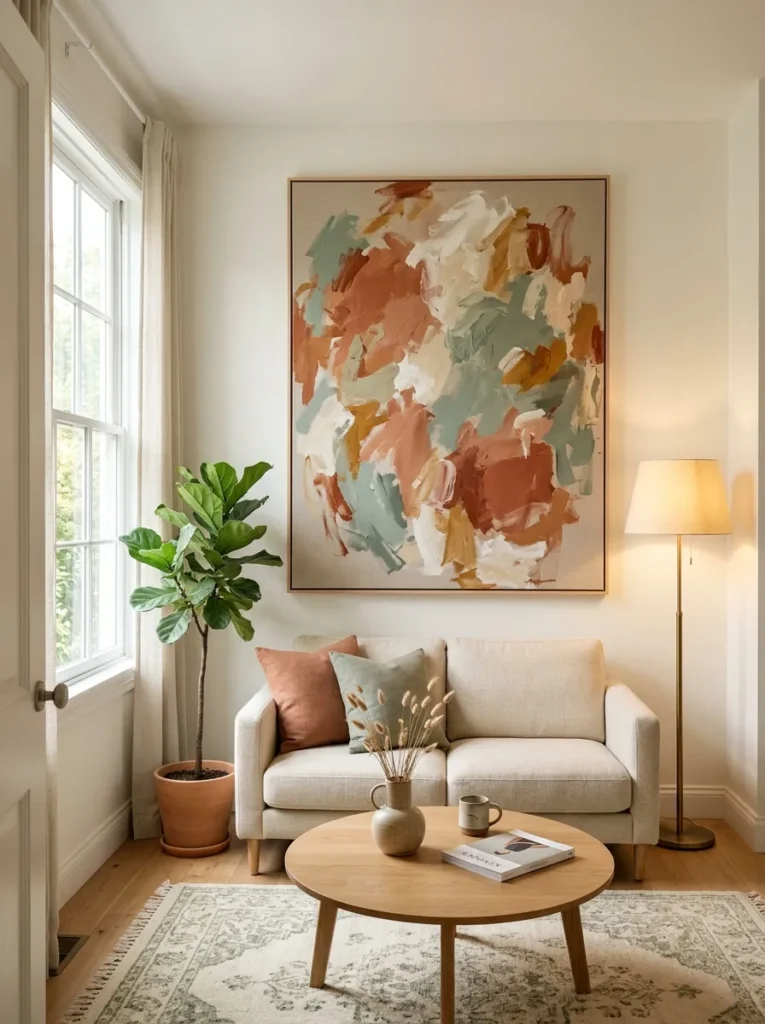
Vibe: One bold piece in a small room feels decisive — the room knows what it is, and so does everyone in it.
Why it works: The small living room artwork strategy that consistently outperforms all alternatives is radical simplification: one large, bold piece on the primary wall, nothing else. This works because of visual hierarchy — the eye in any room seeks the highest-contrast, highest-interest element and uses it to organize everything else. In a small room, a large piece of living room artwork on the primary wall gives the eye exactly what it needs: an immediate, clear focal point that makes the space feel authored rather than assembled. The furniture arrangement, the rug, the lighting — all of it reads as composed around the art rather than competing with it. Every additional piece of wall decor added to a small room reduces the power of the primary piece by diluting the hierarchy.
How to get it: In a room under 200 square feet, commit to one piece on the primary wall only. Size it at a minimum of 36 inches wide — counterintuitively, larger is more correct in a small space. Keep all other walls completely bare. The restraint is the design decision, not the artwork itself.
Shop The Look
| Product |
|---|
| Large abstract canvas terracotta sage 36×48 |
| Small two seat linen sofa compact living room |
| Round natural wood coffee table small |
| Tripod floor lamp natural wood warm shade |
| Jute area rug 5×8 natural small living room |
How to Start Your Living Room Artwork Transformation
The single first move is to hang one piece — specifically, the largest piece you currently own — on your primary wall at the correct height of 57 inches to center. Most living rooms suffer not from a lack of artwork but from artwork that is too small, too high, or both. Correcting the scale and position of one existing piece before purchasing anything new reveals what the room actually needs, which is almost always less than you think.
The most common mistake is hanging artwork too high — typically at eye level for a standing person, which places the center of the piece at 65–68 inches, well above the 57-inch standard. This creates a floating, disconnected quality where the art appears to have no relationship to the furniture below it. The fix is straightforward: rehang everything at 57-inch center height and observe how immediately the art and furniture begin to read as a composed unit rather than separate elements sharing a room.
Three items under $50 that create immediate impact: a can of matte spray paint ($8–$12) in your exact wall color for repainting existing mismatched frames into a cohesive system, a pack of white pre-cut mat boards ($15–$25) that can be inserted into any existing frame to create a more generous mat-to-art ratio, and a laser level ($20–$35) that makes precise multi-piece arrangement achievable without the frustration of repeated measuring and re-hanging. These three tools transform the presentation of artwork you already own before a single new piece is purchased.
Realistic expectations: living room artwork is a category where patience and deliberate accumulation produce the best results. A single gallery-quality original piece for a primary wall sits in the $200–$800 range from emerging artists. A complete gallery wall of nine matching-frame pieces with quality prints runs $300–$600 in total. The most satisfying living room artwork collections are rarely assembled quickly — they accumulate over years of deliberate choosing, which is precisely what makes them feel personal rather than purchased.
Frequently Asked Questions About Living Room Artwork
What size artwork is best for a living room wall?
The most common sizing mistake in living room artwork is choosing pieces that are too small — a piece should span at least two-thirds of the furniture width it sits above. For a standard 84-inch sofa, that means a minimum of 56 inches wide for a single piece. For a gallery wall, the overall grouping should read as a single visual unit at that same minimum width. When in doubt, size up: a piece that feels almost too large in the store will read correctly on the wall, while a piece that feels right in the store will almost always feel too small once hung.
How high should living room artwork be hung?
The universal standard is 57 inches from the floor to the center of the artwork — this is the average human eye level and the height used by museums and galleries worldwide. When hanging above furniture, check that the gap between the top of the furniture and the bottom of the frame is 6–10 inches. The most common error is hanging at standing eye level (65–68 inches), which disconnects the art from the furniture arrangement below it and creates a floating, ungrounded effect.
How much should I spend on living room artwork?
A functional starting point is to budget 5–10% of your total living room furniture spend on artwork — if your sofa and furniture total $3,000, a $150–$300 artwork budget produces a single quality print or a small collection of well-framed pieces. Original artwork from emerging artists starts at $200–$500 for smaller pieces and scales to $1,000–$5,000 for larger works from established artists. High-quality archival prints from platforms like Etsy, Society6, and Artifact Uprising bridge the gap between original art and mass-produced posters at $40–$200 per piece.
Can I mix different art styles in one living room?
Yes — mixing art styles (abstract, photography, illustration, textile) is more interesting than a single consistent style, provided the framing system is unified. Matching frame finishes across a mixed-style gallery wall creates cohesion that allows the artwork inside the frames to be as varied as the collection requires. The one combination to approach carefully is mixing very different scales — a tiny botanical print beside a large abstract canvas creates a hierarchy problem where the smaller piece reads as an afterthought. Group pieces of similar visual weight together, regardless of style.
What is the best living room artwork choice for a rental where I cannot drill into walls?
Command adhesive picture hanging strips rated for the artwork weight are the most reliable no-drill solution — they hold cleanly on painted drywall and release without damage when removed correctly. For heavier pieces (canvas prints, large framed works), look for strips rated for 16 lbs or above per pair. Leaning art — a large canvas or framed print leaning against the wall on top of a console table or credenza — requires no wall attachment at all and is one of the most designer-looking approaches available, rental or not.
Ready to Transform Your Living Room with Artwork?
These 16 ideas span the full creative range — from oversized abstract canvases and tone-on-tone monochromatic walls to ceramic plate clusters, plaster relief panels, and the radical confidence of a single bold piece in a small room — so there is a genuinely workable starting point here regardless of your budget, your wall space, or how much existing artwork you’re working with. The most important thing to understand is that living room artwork is not a finishing touch — it is the element that gives the room its emotional register, and it deserves to be chosen first rather than last. Today, take down everything on your primary wall, hold up the largest piece you own at 57-inch center height, and see if it is the right scale — that single act of looking carefully is where every great art wall begins. Pin the ideas that made you feel something rather than the ones that simply matched your sofa, and let those be the ones you build toward.