15 Cozy Craft Night Themes for Every Season
Cozy craft nights are intentionally designed creative gatherings — hosted at home, in a community space, or virtually — where a group of friends, family members, or creative community comes together around a shared making project, a specific theme, and the particular warmth of an evening dedicated entirely to creativity, conversation, and the specific pleasure of making something with your hands in good company. This article gives you 15 fully developed craft night themes that span every season and every skill level, each one complete with a specific project, a sensory atmosphere, a food and drink pairing, and the design detail that makes the evening feel genuinely special rather than simply a session of craft supply consumption.
Picture a Friday evening in November where eight people are gathered around a table covered in brown kraft paper, warm candles casting amber light across jars of dried botanicals, a pot of spiced cider warming on the stove, and the sound of conversation floating over the specific satisfying sounds of scissors and twine. Nobody is in a hurry. Every person at the table is making something with their hands and talking to someone they care about. At the end of the evening, everyone leaves with something they made, something they ate, and the particular feeling of having spent time in the best possible way. That is what a well-designed craft night produces — and these 15 themes are the blueprint for making it happen. Here are 15 ideas worth saving — and hosting.
Why Cozy Craft Night Themes Work So Well
Cozy craft nights work as a social format because they resolve the central tension of adult social life — the desire for genuine connection and meaningful shared experience alongside the practical reality that most social gatherings default to formats (dinner parties, bar outings, movie nights) where conversation and connection are possible but not structurally guaranteed. A craft night is a social gathering designed around a shared activity that requires focused attention, produces regular small victories (a knot tied, a color matched, a fold completed), and naturally generates conversation from the shared experience of working through the same challenges — making it the social format most likely to produce the combination of focus, laughter, and genuine conversation that characterizes a memorable evening.
The materials that make craft night themes genuinely cozy rather than merely productive are those that engage multiple senses simultaneously: beeswax candles whose honey scent fills the room as they burn alongside the project being made, natural dried botanicals whose earthy fragrance complements the visual warmth of the autumn palette, linen and cotton fabrics whose tactile quality engages the hands while the mind is occupied with making, seasonal food and drinks whose flavors and warmth reinforce the evening’s atmospheric theme. The craft itself — the project being made — should be achievable by a beginner in 90 minutes to 2 hours while offering enough creative decision-making to keep an experienced maker engaged, producing results that everyone at the table would genuinely want to take home.
The craft night tradition draws from multiple cultural antecedents — the American quilting bee, the European knitting circle, the Japanese tea ceremony’s integration of making and hospitality, and the contemporary maker culture’s revival of communal craft as social practice. All share the insight that making is more pleasurable in company than in solitude, and that objects made in good company carry the memory of that company into every subsequent use.
Even a craft night with three people, a kitchen table, and basic supplies becomes an occasion when it is designed with intention — when the table is set thoughtfully, the atmosphere is considered, the project is chosen to match the group’s skills, and the food and drink are warm and seasonal. The theme is the organizing principle that transforms a craft session into an event.
Style at a Glance
| Element | Trait 1 | Trait 2 |
|---|---|---|
| Philosophy | Shared making as structured social occasion — the project creates the condition for connection | Sensory completeness — atmosphere, food, drink, and craft in a unified seasonal theme |
| Materials | Seasonal natural materials, beeswax candles, natural fiber, dried botanicals, watercolor paper | Lino blocks, air dry clay, macramé rope, pressed flowers, bookbinding materials |
| Color Palette | Seasonal palettes — spring blush, summer cobalt, autumn terracotta, winter forest green | Project-specific palettes — indigo resist, warm beeswax, botanical green, festive jewel tones |
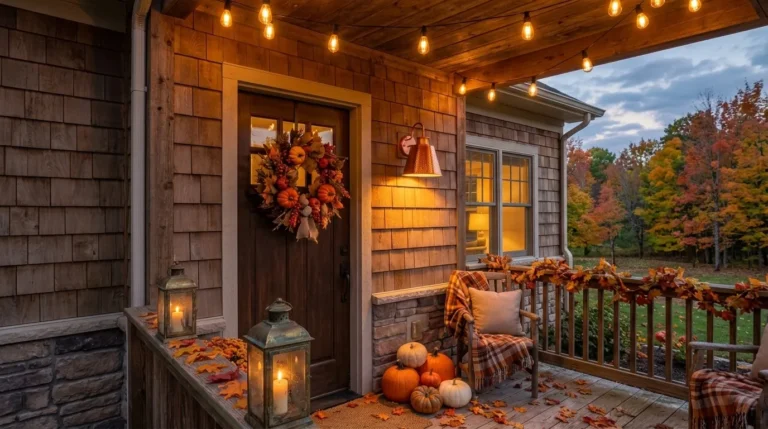
1. Autumn Wreath Making Night
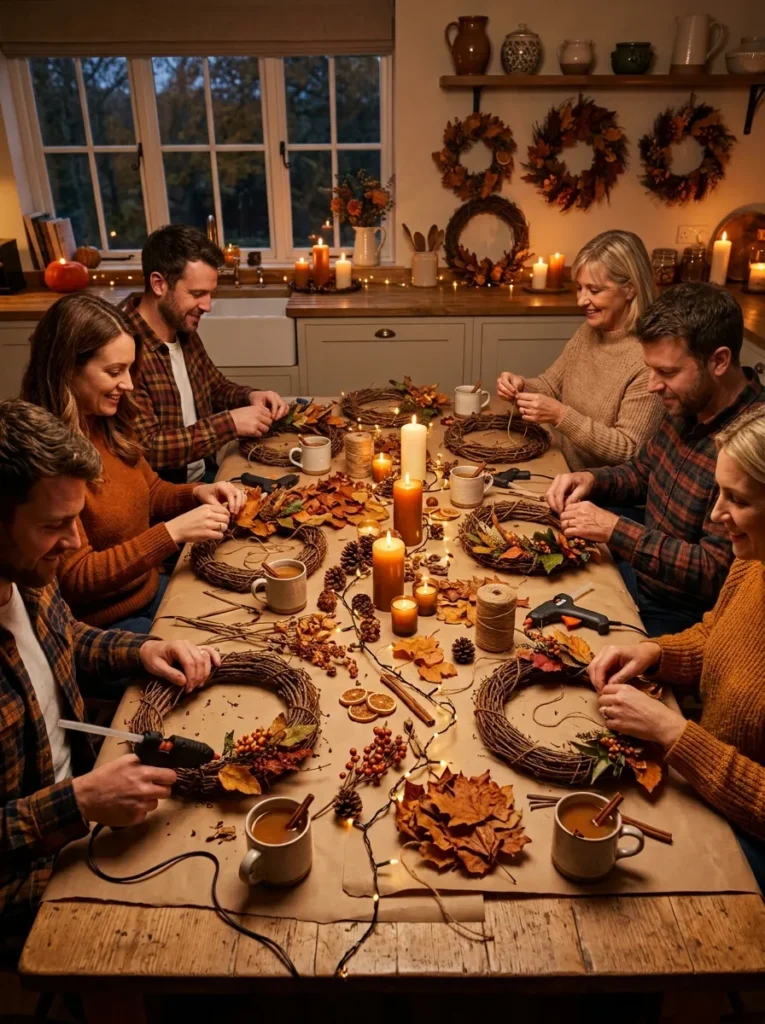
Vibe: Warm and festive — the craft night that smells like autumn and ends with something beautiful for every front door.
Why it works: Autumn wreath making is the foundational cozy craft night because it combines the season’s material abundance (dried leaves, pine cones, botanicals available at zero cost from any outdoor walk) with a project that is infinitely variable — no two wreaths made at the same table will look identical — and produces a result that everyone will genuinely use for the following two months. The grapevine base is the project decision that makes this accessible to any skill level: its organic, irregular form means there is no wrong way to attach materials to it, and the natural base itself provides enough structure that even a beginner’s first wreath looks intentional and beautiful rather than craft-project obvious.
The project: Each guest receives a natural grapevine wreath base (30cm diameter), a hot glue gun, and access to the shared material table. Guests build their wreaths by layering dried leaves first (the largest, most structural element), then pine cones and seed pods (mid-size elements that add dimension), then dried orange slices and small botanical clusters (accent elements), finishing with a jute twine bow. Provide a visual reference image of three different wreath composition styles (abundant, minimal, asymmetric) so guests have a starting direction while maintaining full creative freedom.
The atmosphere: Cover the table with brown kraft paper for easy cleanup. Set beeswax taper candles in varying heights as a central table feature. String warm fairy lights around the room’s perimeter rather than using overhead lighting.
Food and drink: Serve spiced apple cider (warm, with cinnamon sticks and star anise) plus a simple charcuterie and cheese spread that guests can pick at while working — the no-cutlery format allows seamless eating between crafting moments.
Quick Win: Pre-sort all dried materials into individual kraft paper bags labeled with their category (leaves, pine cones, botanicals) before guests arrive — the organization of the materials table is what allows the evening to feel curated rather than chaotic, and 20 minutes of pre-event sorting eliminates the table pile-up that disrupts craft night flow.
| Product |
|---|
| Natural grapevine wreath base 30cm set |
| Dried autumn leaf bag assorted colors |
| Dried orange slice bag natural |
| Natural jute twine roll craft |
| Hot glue gun set with extra sticks |
Also view: 16 Elegant Pillar Candle Holder Decor Ideas
2. Winter Beeswax Candle Dipping Night
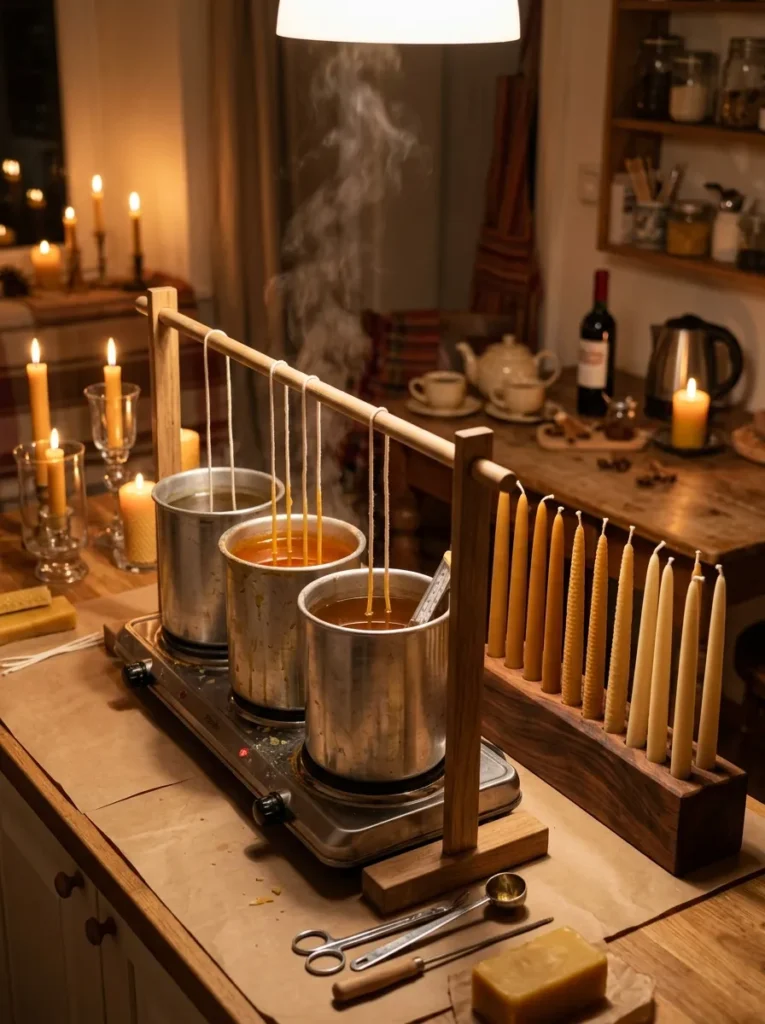
Vibe: Warm and meditative — the craft night that moves at the pace of wax cooling and produces the most satisfying reward of any candle project.
Why it works: Beeswax candle dipping is the craft night project with the highest sensory richness per unit of skill required — the warm honey scent of melting beeswax fills the room from the moment the wax melts, the rhythmic dipping and cooling cycle creates a meditative pace that is genuinely calming, and the finished candles — natural honey amber tapers with the slight irregularity of hand-dipping — are objects of genuine beauty that guests will use for months. The dipping process also has a naturally social structure: guests take turns at the dipping station while others wait and talk, creating the kind of movement and conversation flow that stationary craft nights sometimes lack.
The project: Set up three tall metal containers (coffee cans or tall tin cans work perfectly) in a water bath to maintain wax temperature. Each guest begins with a 45cm length of square-braided cotton wick. They dip the wick into the wax, withdraw, allow 30 seconds for the wax to cool and set, then dip again — repeating 20–30 times to build a finished taper. Between dips, the candle is held straight to ensure it dries without bending. The final taper is trimmed to an even base and allowed to cool completely before taking home.
The atmosphere: The room’s lighting should come entirely from beeswax candles already lit — creating the environment that the evening’s project will eventually produce for each guest’s home. Dim overhead lights completely.
Food and drink: Mulled wine in a slow cooker (set it before guests arrive so the spice scent fills the house alongside the beeswax) and a simple winter cheese and bread board with honey for drizzling — the honey pairs thematically with the beeswax and provides a sensory callback throughout the evening.
| Product |
|---|
| Pure beeswax pellets 5 lb natural filtered |
| Square-braided cotton wick set |
| Tall metal can set for dipping container |
| Beeswax candle dye chip set optional |
| Wooden taper candle drying block |
Also view: 15 Luxury Interior Decor Ideas for Every Room
3. Spring Pressed Flower Art Night
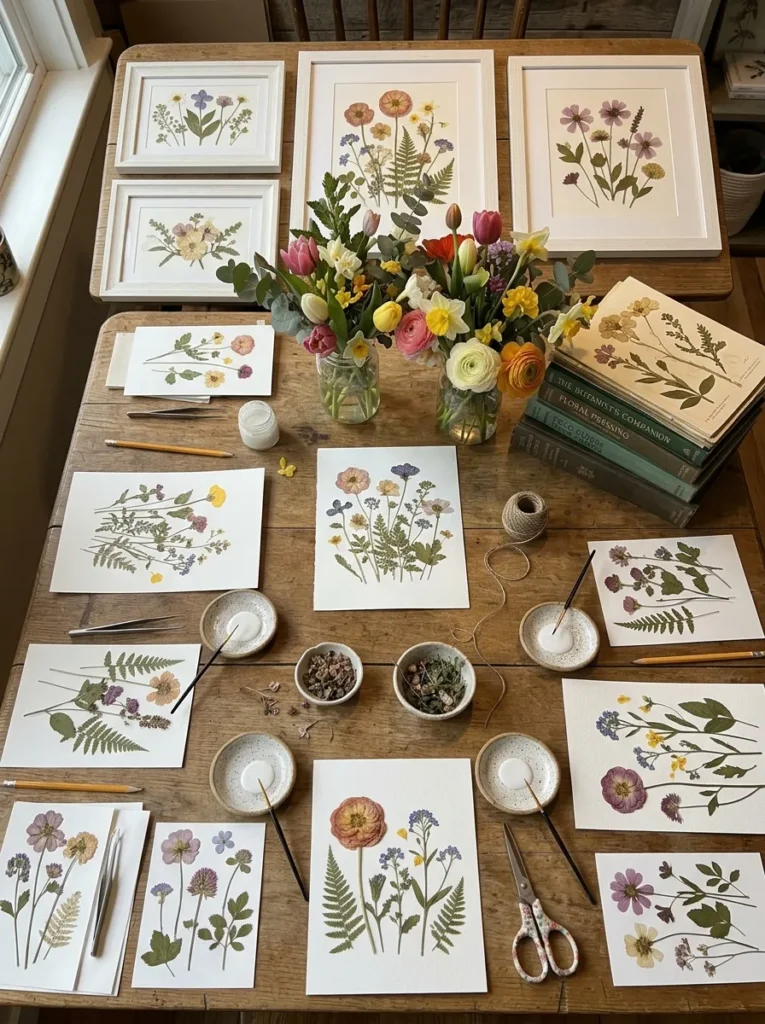
Vibe: Fresh and delicate — the craft night that captures the specific beauty of spring before it disappears.
Why it works: Pressed flower art is the spring craft night project whose outcome most closely resembles professional botanical illustration — when pressed specimens are arranged on cream or white watercolor paper with generous negative space and minimal composition, the finished pieces read as intentional art objects rather than craft projects. The evening has two stages that naturally fill a two-hour session: the first 30–45 minutes spent pressing fresh flowers (providing each guest with botanical specimens to press and take home for their own future use), and the following 60–75 minutes spent working with pre-prepared pressed specimens provided by the host, allowing guests to compose and mount a framed piece they take home the same evening.
The project: Provide guests with a selection of pre-pressed botanical specimens (pansies, ferns, individual flower petals, leaves, and stems pressed over 2–3 weeks in advance by the host) spread on white paper at each workspace. Guests select their specimens and arrange compositions on cream 300gsm watercolor paper, experimenting with layout before gluing. When satisfied, they mount each specimen with diluted PVA applied by a fine-tip brush, press gently, and allow to dry. Frame in a simple white frame with a cream mat board.
Food and drink: Elderflower cordial with sparkling water, light herbal tea, and a spring-appropriate fruit and blossom board — strawberries, edible flower petals on soft cheese, honey, and cucumber sandwiches.
| Product |
|---|
| Flower press kit for pre-event pressing |
| Watercolor paper 300gsm cream sheets |
| PVA glue diluted fine brush application |
| White picture frame set with cream mat |
| Edible flower selection for table decoration |
4. Summer Indigo Shibori Dyeing Night
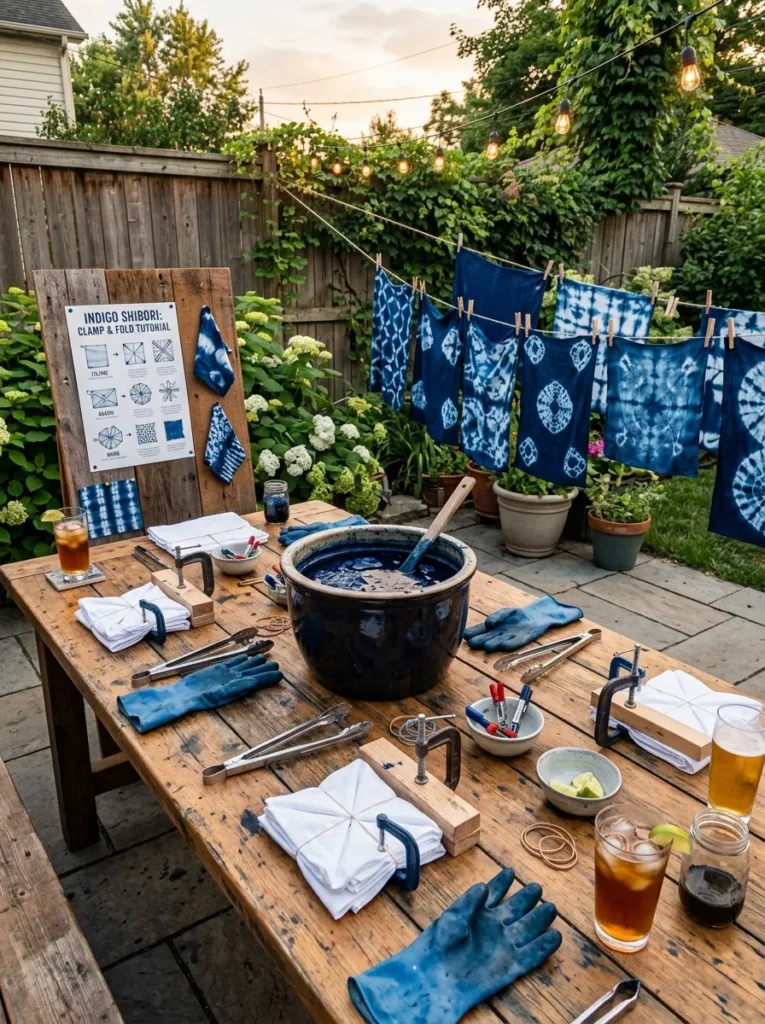
Vibe: Vibrant and summery — the craft night where the reveal moment when you unfold your fabric is genuinely thrilling.
Why it works: Indigo shibori dyeing is the craft night project with the most dramatic reveal moment — the folded, clamped, or bound fabric enters the vat as white cotton and emerges as a resist-patterned textile in deep blue, and the unfolding of the dyed piece to reveal the pattern for the first time is consistently the most exciting moment of any craft night session. The project is also uniquely scalable — guests can fold their fabric in simple accordion folds for a beginner-appropriate stripe pattern, or attempt more complex binding techniques for more adventurous patterns, and both produce beautiful results. Each guest dyes two or three pieces (napkins, small fabric squares, or a tea towel), providing enough material for a full evening of experimentation.
The project: Prepare a pre-reduced indigo vat before guests arrive (the 30-minute vat preparation time is unsuitable for a craft night’s social flow). Provide each guest with three pre-washed white cotton pieces and instruction cards showing five fold-and-clamp techniques (accordion fold, pinch twist, arashi pole wrap, itajime clamp, and simple square fold). Guests fold, clamp, and label their pieces, then dip in the vat for 3 minutes, remove, and unfold the reveal. Multiple dipping rounds in the same evening deepen the color for guests who want darker results.
Food and drink: Cold gin and tonic with botanicals, sparkling lemonade, and a summer mezze spread — hummus, flatbread, cherry tomatoes, olives. Set the food station away from the dyeing area for obvious reasons.
| Product |
|---|
| Indigo dye kit pre-reduced vat |
| White cotton fabric napkin set pre-washed |
| Rubber gloves medium set for dyeing |
| Clamp set assorted for shibori resist |
| Clothesline and pegs for drying display |
5. Autumn Air Dry Clay Pinch Pot Night
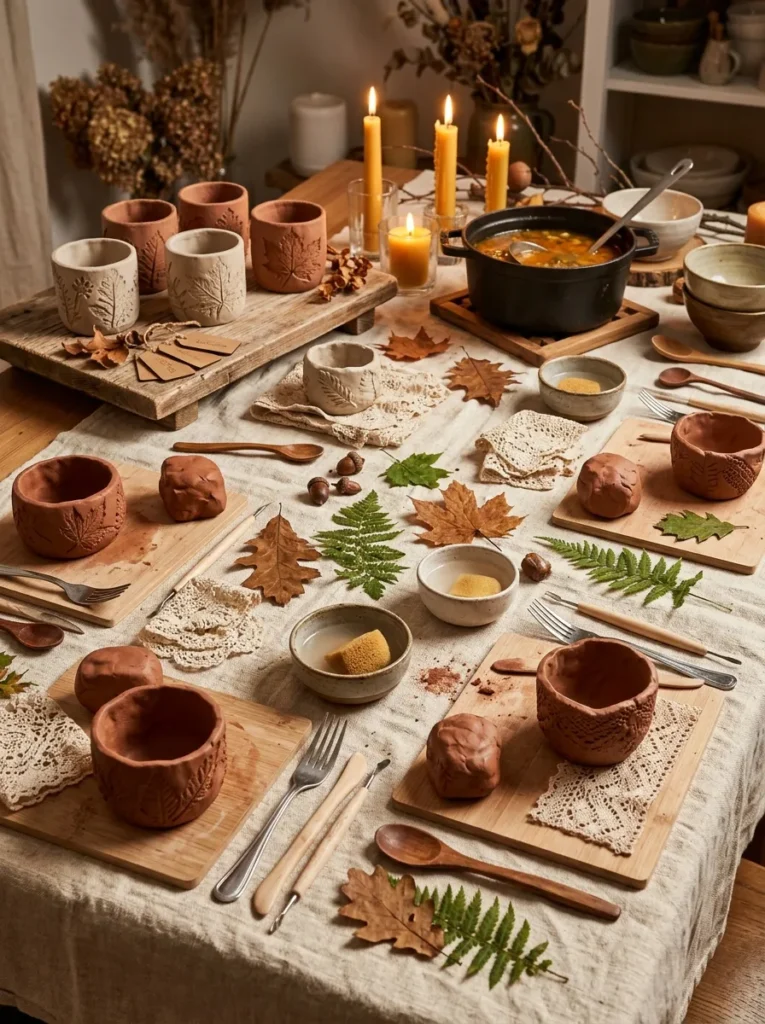
Vibe: Warm and tactile — the craft night that makes you remember how good it feels to have your hands in clay.
Why it works: Air dry clay pinch pot making is the craft night project with the highest tactile engagement — the physical sensation of working clay (its resistance, its smoothness, the way it responds to pressure) is immediately satisfying for everyone at the table regardless of prior ceramic experience, and produces a quality of focused, hands-on absorption that few other craft materials replicate. The pinch pot form is specifically well-suited to a craft night context because it requires no tools (fingers alone produce the fundamental form), scales to every skill level (a beginner’s first pinch pot is an acceptable bowl; an experienced maker’s pinch pot has refined walls and intentional surface texture), and produces a result — a small vessel — that everyone finds genuinely useful for the entry table, the desk, or the bathroom.
The project: Each guest receives approximately 200g of air dry clay and a small bowl of water. They open the clay ball with their thumb and pinch outward, rotating the ball as they work, until they have a bowl of the desired depth and form. Texture tools (forks for linear scoring, lace for woven texture impressions, natural leaves for botanical impressions) are shared across the table. After forming, pots are set on a wooden board to begin drying and are taken home for continued drying and optional painting the following week.
Food and drink: A large pot of warming autumn soup (pumpkin, sweet potato, or butternut squash) ladled into mugs — the mug format allows eating without cutlery, keeping hands clean for clay work between servings. Crusty bread, butter, and mulled apple juice.
| Product |
|---|
| Air dry clay white 5 lb block |
| Natural lace piece set for texture impression |
| Wooden drying board for completed pots |
| Fork set for clay texture tool |
| Small water bowl set ceramic |
6. Winter Watercolor and Wine Night
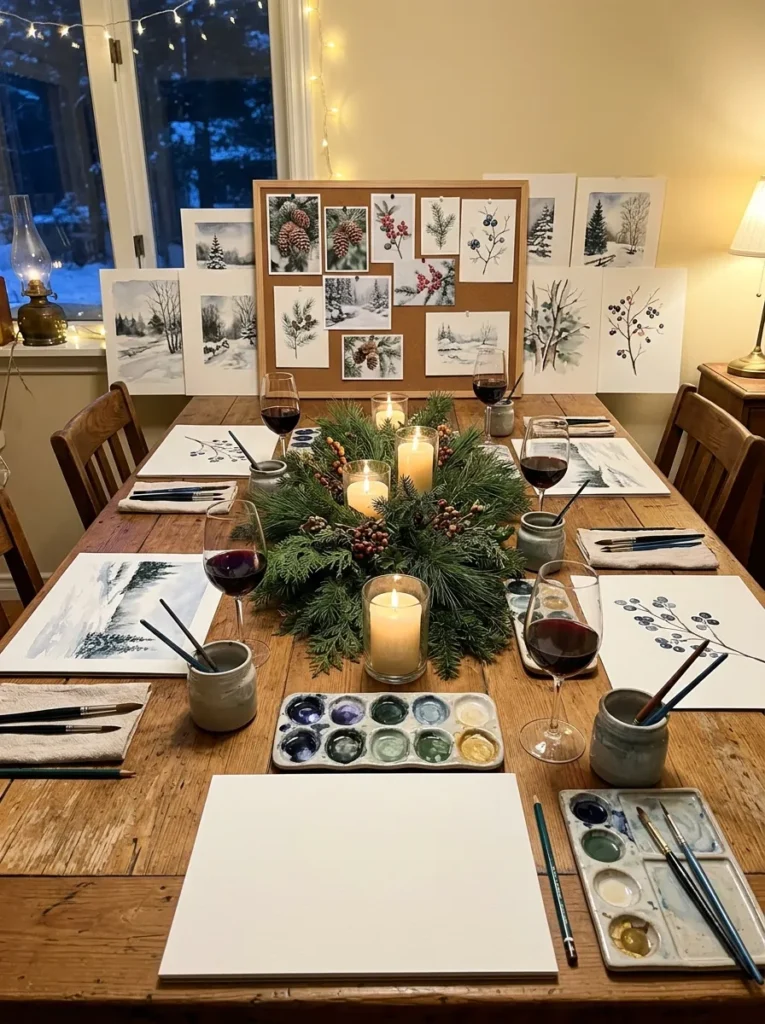
Vibe: Warm and creative — the craft night for people who think they can’t paint and leave having proved themselves wrong.
Why it works: Watercolor is the painting medium most accessible to complete beginners because its inherent qualities — the way water moves pigment unpredictably, the way colors bloom and bleed into each other before the paper dries — produce naturally beautiful effects that require no technical skill to achieve. A watercolor craft night structured around loose, gestural winter botanicals (pine branches, dried seed heads, simple winter berries) gives guests a specific subject that is achievable in loose brushwork and genuinely beautiful in the medium’s characteristic softness. The wine serves a deliberate function beyond hospitality: a glass of wine lowers the inhibition about making marks on paper that prevents many adults from engaging with visual art media, which is precisely the psychological barrier that a beginner-friendly craft night must overcome.
The project: Begin with a 15-minute guided warm-up exercise — wet the full paper surface and drop two colors of paint into the wet, watching them bloom. No drawing, no right answer. Then move to the evening’s main subject: a winter botanical composition. Provide printed reference images of pine branches, dried allium heads, and simple berry clusters. Guests sketch lightly in pencil, then paint using a wet-on-wet approach for backgrounds and wet-on-dry for detail. The emphasis throughout: loose marks, not tight rendering. Imperfection is the goal.
Food and drink: A quality red wine (Pinot Noir or similar) plus a winter cheese board with dried fruit, dark chocolate, and walnuts. Hot chocolate with cream as a non-alcoholic alternative.
| Product |
|---|
| Watercolor paper 300gsm cold press sheets |
| Watercolor paint set artist grade 12 colors |
| Ceramic palette set for paint mixing |
| Watercolor brush set round assorted sizes |
| Ceramic water jar set small |
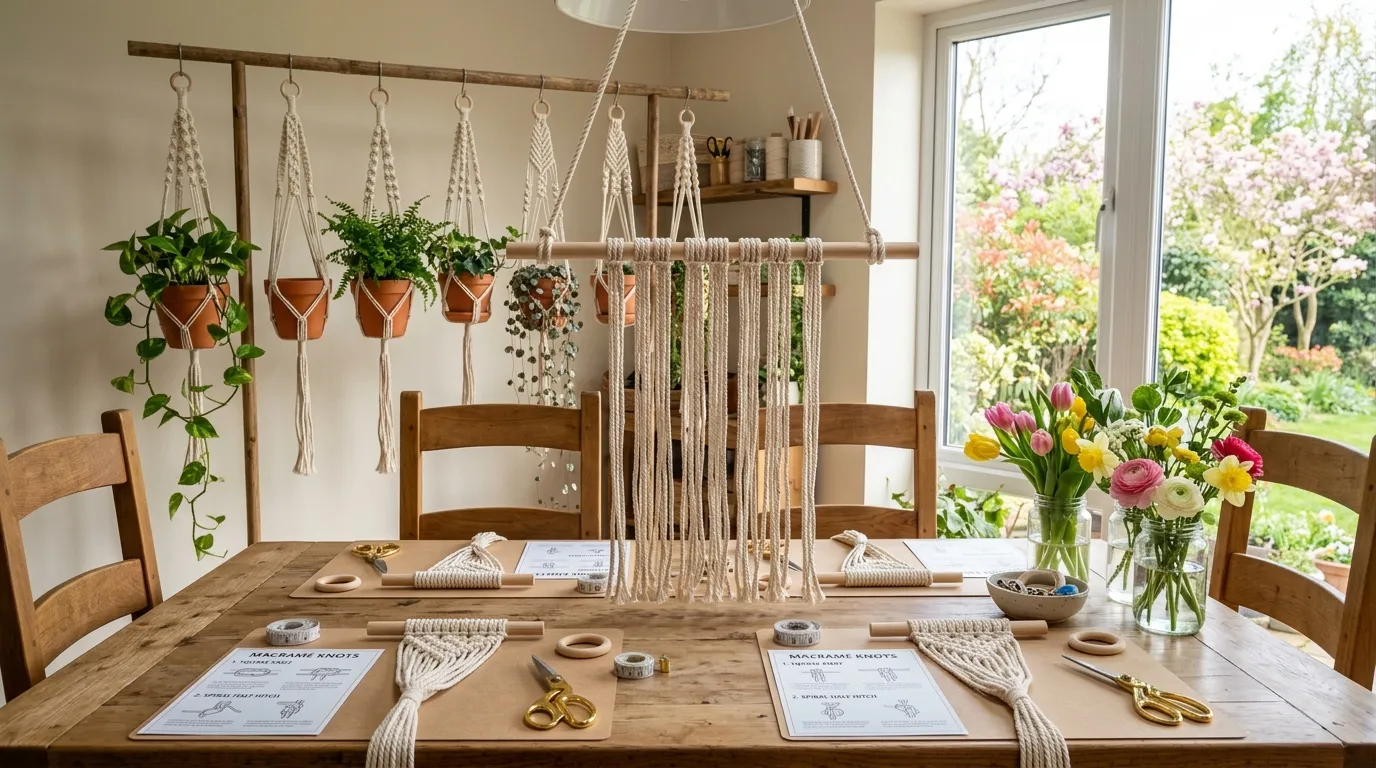
7. Spring Macramé Plant Hanger Night
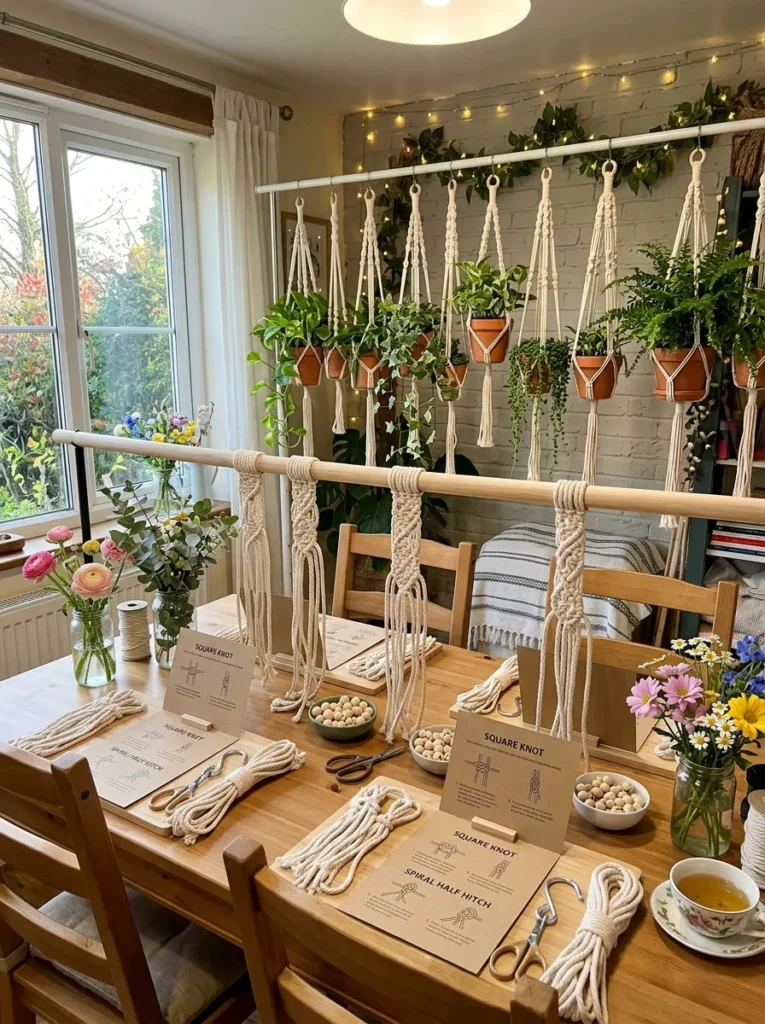
Vibe: Fresh and productive — the craft night where even the most skeptical guest leaves having made something they immediately want to hang up.
Why it works: Macramé plant hangers are the craft night project with the highest skill-building satisfaction curve — the square knot (the foundational macramé knot) can be learned in under three minutes, and within 30 minutes of starting, every beginner at the table has produced a recognizable section of knotted plant hanger. The project also has a natural social structure: the knotting rhythm is meditative enough to allow easy conversation, the progress is visible and encouraging at every stage, and the finished plant hanger holding a terracotta pot with a trailing plant is the craft night take-home with the most immediate visual impact in any home.
The project: Pre-cut cotton rope lengths (eight pieces at 2.5m each per person) before guests arrive — the preparation time for rope cutting is significant and unsuitable for a craft night. Suspend a dowel rod horizontally between two chairs or from hooks for guests to attach their rope bundles. Teach the gathering knot (to attach ropes to the dowel), the square knot (the primary knot used throughout the hanger), and the gathering knot (to finish the bottom). Provide laminated knot cards at each workspace as reference. Each guest creates a simple 8-rope plant hanger with four square knot sections and a finished base — achievable in 75–90 minutes for a beginner.
Food and drink: Elderflower gin spritz, sparkling water with cucumber and mint, a spring charcuterie board with edible flowers. Serve in small plates that can be set aside while hands are occupied.
| Product |
|---|
| Natural cotton macramé rope 5mm 100 ft |
| Wooden dowel rod 45cm set for mounting |
| Terracotta plant pot set small |
| Trailing pothos plant set for take-home |
| Laminated knot instruction card set |
8. Summer Linocut Print Night
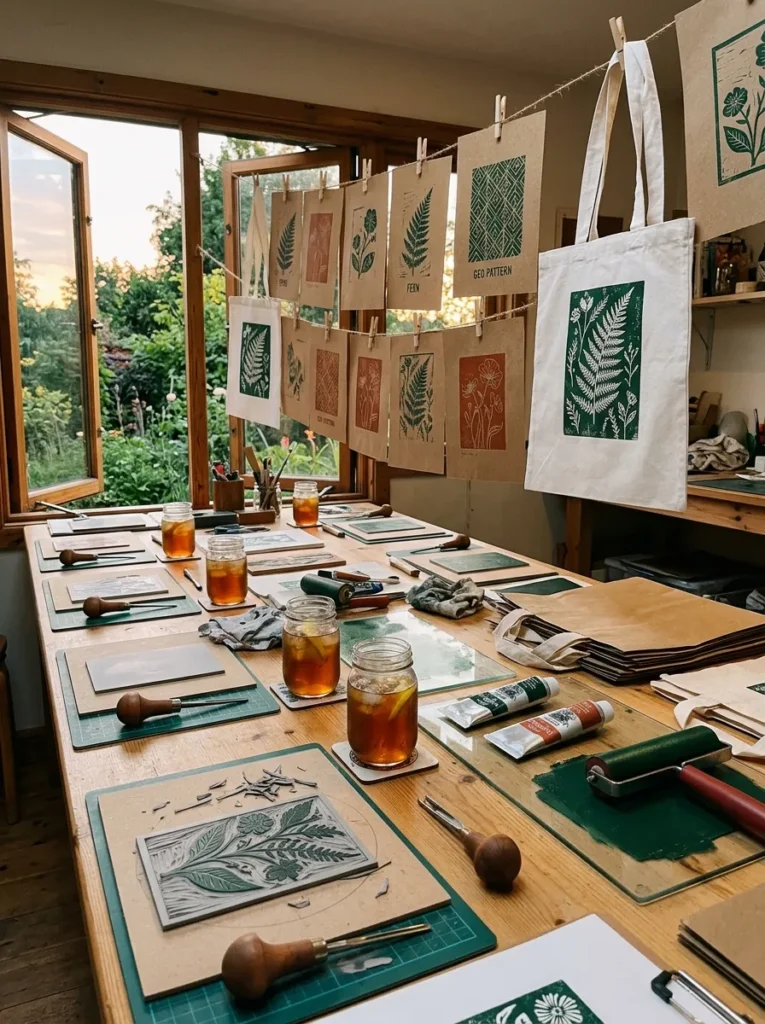
Vibe: Creative and satisfying — the craft night where the carving is meditative and the printing is pure joy.
Why it works: Linocut printing is the craft night project that produces the most dramatic transformation from process to result — the carved block produces no visual reward while carving is happening, and the first print pulled from the inked block is the moment of complete, immediate reveal. This reveal structure makes linocut printing particularly well-suited to a craft night social dynamic: the carving phase is meditative and conversational (guests carve and talk for 45–60 minutes), and the printing phase is energetic and celebratory (everyone moves between printing stations, comparing results and experimenting with color). Each guest prints onto both kraft paper sheets (for framing) and a cotton tote bag (a genuinely useful take-home).
The project: Provide each guest with a 10x10cm soft lino block and a simple botanical or geometric design drawn directly on the lino in marker. Guests carve using a V-gouge lino tool, removing material to leave the desired design in relief. At the printing station, ink is applied to the carved block with a foam brayer and the block is pressed firmly onto the paper or tote bag surface. Multiple colors can be applied by different guests using the same block for collaborative print outcomes. Provide clean-up wipes at each workspace for ink management.
Food and drink: Cold beer or sparkling rosé, a summer mezze spread (hummus, pita, fresh vegetables, dips), and fresh fruit skewers that can be eaten one-handed between carving passes.
| Product |
|---|
| Soft lino block set 10x10cm |
| V-gouge lino carving tool set |
| Block printing ink set forest green terracotta |
| Foam brayer roller set |
| Cotton tote bag set blank for printing |
9. Autumn Bookbinding Night
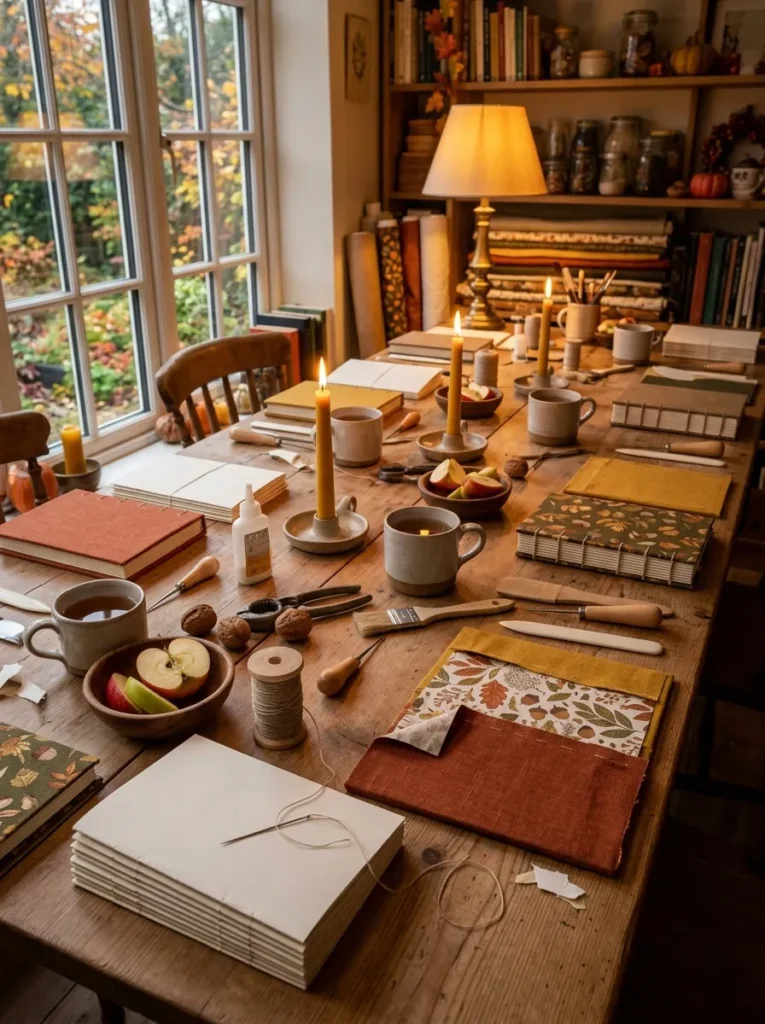
Vibe: Focused and warm — the craft night that produces the object most likely to become a treasured possession.
Why it works: Bookbinding is the craft night project with the highest perceived value relative to material cost — a hand-bound coptic stitch notebook in a guest’s chosen cover fabric is an object that most guests immediately identify a specific use for (a journal, a sketchbook, a recipe notebook), making the take-home genuinely meaningful rather than simply decorative. The coptic stitch is the ideal bookbinding structure for a craft night because it requires no adhesive or book press, produces a notebook that opens completely flat (the most functional quality of any hand-bound notebook), and the exposed chain stitch spine is visually sophisticated enough to read as professionally crafted.
The project: Pre-fold all paper signatures before guests arrive — the folding step is time-consuming and can be done in advance without reducing the evening’s craft engagement. Each guest receives six pre-folded signatures of four sheets each (creating a 96-page notebook), two cover boards, a piece of their chosen cover material (autumn-toned bookcloth, fabric, or decorative paper), and a length of waxed linen thread. Guests cover their boards, punch holes in signatures and covers using a template and awl, and sew the coptic stitch structure under guidance from a demonstration video or a host who has practiced the sequence.
Food and drink: A proper autumn tea — Darjeeling, Earl Grey, or chai — in good mugs with a plate of apple slices, walnuts, sharp cheddar, and honey oat biscuits. The food should be one-handed and require no cutlery.
| Product |
|---|
| Bookbinding linen thread waxed natural |
| Bookbinding awl for signature holes |
| Bookbinding needle curved large eye |
| Book board 2mm for covers |
| Autumn bookcloth set assorted colors |
10. Winter Paper Cutting Night
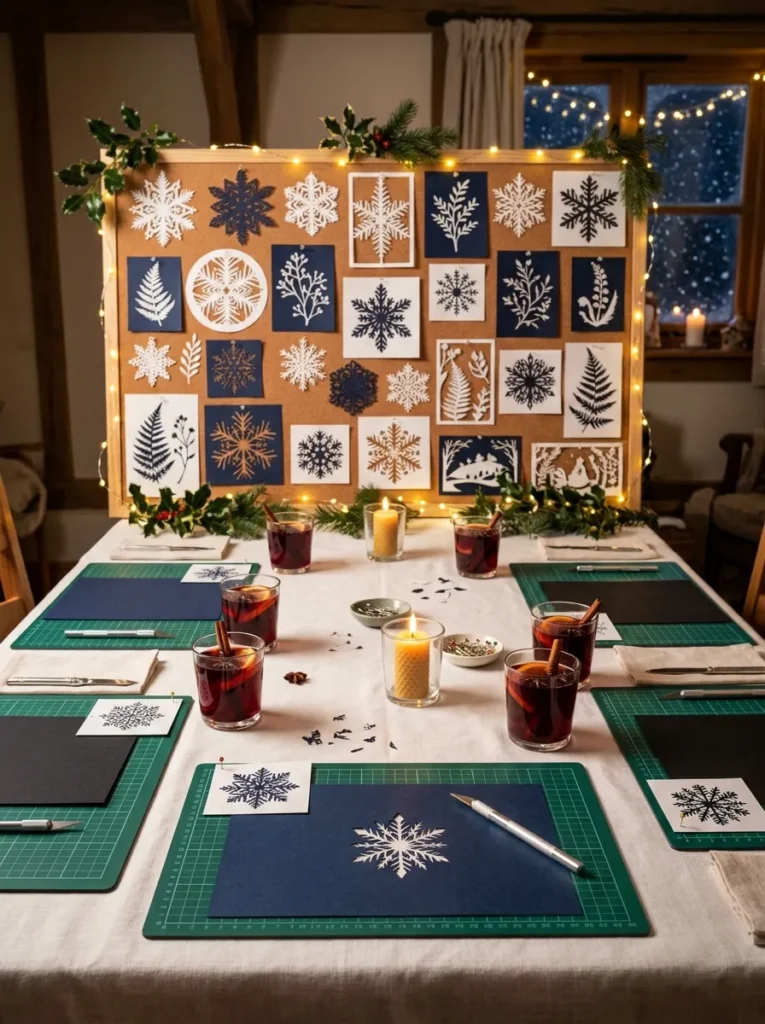
Vibe: Focused and atmospheric — the craft night where silence is as welcome as conversation and every person leaves with something they cannot quite believe they made.
Why it works: Paper cutting is the craft night project that most consistently produces the response “I didn’t know I could do that” — the apparent complexity of intricate cut paper designs is achieved through a simple process (following a template with a sharp craft knife on a cutting mat) that produces results whose delicacy makes them look technically demanding. Winter is the natural season for paper cutting because snow crystal symmetry and bare-branch silhouettes are the design vocabulary most naturally suited to the medium’s white-on-dark or dark-on-light aesthetic. The evening has a naturally contemplative pace — paper cutting requires sustained focus that reduces conversation and creates a shared atmosphere of deep absorption that guests frequently describe as the most restful part of any craft night.
The project: Provide printed template sheets for three design options at different complexity levels: a simple six-fold snowflake (beginner, 20–30 minutes), a botanical branch silhouette (intermediate, 45–60 minutes), and a complex mandala pattern (advanced, 60–90 minutes). Guests select their template, tape it to their chosen cardstock, and cut through both layers simultaneously. Mount completed cuts on contrasting backing paper in a simple frame or pin to the display board for the evening’s communal gallery.
Food and drink: Mulled wine (warm, spiced, served in warmed glasses) and a winter board of dark chocolate, candied orange peel, roasted chestnuts, and gingerbread cookies. The food should require no plates.
| Product |
|---|
| Deep navy cardstock 110lb sheets |
| Craft knife handle with fine blades |
| Self-healing cutting mat A4 set |
| Paper cut template cards winter designs |
| White cardstock for snowflake cutting |
11. Spring Botanical Print Block Night
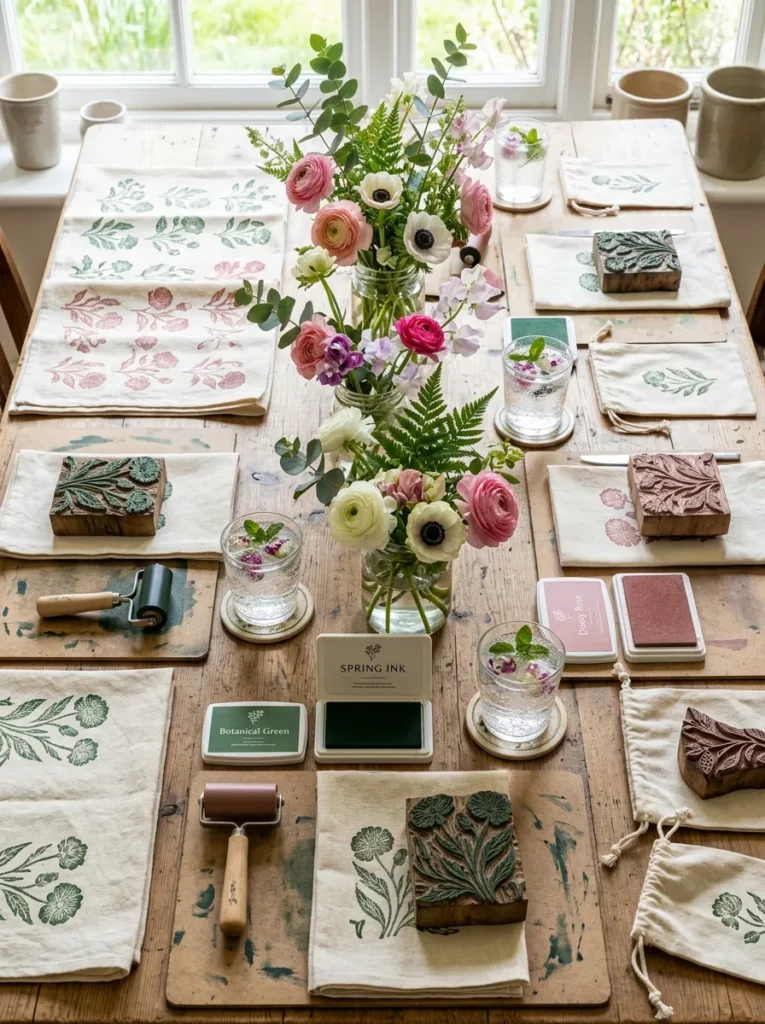
Vibe: Fresh and productive — the craft night that produces a complete set of printed linens from a single evening of making.
Why it works: Botanical block printing onto linen napkins is the craft night project with the most immediately practical take-home — a set of six hand-printed linen napkins is a genuinely useful household object that most guests would not purchase but immediately want to own, making this the craft night with the highest material life expectancy of any project. Pre-carved wooden botanical stamps (available from craft suppliers) or guest-carved lino blocks provide the printing element, and the repeatability of stamping — pressing the same block multiple times with different ink loading levels produces naturally varied impressions — makes the project accessible to complete beginners while offering experienced printers the opportunity to create complex multi-color compositions.
The project: Provide each guest with six pre-washed cream linen napkins and access to a shared printing station with three botanical stamp designs (leaf cluster, single flower, and simple stem-and-berry), two ink pad colors (botanical green and dusty rose), and a small foam brayer for applying ink to the stamps. Guests plan their repeating pattern on one napkin in pencil before printing, then progress through all six napkins. Heat-set finished napkins with an iron over parchment paper to make prints washable.
Food and drink: Sparkling water with flower ice cubes (freeze edible flowers into ice cube trays a day before), elderflower champagne, and a spring garden board — asparagus with hollandaise dipping sauce, radishes with butter and salt, snap peas, and a ricotta crostini.
| Product |
|---|
| Linen napkin set blank pre-washed 6 pack |
| Botanical rubber stamp set leaf and flower |
| Fabric ink pad set botanical green dusty rose |
| Foam brayer small for stamp inking |
| Iron parchment for heat-setting prints |
12. Summer Natural Dye Tie-Dye Night
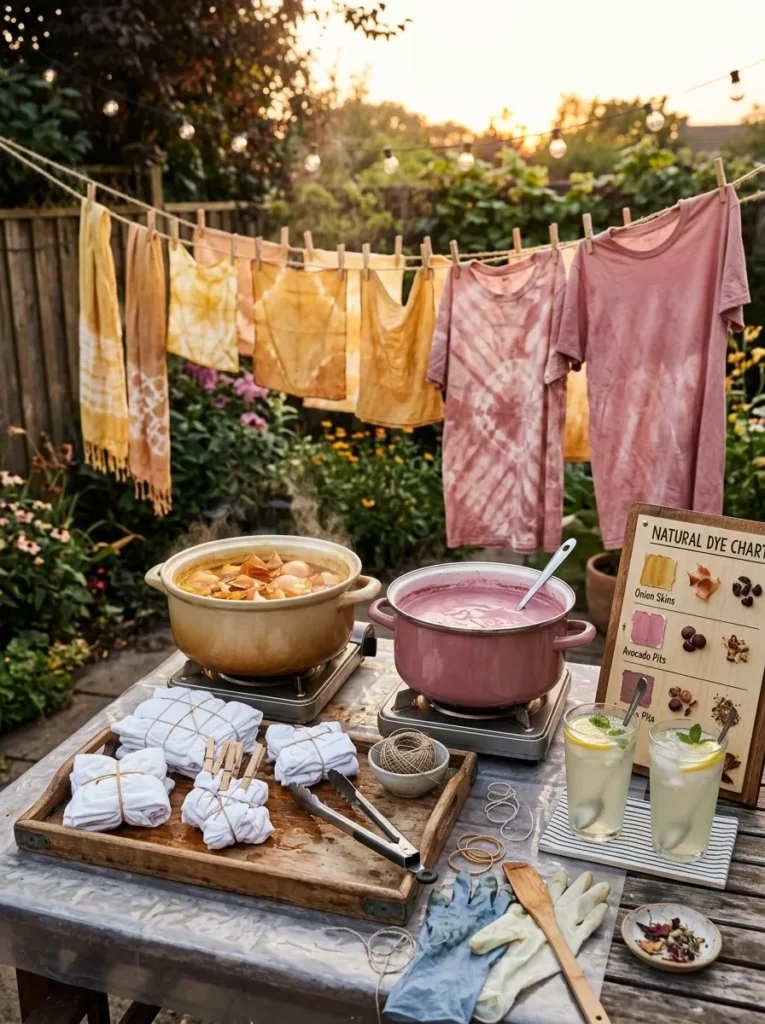
Vibe: Vibrant and natural — the craft night that produces fashion in the colors of the natural world.
Why it works: Natural dye tie-dye is the craft night project that most convincingly bridges the domestic and the artisanal — using kitchen ingredients (onion skins, avocado pits, red cabbage) to produce professional-quality natural dyes in the muted, sophisticated tonal range that plant-based dyes naturally produce. The colors of natural dye — warm golden yellow from onion skins, dusty rose-pink from avocado pits, soft sage from chamomile — are the specific color palette dominating contemporary fashion and textile design, making natural dye tie-dye the craft night whose results are most directly connected to a current aesthetic moment rather than a nostalgic craft tradition.
The project: Prepare two dye baths before guests arrive (onion skin golden and avocado pit dusty rose, both requiring 45-60 minutes of simmering that is not suitable for the craft night itself). Mordant all fabric pieces with alum before the evening (this can be done 24 hours in advance). Each guest bundles, twists, and binds their cotton t-shirt or fabric piece using rubber bands, string, or wood clothespins as resist elements, then submerges in their chosen dye bath for 45 minutes while the conversation flows. Reveal pieces by unwrapping — the resist elements produce the pattern in natural negative space against the dyed ground.
Food and drink: Cold lemonade with herb ice, sparkling water, and a summer salad spread — large bowls of tomato and bread salad, green salad, and fresh fruit for help-yourself serving.
| Product |
|---|
| Alum mordant for natural dyeing |
| Onion skin bag large for golden dye |
| White cotton t-shirt set pre-washed |
| Large stainless pot set for dye baths |
| Rubber band and string set for resist |
13. Autumn Terrarium Night
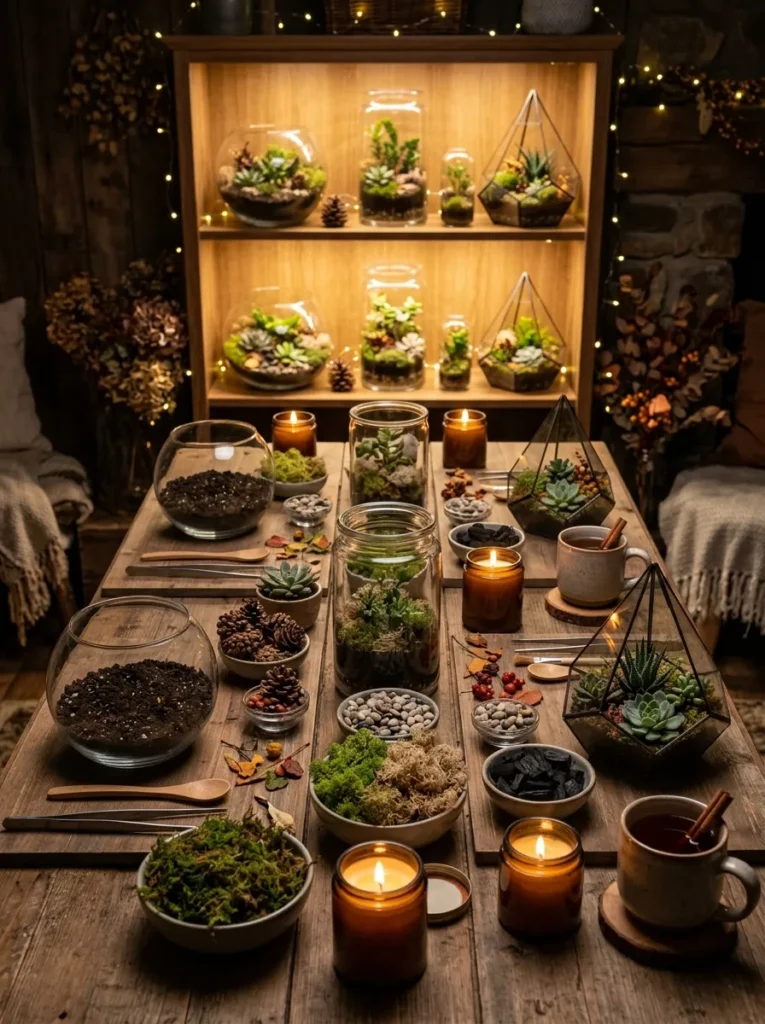
Vibe: Warm and focused — the craft night that ends with every guest taking home a small living world in glass.
Why it works: Terrarium making is the craft night project with the most sustained engagement after the evening ends — the living ecosystem created in each glass vessel continues to develop, grow, and change for months after the craft night, making it the take-home with the longest ongoing connection to the evening’s experience. The layered construction process — pebbles, then charcoal, then soil, then plants, then moss and decorative elements — provides a natural step-by-step structure that makes the project feel manageable and satisfying at each stage rather than overwhelming as a whole. Autumn is the ideal season because small succulents and air plants pair naturally with dried pine cones, acorn caps, and autumn-toned moss to create a seasonal ecosystem that feels specifically appropriate to the time of year.
The project: Each guest receives a glass vessel (provide 3–4 different shapes and sizes for guests to choose from), a set of materials in small dishes (pebbles for drainage base, activated charcoal, terrarium potting mix, sphagnum moss, two or three small plants), and autumn accent materials (tiny pine cones, dried moss tufts, small crystal pebbles). Assembly follows the layering sequence: pebbles, charcoal, soil, plants, moss layer, autumn accents. Tweezers are essential for placing plants through narrow vessel openings.
Food and drink: Warm spiced cider in mugs (small enough to set aside during planting), a harvest board of roasted pumpkin seeds, dried cranberries, sharp aged cheese, and sourdough bread.
| Product |
|---|
| Glass terrarium vessel set assorted shapes |
| Activated charcoal terrarium layer |
| Small succulent plant set for terrarium |
| Sphagnum moss bag terrarium |
| Terrarium potting mix bag |
14. Winter Soap Making Night
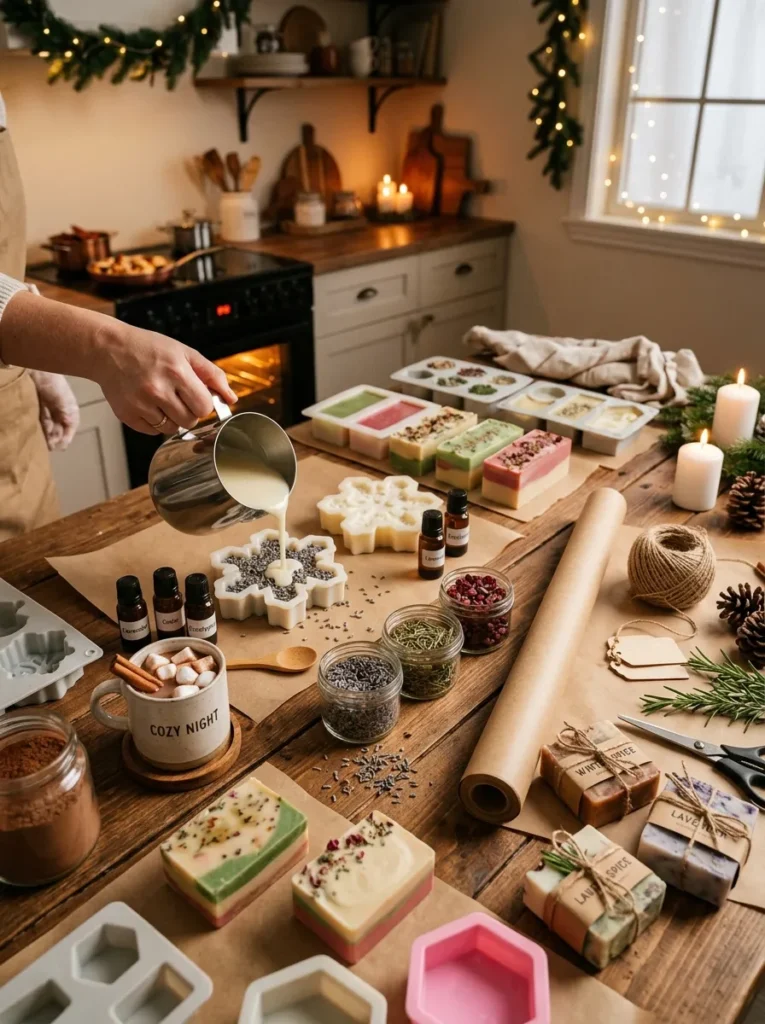
Vibe: Warm and gift-oriented — the craft night that produces personalized gifts for everyone on the guest list before Christmas.
Why it works: Soap making using the melt-and-pour method is the craft night project with the highest gift potential — four to six bars of hand-made soap scented with essential oils and decorated with dried botanicals, wrapped in kraft paper and tied with twine, is a genuinely impressive and genuinely useful gift that requires no prior soap-making knowledge to produce professionally. The melt-and-pour method (melting a pre-made clear or white soap base) eliminates the lye safety concerns of cold-process soap making, making it completely safe for a craft night context. Each guest produces 4–6 soaps in a single evening — enough to cover the gifts they need for the holiday season.
The project: Melt white and clear melt-and-pour soap base in separate containers before guests arrive (microwave method, 30-second intervals). Guests select their mold shape (rectangular, round, or botanical pressed form), pour a base layer of colored soap, allow to partially set, add dried botanical garnishes (pressed into the surface), then pour a second complementary colored layer. Add 5–7 drops of their chosen essential oil blend per 100g of soap base. Allow to set for 20–30 minutes, unmold, and wrap in kraft paper and twine at the wrapping station.
Food and drink: Hot cocoa with marshmallows and cream, a winter cookie and gingerbread spread, and mulled apple juice. The sweet, warm drinks pair thematically with the soap’s aromatic essential oil scents that fill the room.
| Product |
|---|
| Melt-and-pour soap base white clear |
| Soap mold silicone set assorted shapes |
| Essential oil set lavender cedar eucalyptus |
| Dried botanical soap garnish set |
| Kraft paper and twine gift wrapping |
15. Year-Round Vision Board Collage Night
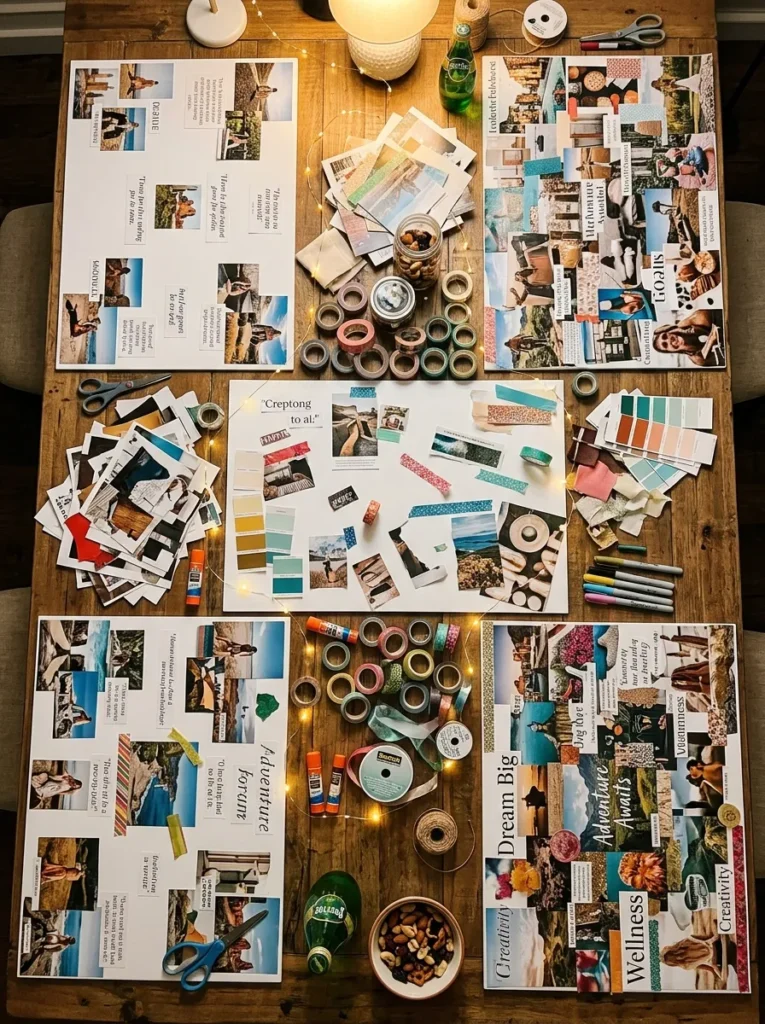
Vibe: Creative and energized — the craft night that is genuinely about making rather than making a thing, and produces a different kind of satisfaction from any other project.
Why it works: A vision board collage night works as a craft night theme because it requires no skill, produces deeply personal results, and naturally generates conversation about goals, aesthetics, and creative identity that no other craft project facilitates as directly. The collage format — cutting, selecting, arranging, and adhering images and words that resonate personally — is both meditative and revealing, and the shared activity of vision board creation regularly produces the most intimate conversations of any craft night because each person’s emerging board invites questions about what they are choosing and why. As a year-round theme (particularly well-suited to January and to seasonal transition points), it connects the craft activity to the genuine life aspirations of the participants rather than to an external decorative goal.
The project: Provide each guest with an A2 cork or foam board, a large selection of magazines across varied categories (interiors, nature, travel, fashion, food, culture), access to a shared material table (washi tape, ribbon, fabric scraps, paint chips, printed quote sheets), and their own glue stick and scissors. The only instruction: no wrong answer, no theme required, and no judgment. Begin with 20 minutes of cutting and collecting before anyone glues anything — this accumulation phase is what ensures guests are choosing from genuine resonance rather than what happens to be in front of them first.
Food and drink: The most varied and festive food spread of any craft night — this is the occasion for a genuinely generous grazing table with varied textures, flavors, and the seasonal elements of whatever month the craft night falls in. Champagne or sparkling wine for the sense of occasion.
| Product |
|---|
| A2 foam board or cork board set |
| Magazine collection assorted categories |
| Washi tape set assorted patterns |
| Glue stick set strong hold |
| Scissors set quality craft |
How to Start Your Cozy Craft Night Hosting Practice
Start by hosting for three. Before organizing a full group craft night for eight or ten guests, host a single trial craft night for two or three close friends using one of the simpler projects on this list — the autumn wreath, the watercolor night, or the vision board evening. This small-scale first event gives you the logistical information that makes every subsequent craft night run smoothly: how long setup actually takes versus how long you estimated, which food format works best for hands-in-use eating, how much material each person actually uses versus how much you prepared, and how to explain the project clearly to someone who has never done it before. The trial craft night investment is one evening and a modest material cost; the return is the knowledge that makes every future craft night feel genuinely well-prepared rather than improvised.
The most common mistake craft night hosts make is underestimating the importance of the table setup relative to the project itself. A beautifully set craft table — kraft paper covering, individual material piles or supply bags at each place, warm ambient lighting established before guests arrive, and food already out and accessible — creates the atmosphere that makes guests feel the evening is a genuine occasion rather than an informal session that happens to involve making. The table is the first thing every guest sees when they arrive, and the quality of its preparation sets the expectation for the entire evening. Ten minutes of pre-event table setting — candles lit, supplies organized, music on, cider warming — produces more hosting quality than an hour of more complex preparation hidden from guest view.
Three items under $30 that make every craft night better: A roll of brown kraft paper ($6–$10) that covers any table for easy cleanup and immediately creates the warm, artisanal surface aesthetic that sets a craft night apart from a regular social gathering; a set of battery-operated warm fairy lights ($8–$12) that provides the ambient warm atmosphere most associated with cozy craft nights in under two minutes of setup; and a collection of small ceramic or glass bowls ($8–$14 for a set of six) that organizes shared materials at the table center in a way that reads as curated rather than pile-up, making the material table a visual feature of the evening rather than a logistical challenge.
Realistic expectations: A basic craft night for four to six guests — project materials, food and drink, and basic table setup — costs $40–$80 in total depending on the project and food generosity. A more elaborate craft night with higher-quality project materials and a generous food and drink spread typically costs $80–$150 for six guests. The project materials for most craft nights on this list cost $4–$8 per person at the material quantities required — a very favorable cost per head for an evening’s entertainment that also produces a take-home object. The time investment for hosting is 45–60 minutes of pre-event setup and approximately 15 minutes of post-event cleanup with the kraft paper table covering doing the majority of the material containment work.
Frequently Asked Questions About Cozy Craft Night Themes
How do I choose the right craft night project for a mixed skill-level group?
Choose projects whose core technique is achievable by a complete beginner in the time available while offering enough creative decision-making to keep an experienced maker engaged. The best craft night projects are those with skill floors low enough that no guest feels incapable and skill ceilings high enough that the most experienced maker at the table can always find something more complex to attempt. Pinch pot making, wreath construction, watercolor painting, and collage all meet this criterion — the beginner and the experienced maker are both engaged by the same project at different levels of technical ambition. Avoid projects with a narrow skill range that only suits one level (complex bookbinding structures are frustrating for beginners; simple sticker application is unstimulating for experienced makers), and avoid projects where early mistakes cannot be corrected or worked with — frustration with irreversible errors is the most effective way to end a craft night’s joyful atmosphere.
What is the ideal group size for a craft night?
Four to eight guests is the optimal range for most craft night projects and social dynamics. Below four, the evening can feel like an intensive session rather than a social occasion. Above eight, the host’s attention is spread too thin for adequate project guidance, table logistics become complex, and the natural conversation groupings that emerge from a craft table fragment in ways that reduce the cohesion of the evening. Six is the sweet spot for most projects and most home settings — enough people for varied conversation, enough critical mass for the social energy that makes a craft night feel like an occasion, and few enough for a standard dining table to accommodate all workspaces comfortably.
How much material should I prepare per person?
A general rule for craft night material preparation is 150% of the minimum required per person — the extra 50% buffer covers mistakes, experimentation beyond the basic project, and the natural tendency for materials to migrate across workspaces during the evening. For specific projects: wreath making requires one base plus approximately 3x the anticipated material volume per wreath (guests use more than expected); paper cutting requires two or three extra sheets per guest (mistakes require starting again); clay pinch pot making requires 300g per guest for one pot plus 100g additional for a second attempt. Under-preparing materials is the most common cause of craft night interruption — having to pause the project to find more materials breaks the evening’s creative flow in a way that over-preparation entirely prevents.
How do I handle guests who feel they are not creative enough to craft?
The most effective response to “I’m not creative” at a craft night is structured beginning — a specific first instruction that removes the blank-page paralysis that non-crafters experience when faced with an open creative task. “Start by placing the largest element in the lower left third of your wreath and working from there” is more helpful than “make your wreath however you like.” Every project on this list should have a specific starting instruction that guides the first decision without constraining the full creative expression that follows. Additionally, framing the craft night as an experiment rather than a performance (“there is no wrong result — we’re all just playing with the materials”) reduces the self-consciousness that makes non-crafters hesitant. In practice, the guests who arrive announcing they cannot craft are frequently the ones whose projects receive the most genuine admiration at the evening’s end.
Can craft nights work virtually, and which projects translate best online?
Virtual craft nights work well for projects that are genuinely achievable with materials that can be pre-purchased and shipped or provided in a kit format, and where the making process is visible enough on a video call to be instructional and social. The projects that translate best to virtual format are watercolor painting (materials visible and makeable on camera, process visible), collage and vision boards (individual materials easily sourced, process visible and conversational), candle dipping if each participant has their own small wax container, and paper cutting (visible and precise enough to demonstrate on camera). Projects that translate poorly to virtual format are clay work (tactile feedback cannot be communicated through video), dyeing (the dye vat setup is complex for individual participants), and wreath making (the material volume and workspace size is challenging in a video call context). The social dynamic of a virtual craft night is different from an in-person one — the conversation is more structured and intentional because the natural physical proximity conversation of shared table space does not exist — but many participants report that the focused, activity-centered video call of a craft night produces more meaningful conversation than a standard social call.
Ready to Host Your Dream Cozy Craft Night?
These 15 themes cover every season, every skill level, and every social dynamic from intimate gatherings of three to lively evenings of eight — from the meditative autumn pace of bookbinding and the dramatic summer reveal of shibori dye unfolding, to the joyful energy of linocut printing’s first print moment and the tender intimacy of a vision board night’s conversations. Every craft night hosting practice begins with a single evening — not the perfectly prepared, fully resourced version you imagine hosting one day, but the version achievable this month with three friends, a kraft paper table covering, and one of the simpler projects on this list. Host that first small evening, note what worked and what you would do differently, and let it be the beginning of a hosting practice that produces some of the best evenings of your year. Save the themes that match your seasonal instincts and your group’s interests — and send the invitation this week before the timing feels perfect, because the craft night that happens imperfectly is infinitely better than the one that waits forever for the right moment.