16 Eco-Friendly Handmade Gift Ideas for Sustainable Gifting
An eco-friendly handmade gift is a crafted item built from natural, upcycled, or package-free materials, so the act of giving doesn’t add to landfill waste or single-use consumption. This article gives you 16 specific, buildable ideas for gifts that are thoughtful for both the recipient and the planet. There’s a particular satisfaction in sustainable handmade gifting: a gift that replaces something disposable in someone’s routine, a container that gets reused for years, a present that leaves behind nothing but good use. It borrows from both the zero-waste movement’s practical material choices and the long tradition of giving time and care instead of packaging, which is exactly why it works for anyone trying to gift more consciously without losing any warmth in the process. Here are 16 ideas worth saving — and stealing.
Why Eco-Friendly Handmade Gifts Work So Well
Sustainable handmade gifting draws from two traditions: the zero-waste movement’s emphasis on reusable, biodegradable, and package-free materials over disposable plastic, and the long-standing handmade gifting tradition that has always valued time and thought over price tags and packaging. What makes a gift genuinely eco-friendly rather than simply handmade is material sourcing — every ingredient and container is chosen because it breaks down naturally, gets reused indefinitely, or replaces a single-use item already in the recipient’s life.
The material and color language favors natural fiber cotton and linen, beeswax and soy wax, reclaimed glass and wood, and unbleached kraft paper for wrapping. Where possible, colors come from natural sources, plant dyes, undyed fiber, the material’s own tone, keeping the aesthetic warm and earthy rather than synthetic.
This style is trending now because gift-giving has come under real scrutiny for its environmental footprint, wrapping paper, plastic packaging, one-use novelty items, and search interest in “eco-friendly gift ideas” and “zero waste gift” has grown as more people look for ways to give thoughtfully without contributing to waste. Package-free bulk ingredients and reclaimed materials have also become far easier to source than they used to be.
A genuine commitment to sustainability doesn’t require sacrificing thoughtfulness, since the best eco-friendly gifts are often more personal precisely because they’re built to be reused or to naturally return to the earth. Prioritize one material that replaces something single-use in the recipient’s daily life before choosing which specific project to build.
Style at a Glance
| Element | Zero-Waste Practical | Handmade Sentimental Tradition |
|---|---|---|
| Philosophy | Reusable, biodegradable | Time over packaging |
| Materials | Beeswax, cotton, reclaimed wood | Natural dye, kraft paper |
| Presentation | Reused containers, twine | Kraft paper, handwritten tag |
16 Eco-Friendly Handmade Gift Ideas
1. Loofah and Soap Combo From a Homegrown Gourd
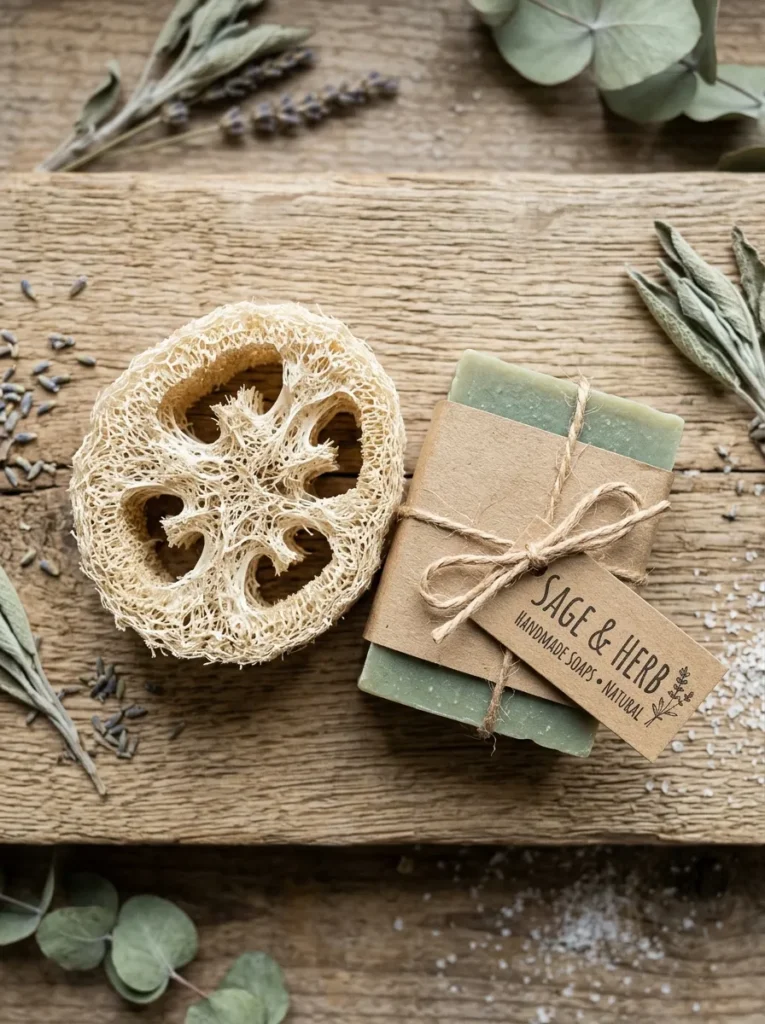
Vibe: Natural, like a garden vegetable became a genuine bathroom staple.
Why it works: A loofah grown and dried at home replaces a plastic-netted synthetic sponge entirely, a material principle where the entire gift traces back to something planted, grown, and harvested rather than manufactured.
How to get it: Grow luffa gourds through a full season, let them dry fully on the vine, peel away the outer skin, shake out the seeds, and slice into rounds to pair with a bar of soap.
Shop the Look
| Product |
|---|
| Dried loofah gourd slices |
| Bar soap unwrapped |
| Kraft wrapping paper |
| Natural jute twine |
| Kraft gift tag set |
Also view: 16 Handmade Gift Ideas for Coworkers That Won’t Break the Budget
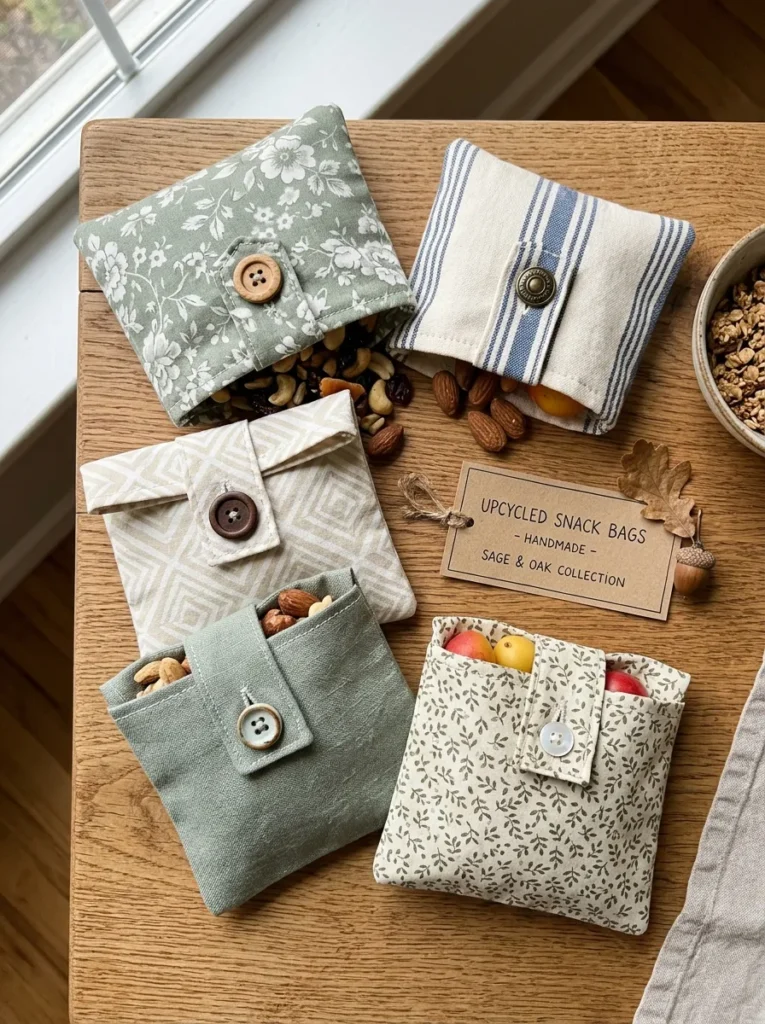
2. Reusable Snack Bags From Upcycled Fabric
Vibe: Practical, like the lunch bag drawer got a small, lasting upgrade.
Why it works: Sewing bags from an old pillowcase or worn shirt directly replaces disposable plastic sandwich bags with a washable, reusable version, a function-first design where the gift reduces waste on a near-daily basis.
How to get it: Cut upcycled cotton fabric into rectangles, sew three sides closed, and add a button-and-loop or Velcro flap closure for the opening, making a set of two or three sizes.
Shop the Look
| Product |
|---|
| Upcycled cotton fabric |
| Button set for closures |
| Sewing machine or needle and thread |
| Fabric scissors |
| Kraft label tag set |
Also view: 15 Handmade Gift Ideas for Mom That She’ll Treasure
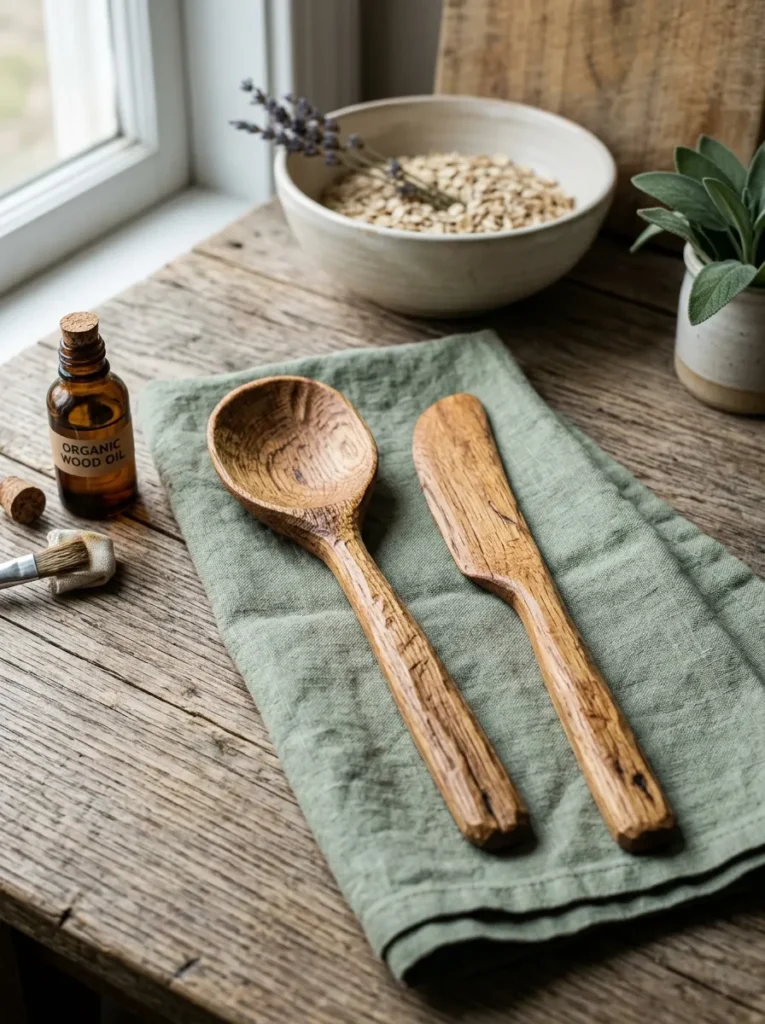
3. Wooden Utensil Set From a Fallen Branch
Vibe: Grounded, like a fallen branch became a kitchen tool that will outlast most plastic ones.
Why it works: Carving from a branch that’s already fallen requires no tree to be cut down at all, a material principle where the raw material has essentially zero environmental cost beyond the time spent carving it.
How to get it: Select a fallen hardwood branch, carve a simple spoon or spreader shape using a whittling knife, sand progressively finer grits to smooth the surface, and finish with food-safe mineral oil.
Quick Win: A basic spreader knife shape is far more forgiving for a first carving attempt than a deep-bowled spoon.
Shop the Look
| Product |
|---|
| Fallen hardwood branch |
| Whittling knife |
| Food-safe mineral oil |
| Fine sandpaper sheet set |
| Small ribbon for gifting |
4. Natural Dye Scarf From Onion Skins
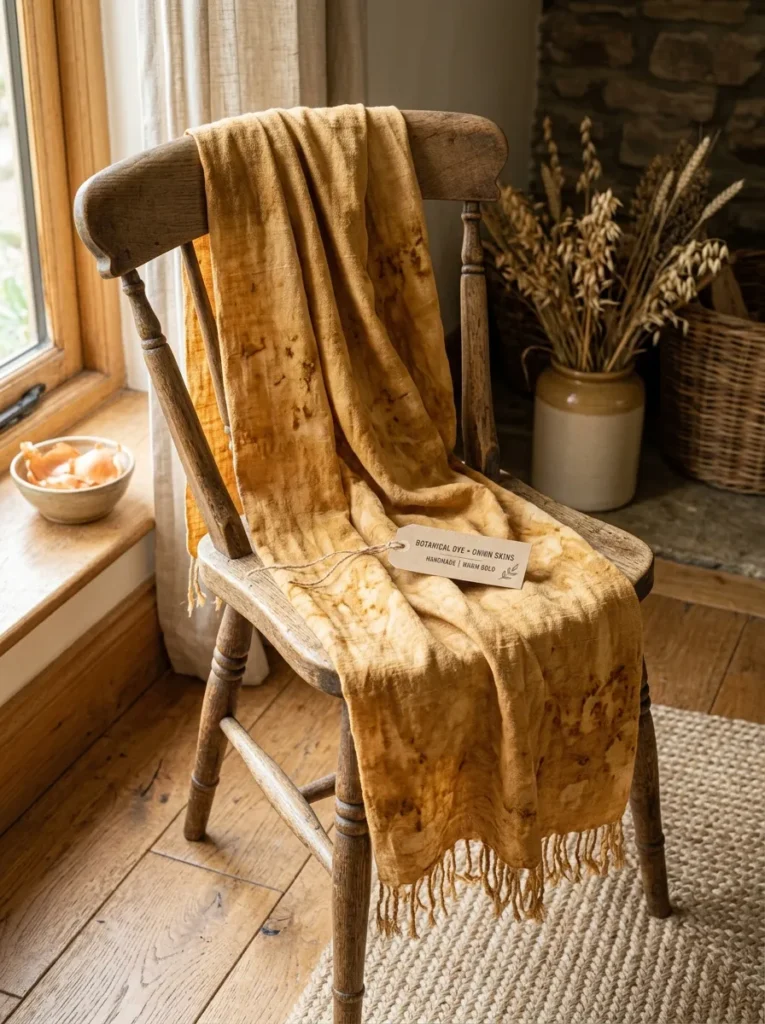
Vibe: Earthy, like kitchen scraps turned into something worth wearing.
Why it works: Onion skins are a food byproduct that would otherwise be discarded, and using them as a dye source avoids the synthetic dye runoff associated with commercial textile production entirely.
How to get it: Save onion skins over several weeks of cooking, simmer them in water to create a dye bath, submerge a plain cotton scarf and let it soak until the desired golden color develops, then rinse and dry flat.
Shop the Look
| Product |
|---|
| Plain cotton scarf blank |
| Saved onion skins |
| Large pot for dye bath |
| Cotton string for bundling |
| Kraft gift tag |
5. Small Space Reusable Produce Bag From Mesh Fabric
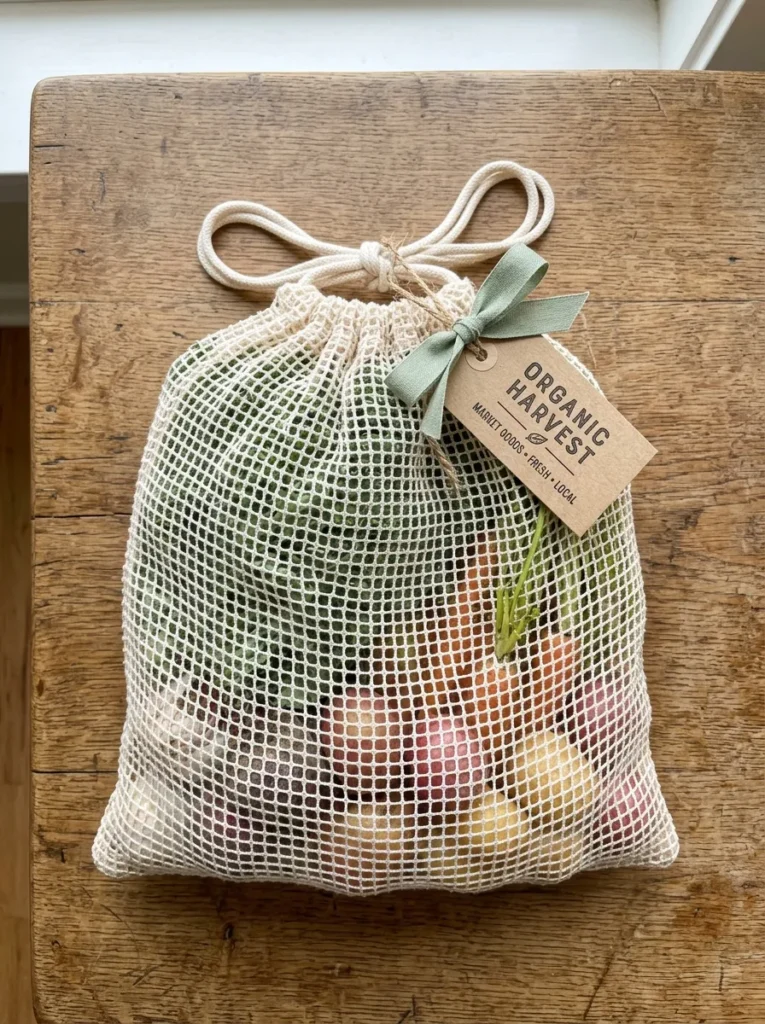
Vibe: Practical, like grocery shopping got a small, lasting upgrade.
Why it works: A reusable mesh produce bag directly replaces thin plastic produce bags on every single grocery trip, a function-first design where the environmental impact compounds with each use over years.
How to get it: Sew a simple drawstring bag from lightweight cotton mesh, hemming the top edge and threading a cotton cord through for the closure, making a set of three or four in varying sizes.
Shop the Look
| Product |
|---|
| Cotton mesh fabric |
| Cotton drawstring cord |
| Sewing machine or needle and thread |
| Fabric scissors |
| Kraft label tag set |
6. Sage and Kraft Wrapped Infused Vinegar
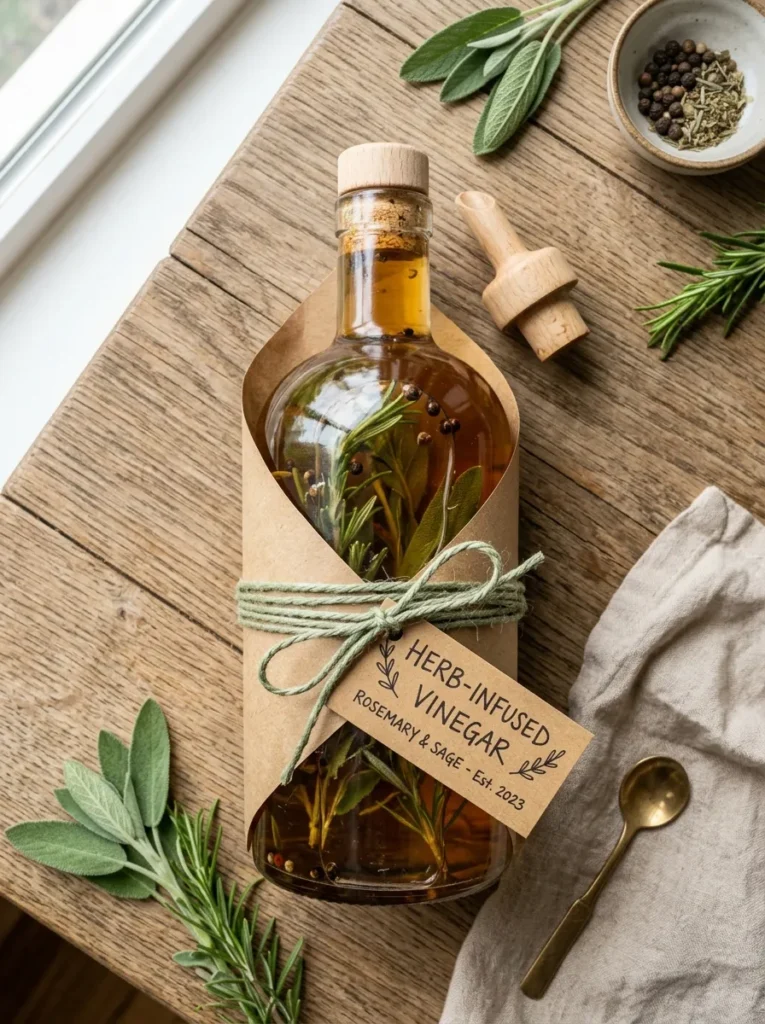
Vibe: Cheerful, like a garden herb found its way into someone else’s kitchen.
Why it works: Infusing vinegar in a reused glass bottle rather than buying new packaging keeps a container out of the recycling stream longer, and the empty bottle becomes reusable again once the vinegar is finished.
How to get it: Steep fresh or dried herbs like rosemary or thyme in white vinegar for two weeks, strain into a cleaned reused glass bottle, and wrap with kraft paper and sage twine.
Shop the Look
| Product |
|---|
| Reused glass bottle cleaned |
| Fresh or dried herbs |
| White vinegar |
| Kraft paper for wrapping |
| Sage twine spool |
7. Warm Task Lighting Beeswax Firestarter Set
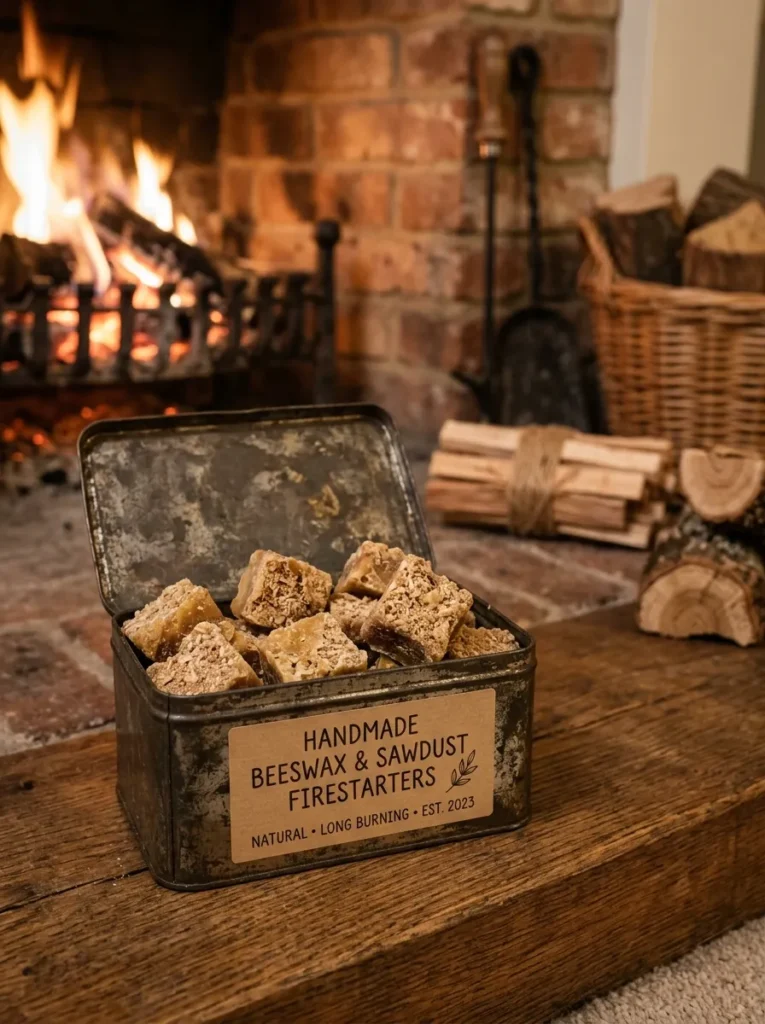
Vibe: Functional, like an old muffin tin turned into a genuinely useful fireside gift.
Why it works: Combining beeswax with sawdust or dryer lint diverts two low-value waste materials into something genuinely functional, replacing chemical-laden commercial firestarters with an all-natural alternative.
How to get it: Melt beeswax and pour it over small mounds of sawdust or dryer lint set into a muffin tin or small cupcake liners, let harden fully, and package the finished pucks in a reused metal tin.
Shop the Look
| Product |
|---|
| Beeswax block |
| Sawdust or dryer lint |
| Reused muffin tin or liners |
| Reused metal tin for storage |
| Kraft label sticker sheet |
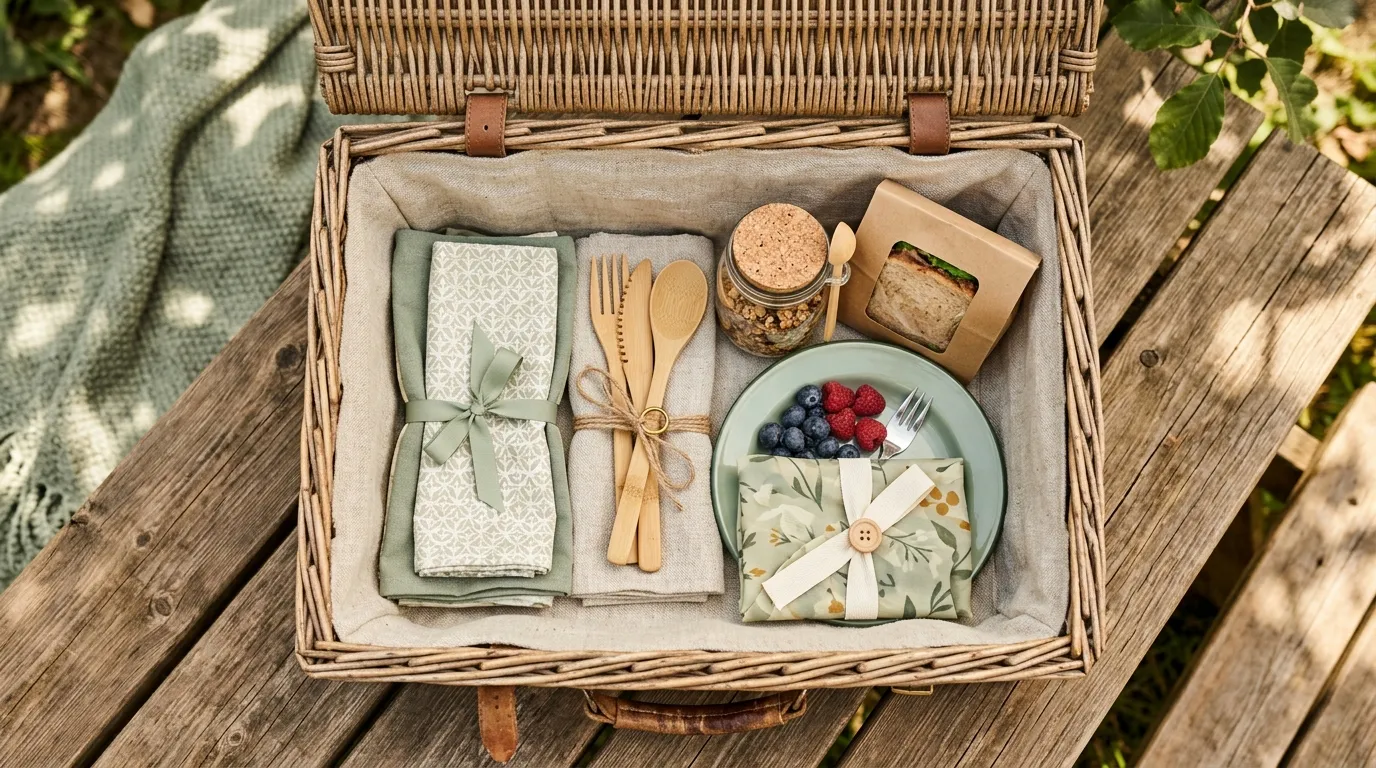
8. Layout: Zero-Waste Picnic Set in a Reused Basket
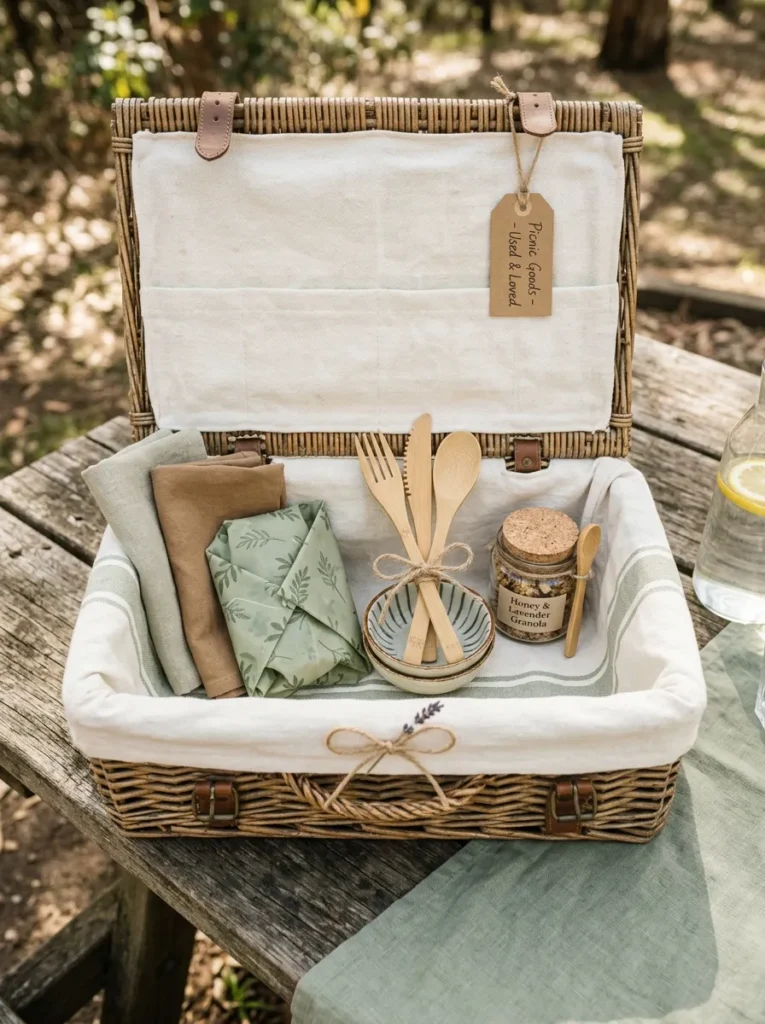
Vibe: Thoughtful, like a whole disposable-free picnic kit came together in one basket.
Why it works: Grouping several reusable items into a secondhand basket rather than new packaging means the presentation itself avoids waste, letting every element of the gift, contents and container alike, serve a repeat-use purpose.
How to get it: Source a secondhand picnic basket, line it with a cloth napkin set, and fill it with a set of the wood utensils, a beeswax wrap, and reusable cotton napkins so the whole kit replaces disposable picnic gear.
Shop the Look
| Product |
|---|
| Secondhand picnic basket |
| Cloth napkin set |
| Wood utensil set |
| Beeswax food wrap |
| Small ribbon bow accent |
9. Small Nook Compost Starter Kit for a New Gardener
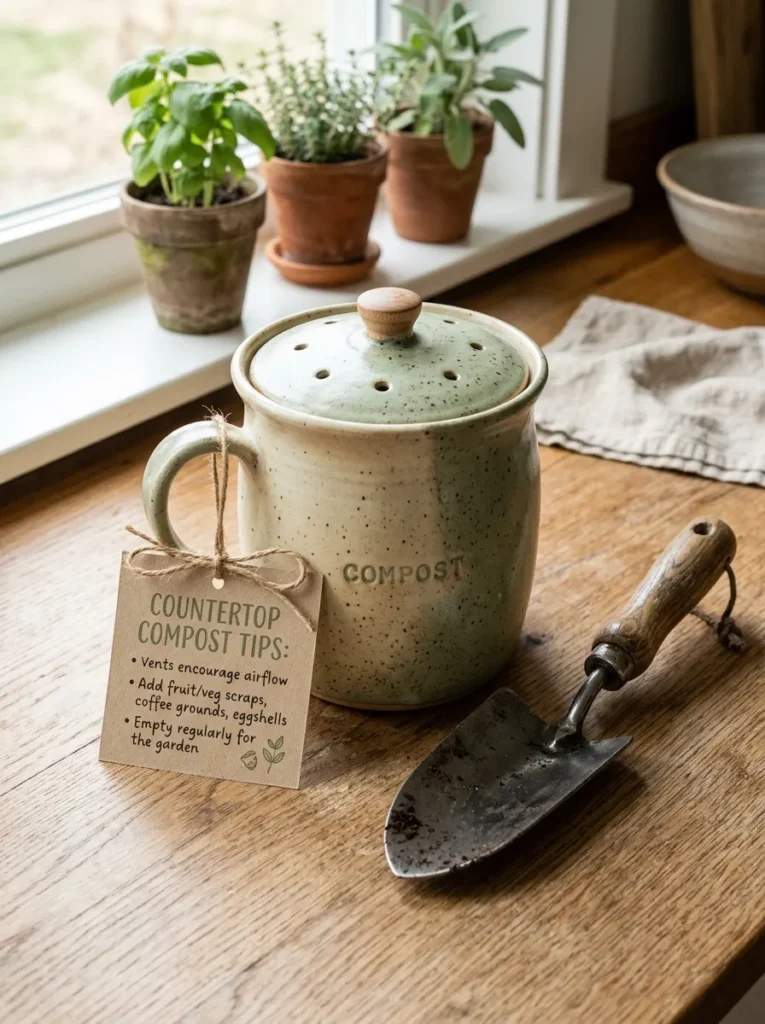
Vibe: Practical, like the kitchen scraps finally have somewhere better to go than the trash.
Why it works: A countertop compost collector encourages diverting food scraps from landfill, where they produce methane, into something that becomes usable soil, a function-first gift that changes a daily habit rather than just adding an object.
How to get it: Repurpose a lidded ceramic crock or jar, drilling a few small vent holes if needed, and pair it with a simple instruction card explaining what can and can’t be composted for a beginner.
Quick Win: A secondhand cookie jar or canister works perfectly as the compost collector base.
Shop the Look
| Product |
|---|
| Secondhand ceramic crock with lid |
| Small drill for vent holes |
| Kraft instruction card |
| Garden trowel |
| Small compostable liner bags |
10. Warm Oak and Reclaimed Wood Bird Feeder
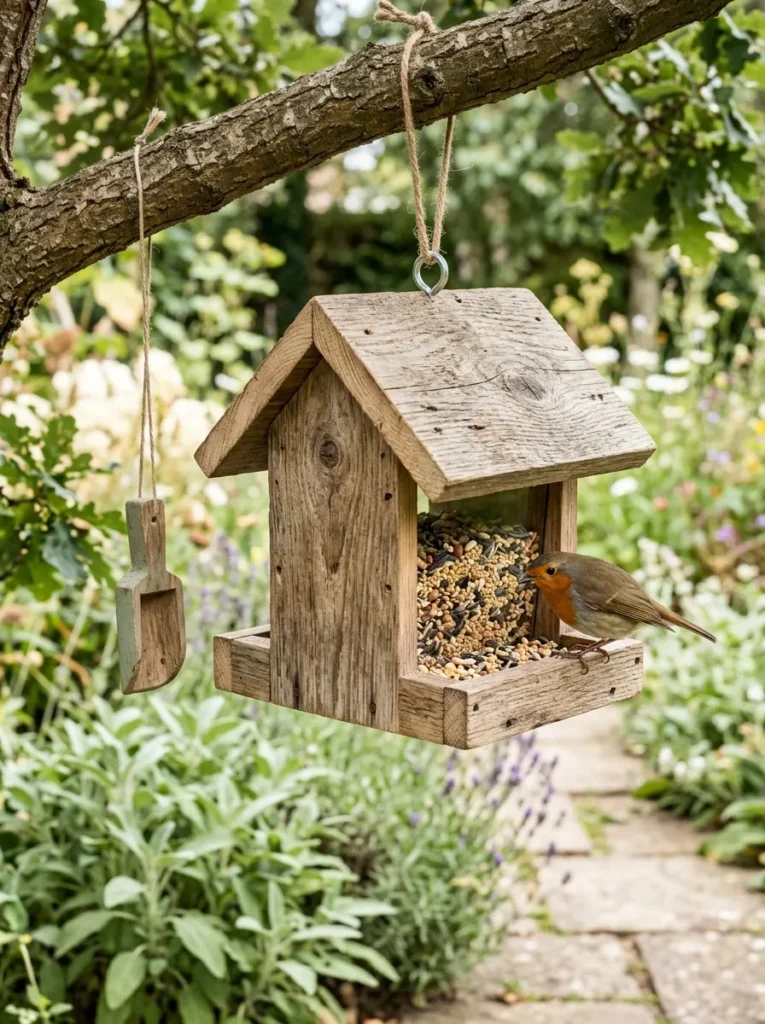
Vibe: Grounded, like scrap wood found a purpose that benefits the whole backyard.
Why it works: Building from reclaimed wood scraps rather than new lumber avoids the environmental cost of harvesting fresh timber, while the finished feeder supports local wildlife long after the gift is given.
How to get it: Cut reclaimed wood scraps into a simple platform and roof shape, assemble with wood glue and small nails, and finish with a weather-resistant natural oil before hanging.
Shop the Look
| Product |
|---|
| Reclaimed wood scraps |
| Wood glue and small nails |
| Weather-resistant wood oil |
| Small hanging hook |
| Bird seed bag |
11. Small Space Upcycled Tote From a Feed or Flour Sack
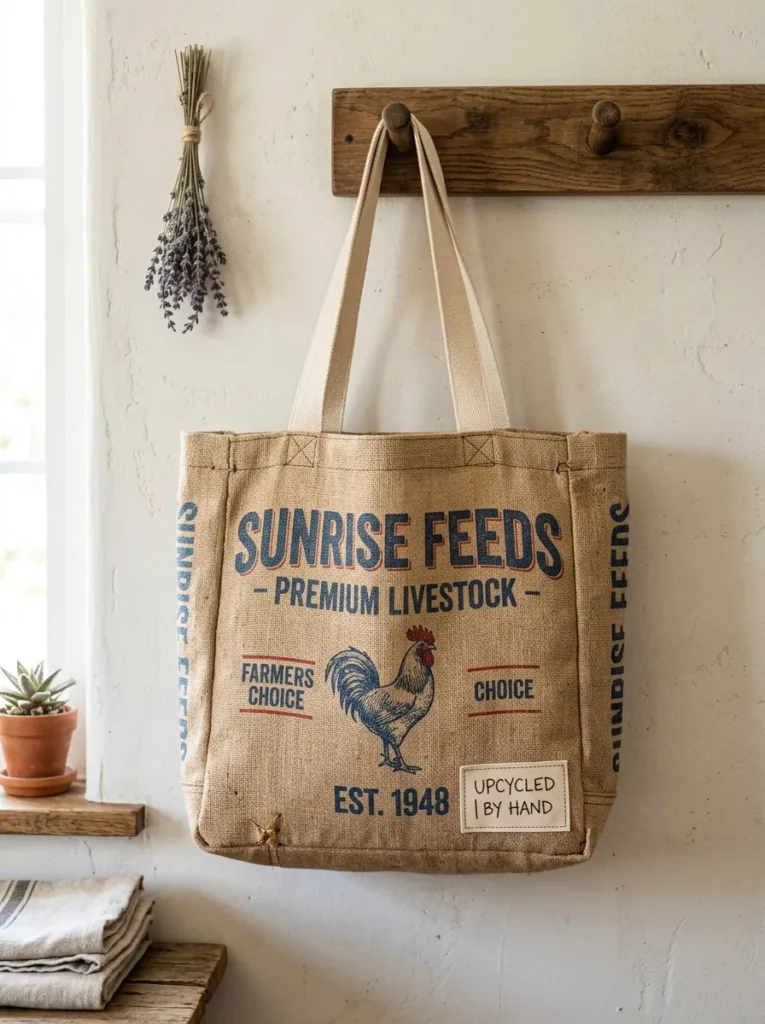
Vibe: Resourceful, like a burlap sack got a genuinely stylish second act.
Why it works: Repurposing a printed feed or flour sack rather than buying new canvas fabric gives an already-sturdy material a second full life as a functional bag, keeping it out of a landfill entirely.
How to get it: Cut a feed or flour sack to size, sew the bottom closed, and add fabric or cotton webbing straps for handles cut from the remaining sack material.
Shop the Look
| Product |
|---|
| Upcycled feed or flour sack |
| Cotton webbing for straps |
| Sewing machine heavy-duty needle |
| Fabric scissors |
| Small canvas label tag |
12. Sage and Kraft Seed Bomb Set
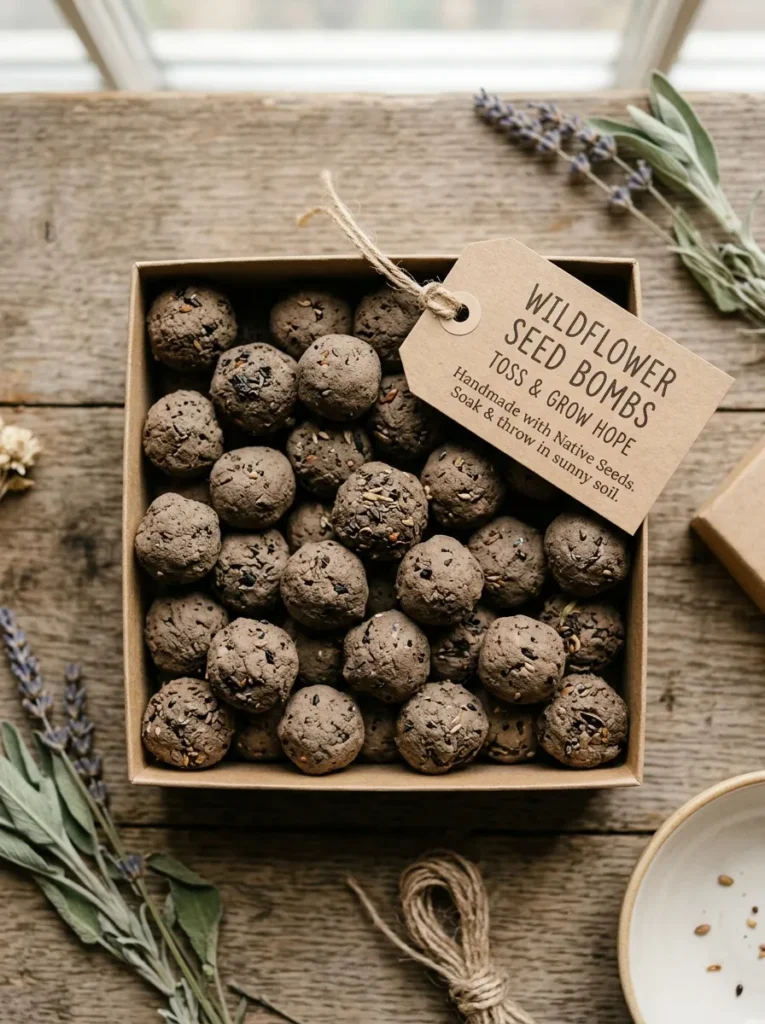
Vibe: Hopeful, like a small clay ball is really a whole future wildflower patch.
Why it works: Seed bombs made from clay, compost, and wildflower seeds are designed to be tossed directly into soil, a gift where the entire object dissolves into something that supports local pollinators.
How to get it: Mix powdered clay, compost, and wildflower seeds with a small amount of water, roll into small balls, let dry fully for a day or two, and package in a small kraft box with planting instructions.
Quick Win: Native wildflower seed mixes support local pollinators more effectively than generic flower seed blends.
Shop the Look
| Product |
|---|
| Powdered clay |
| Compost or potting soil |
| Native wildflower seed mix |
| Small kraft box |
| Kraft instruction tag |
13. Small Nook Reusable Cloth Gift Wrap
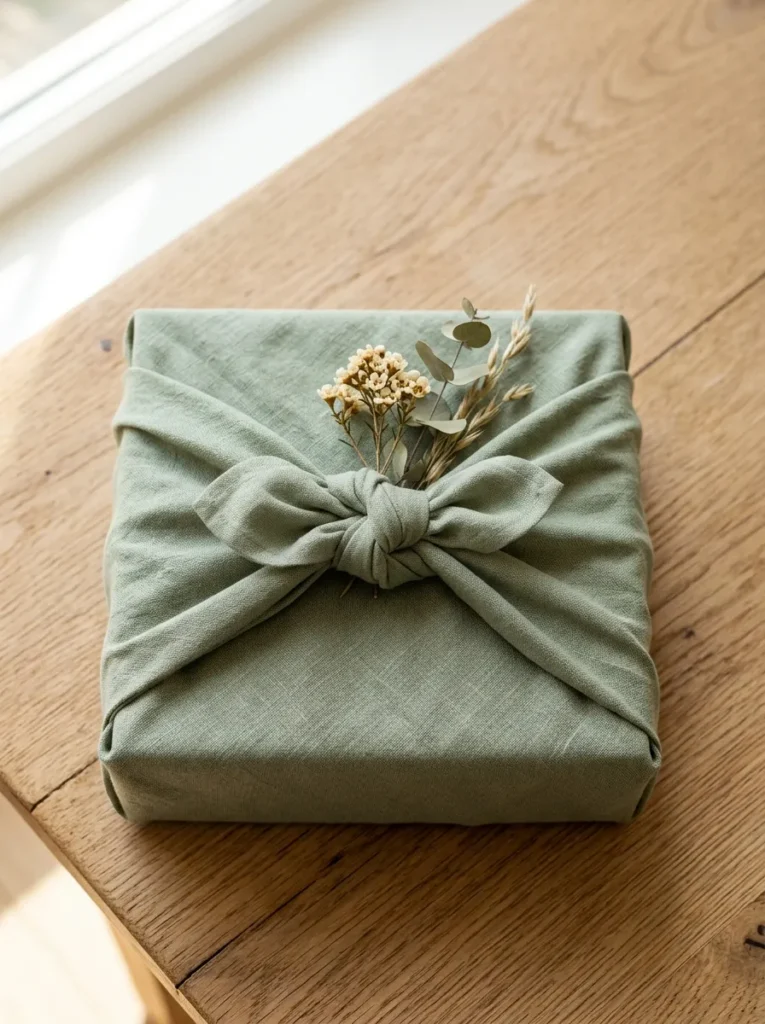
Vibe: Elegant, like the wrapping itself became a second gift.
Why it works: Fabric gift wrapping, based on the Japanese furoshiki tradition, replaces single-use wrapping paper entirely, since the cloth itself can be reused indefinitely for future gifts once the recipient learns the folding technique.
How to get it: Hem the edges of a square piece of cotton or linen fabric, then use it to wrap a gift using simple furoshiki folding and knotting techniques in place of paper and tape.
Shop the Look
| Product |
|---|
| Cotton or linen fabric square |
| Sewing machine or needle and thread |
| Fabric scissors |
| Small dried sprig accent |
| Furoshiki folding instruction card |
14. Warm White Natural Loofah Bath Mitt
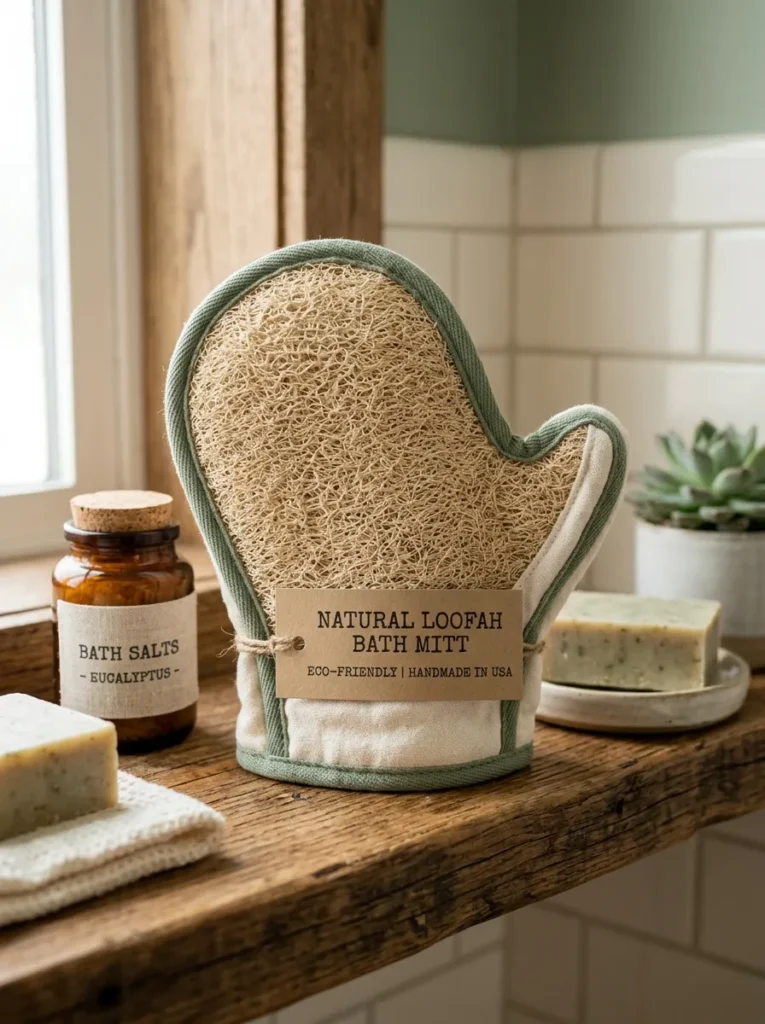
Vibe: Practical, like the shower routine got a plastic-free upgrade.
Why it works: A loofah mitt made from natural plant fiber and cotton backing fully biodegrades at the end of its life, unlike a synthetic mesh puff, a material choice where even the gift’s disposal avoids landfill waste.
How to get it: Cut a dried loofah into a flat panel, sew it onto a cotton mitt backing shaped to fit over the hand, and finish the edges with a simple hem or bias tape.
Shop the Look
| Product |
|---|
| Dried loofah panel |
| Cotton fabric for backing |
| Bias tape for edges |
| Sewing machine or needle and thread |
| Kraft label tag |
15. Small Space Illusion Pressed Botanical Card Set From Foraged Materials
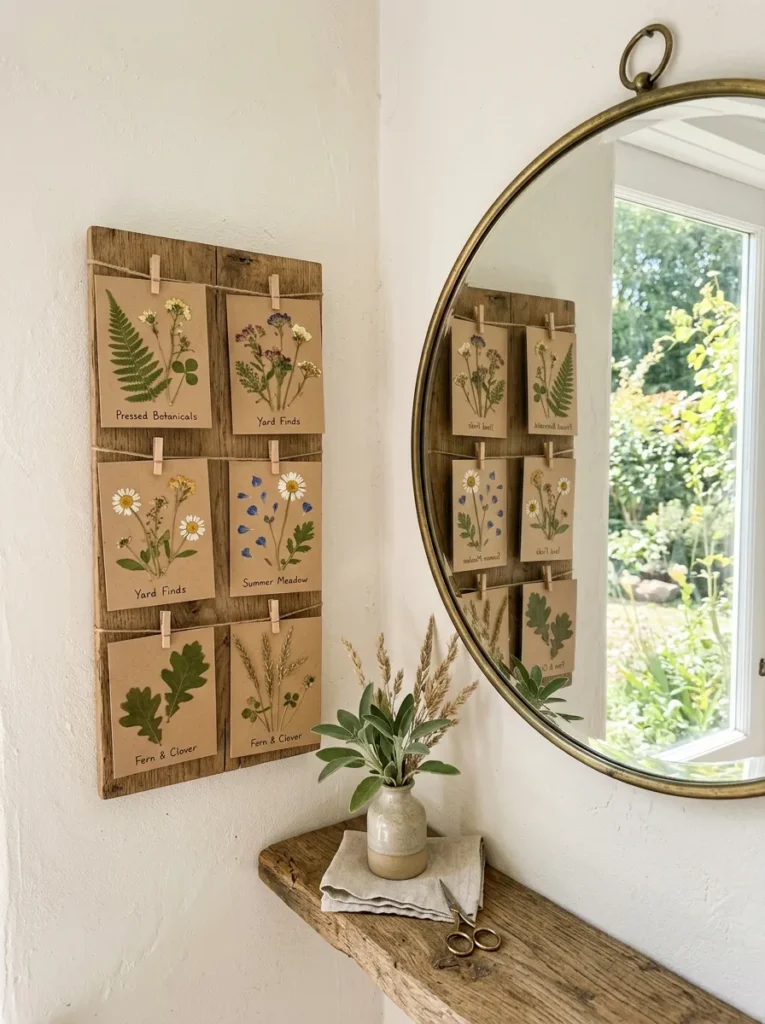
Vibe: Expansive, like a few foraged leaves became a whole set of genuinely usable cards.
Why it works: Foraging botanicals from a yard or public space where cutting is permitted costs nothing and requires no shipping or manufacturing footprint, and the cards themselves are made on recycled cardstock rather than new paper.
How to get it: Press leaves and small flowers between heavy books for one to two weeks, glue them onto recycled kraft cardstock folded into card shapes, and pair with recycled paper envelopes.
Shop the Look
| Product |
|---|
| Foraged leaves and flowers |
| Recycled kraft cardstock |
| Craft glue |
| Recycled paper envelopes |
| Small kraft gift tag |
16. Small Nook Reused Jar Herb Garden Starter
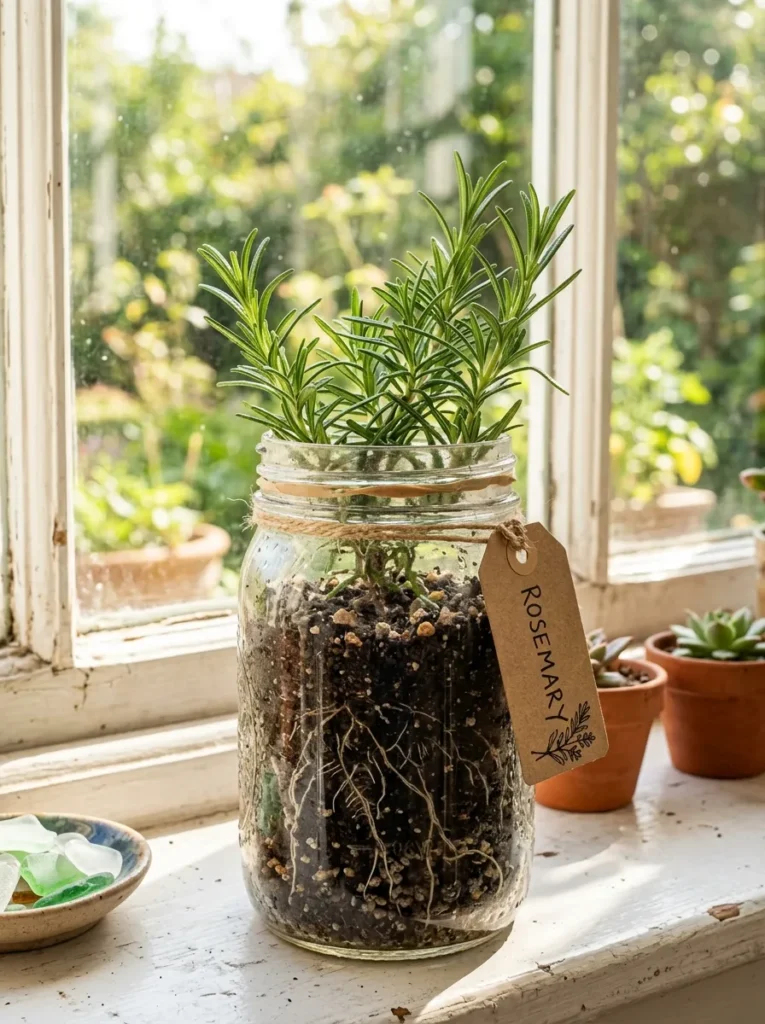
Vibe: Fresh, like a saved jar and a garden cutting became a small kitchen herb garden.
Why it works: Using a cleaned food jar rather than a new planter avoids adding a new container to the world, while gifting a rooted cutting from an existing plant rather than a store-bought one costs nothing beyond a bit of water and patience.
How to get it: Root a cutting from an herb like mint or basil in water for two to three weeks, transplant it into a cleaned reused glass jar filled with potting soil, and label with a small kraft tag noting the herb and basic care.
Quick Win: Mint and basil are both especially easy to root from cuttings and forgiving for a beginner recipient.
Shop the Look
| Product |
|---|
| Reused glass jar cleaned |
| Herb cutting |
| Potting soil small bag |
| Small kraft plant care tag |
| Small pebbles for drainage |
How to Start Your Eco-Friendly Handmade Gift
Start with the material, not the recipient. Choosing one sustainable base material first, reclaimed wood, beeswax, saved jars, foraged botanicals, determines which projects are realistically achievable with what’s already on hand or easy to source locally, rather than shopping for new supplies for every individual gift.
The most common mistake is buying new “eco” packaging or containers instead of using what’s already available secondhand, which undercuts the whole point of a sustainable gift. A brand-new glass jar marketed as eco-friendly still required new manufacturing; reach for a cleaned food jar, a saved sack, or a secondhand basket before purchasing anything new.
Three items under $50 that make an immediate difference: a bulk bag of beeswax pellets that works across the firestarters and bath mitt projects, a length of cotton mesh fabric for produce bags, and a roll of kraft twine that ties together nearly every project on this list.
A basic version — one project like a produce bag set or a jar herb garden — is an evening project costing $5 to $15 in materials, often less when using saved containers or foraged materials. A fuller eco-friendly gift basket combining three or four projects runs $30 to $70 and typically takes a single afternoon.
Frequently Asked Questions About Eco-Friendly Handmade Gifts
What’s the most impactful eco-friendly handmade gift for someone trying to reduce daily waste?
Reusable produce bags and the compost starter kit both directly change a daily or weekly habit, replacing plastic grocery bags and diverting food scraps from landfill respectively, giving the gift ongoing rather than one-time impact. Both also require very little from the recipient to start using immediately.
How do I find reclaimed or secondhand materials for these projects?
Local salvage yards, secondhand stores, curbside furniture piles, and even a household’s own recycling bin, glass jars, old sacks, worn fabric, are all reliable sources for the materials used across this list. Community swap groups and secondhand marketplaces are also worth checking for reclaimed wood or containers before buying anything new.
How much does it cost to make an eco-friendly handmade gift?
A single small project like a produce bag set or a jar herb garden costs $5 to $15 in materials, often less when using saved jars or foraged cuttings. A fuller eco-friendly gift basket combining several projects typically runs $30 to $70, with beeswax and fabric generally being the largest individual cost components.
Are homemade items like infused vinegar or seed bombs actually effective, or just symbolic?
Herb-infused vinegar works genuinely well as a natural cleaning agent or culinary ingredient, and seed bombs reliably germinate when tossed onto bare soil with adequate moisture, making both functional rather than purely decorative gifts. Choosing native seed varieties for seed bombs specifically improves their real ecological benefit to local pollinators.
What’s the best eco-friendly gift for someone I don’t know very well, like a coworker or neighbor?
Broadly useful, low-risk projects like the produce bags, the infused vinegar, or the pressed botanical card set work well when you don’t know someone’s specific habits or preferences in detail, since all three are practical, low-commitment, and don’t require any particular lifestyle change from the recipient to appreciate.
Ready to Make Eco-Friendly Handmade Gifts?
Between reusable produce bags, hand-carved utensils, seed bombs, and reused jar herb gardens, these 16 ideas cover a full range of ways to give something genuinely thoughtful without adding to landfill waste. Starting with just one sustainable material, saved jars, beeswax, reclaimed wood, is not a small decision, it’s the choice that determines how many gifts you can make from a single low-impact purchase. Today, gather whatever reusable containers, fabric scraps, or foraged materials are already sitting around your home, and pick the project on this list that makes the best use of them. Once it’s finished and wrapped in reused kraft paper or fabric, you’ll have proof that a genuinely thoughtful gift and a genuinely sustainable one were never in conflict to begin with. Save your favorite ideas now — especially the ones that repurpose materials you already have on hand, since those are the gifts that cost the least while giving back the most.