15 Timeless Interior Design Ideas for Every Home
Timeless interior design is the art of making decorating decisions whose quality, beauty, and relevance endure across decades rather than seasons — decisions grounded in the principles of material honesty, spatial discipline, compositional intelligence, and sensory richness that have made the world’s great domestic interiors genuinely beautiful across changing fashions, changing technologies, and changing cultural preferences. This article gives you 15 genuinely timeless interior design ideas that work in every home style, every room size, and every budget range, providing the design foundation that makes a home feel considered and complete regardless of the year it was decorated.
Most interior design advice defaults to the trend-driven — the color of the year, the sofa silhouette of the season, the material that just appeared on every design blog simultaneously. The homes in this list make a different choice: they invest in design decisions whose value compounds over time rather than depreciating with each passing trend cycle, creating rooms that look more beautiful and more resolved with every year of inhabitation. Here are 15 ideas worth saving — and living by.
Why Timeless Interior Design Works So Well
The concept of timeless design has a philosophical grounding that extends well beyond the practical preference for design decisions that do not require replacement every five years. The most enduring design objects — the Barcelona chair, the Eames lounge, the Windsor chair, the Shaker cabinet, the Thonet bentwood rocker — share not a common aesthetic but a common set of qualities: material honesty (each is made from the material most suited to its structural requirements without cosmetic concealment), proportional rightness (each has dimensions and visual weight that feel inevitable rather than arbitrary), functional precision (each performs its primary function with a quality that has never been significantly improved upon), and making intelligence (each was produced by a process that exploited the full potential of its materials and the knowledge of its maker). These are the qualities that make a design decision genuinely timeless rather than merely enduring — the capacity to be perceived as right rather than merely old.
The materials that most reliably produce a timeless interior are those whose visual quality improves with age rather than degrading with it. Solid timber develops the patina that distinguishes a piece of furniture that has been lived with from one that has been recently purchased. Natural stone — limestone, marble, slate, travertine — weathers to tones and surface qualities that are more beautiful than the freshly quarried or cut version. Aged leather develops a character and warmth that new leather cannot replicate. Natural linen softens with washing to a quality that new, stiff linen does not possess. These materials share the quality of temporal responsiveness — they record the passage of time in their surfaces in ways that read as beauty rather than wear, connecting the design objects that contain them to the longer human tradition of valuing the seasoned over the new.
The cultural persistence of timeless design principles across centuries of changing fashion is documented across every major design tradition. The Japanese wabi-sabi aesthetic — the specific appreciation of aged, imperfect, and natural-material objects as the highest form of beauty — is both ancient in origin and urgently contemporary in application, appearing in the same Japandi-minimalist interiors that define the 2020s premium residential aesthetic. The Scandinavian design tradition of functional simplicity, natural materials, and craftsmanship as the expression of social democracy has produced the same aesthetic quality across 80 years of production without requiring significant revision. The Arts and Crafts movement’s insistence on material honesty, handcraft, and the integration of domestic objects with the natural world is as prescient in 2024 as it was when William Morris articulated it in the 1880s. These traditions endure because they are grounded in human perceptual constants — the specific qualities of natural material, warm light, spatial generosity, and sensory richness that the human nervous system responds to as beautiful regardless of the cultural moment.
Style at a Glance
| Element | Detail |
|---|---|
| Philosophy | Invest in design decisions whose value compounds over time — the quality of the material, the rightness of the proportion, the discipline of the composition — rather than in the visual currency of the trend cycle |
| Key Materials | Solid timber, natural stone, aged leather, natural linen, beeswax, ceramics, wrought iron, rattan, marble |
| Three Principles | Material honesty, proportional rightness, spatial discipline |
15 Timeless Interior Design Ideas
1. Invest in One Exceptional Piece of Furniture Rather Than Many Average Ones
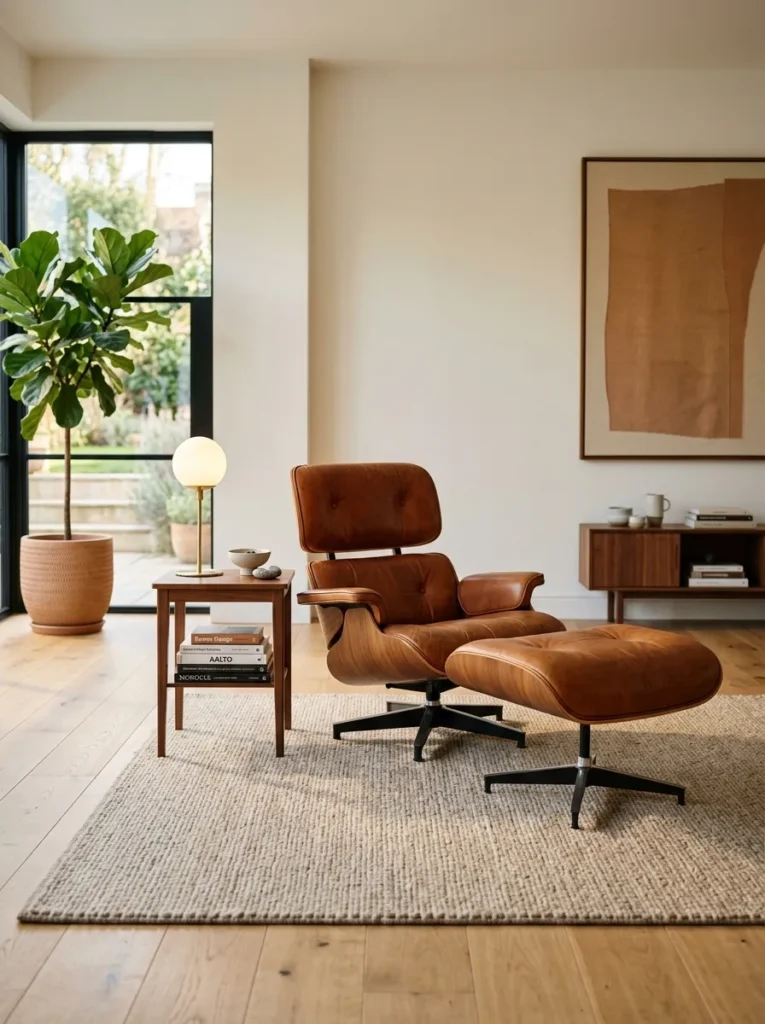
Vibe: Warm and considered — the room that proves the design principle that one genuinely exceptional object is worth more to a room than ten adequate ones.
Why it works: The principle of concentrating furniture investment in one exceptional piece rather than distributing it across many average ones is the timeless design strategy that most consistently produces rooms of genuine quality — it is the furniture buying philosophy of every great interior designer and every design-literate homeowner who has learned through experience that the average piece eventually dissatisfies while the exceptional piece continues to reward. The exceptional furniture piece earns its higher investment through time — it does not need replacement as its average counterparts do, it does not become visually tiresome as trend-driven pieces do, and it develops character with use rather than diminishing in quality. The Eames lounge chair has been in continuous production since 1956 and is as visually relevant, as physically comfortable, and as materially beautiful today as when Charles and Ray Eames designed it — this 70-year relevance is the definition of genuine design exceptionalism, and it applies to any piece of furniture designed with equivalent material honesty, proportional rightness, and functional precision.
How to get it: The test for a genuinely exceptional piece of furniture is simple: it should read as right — not merely as beautiful, not as fashionable, not as expensive, but as specifically proportioned and specifically made in a way that feels inevitable rather than arbitrary. This quality of rightness is detectable at the first encounter with a genuinely exceptional piece and is absent in all average pieces regardless of their price. Save for the genuinely exceptional piece rather than compromising with the immediately affordable average — one exceptional sofa purchased over three years of saving is a better design decision than three average sofas purchased over the same period.
Quick Win: Identifying the one piece of furniture in your current home that you consider genuinely exceptional — the piece you would save from a fire, the piece you could not imagine replacing — and positioning it in the room’s primary light and primary sightline immediately demonstrates the design principle of exceptional-piece primacy without any additional purchase.
Shop the Look
| Product |
|---|
| Eames lounge chair walnut leather |
| Natural timber floor boards |
| Minimal quality rug warm neutral |
| Slim natural timber side table |
| Single quality lamp |
Also view: 15 Stylish Green Living Room Designs for Every Home
2. Choose Paint Colors with Genuine Depth and Complexity
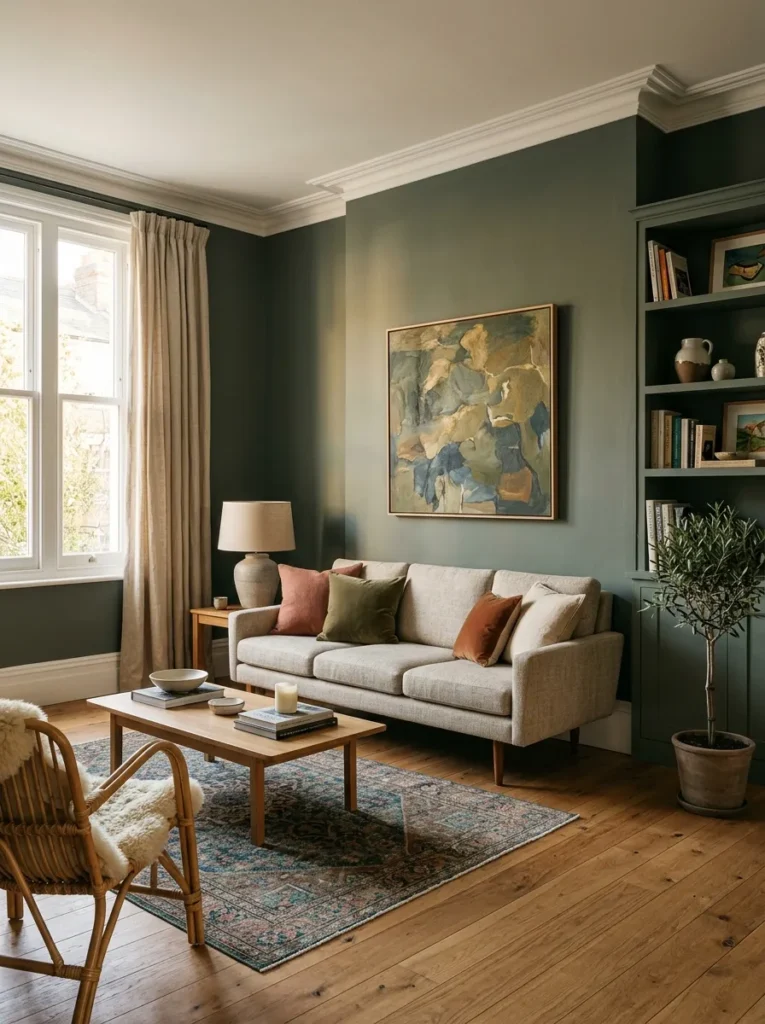
Vibe: Warm and deeply considered — the room whose wall color rewards looking at it at 8am and again at 8pm and finding something new to perceive each time.
Why it works: Paint colors with genuine depth and complexity — colors that contain multiple undertone components that shift the color’s reading across different lighting conditions throughout the day — are the wall treatment that most closely replicates the temporal responsiveness of natural materials in their behavior. A flat, single-note paint color reads identically in morning light, afternoon light, and evening artificial light — it provides one visual experience repeated continuously. A genuinely complex paint color reads as warm grey-green in morning light, as blue-grey in afternoon light, and as warm charcoal in evening lamplight — it provides three different visual experiences in the same room across a single day, creating the temporal variety that makes a room feel genuinely inhabited rather than merely furnished. This temporal complexity is the quality that separates the genuinely timeless paint choice from the trend color that looked perfect in the store and bores within a year.
How to get it: The paint brands that most consistently produce genuine color complexity are those that formulate with complex pigment combinations rather than single-pigment color matching — Farrow & Ball’s chalky, multi-pigment formulations produce the greatest temporal complexity of any widely available residential paint range. Paint Portola Roman Clay, Bauwerk Colour’s limewash range, and Little Greene’s lead-free historical colors all produce equivalent or superior complexity. The finish is as important as the color — eggshell or satin finish on walls rather than flat or matte allows the color’s complexity to be revealed by the slight directional reflectivity of the surface rather than absorbed by the flat matte surface’s uniform light behavior.
Shop the Look
| Product |
|---|
| Complex depth paint Farrow Ball |
| Eggshell interior paint finish |
| Natural linen curtain panel |
| White semi gloss trim paint |
| Quality roller and brush set |
Also view: 14 Neutral Living Room Designs with Timeless Style
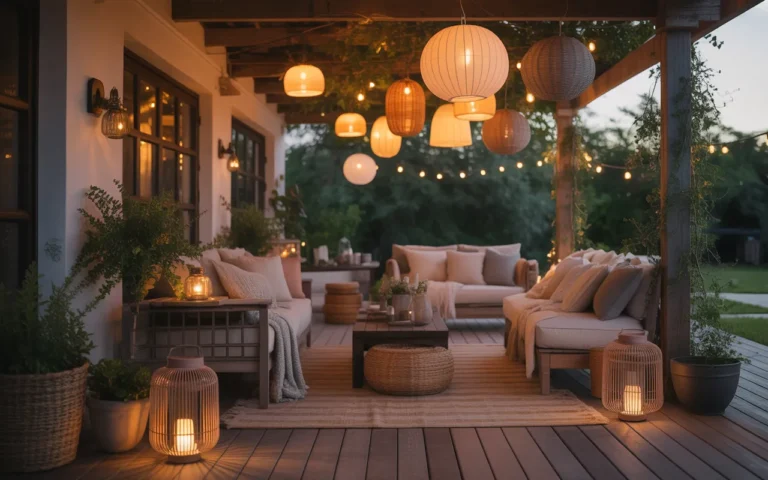
3. Layer Lighting from Multiple Sources at Different Heights
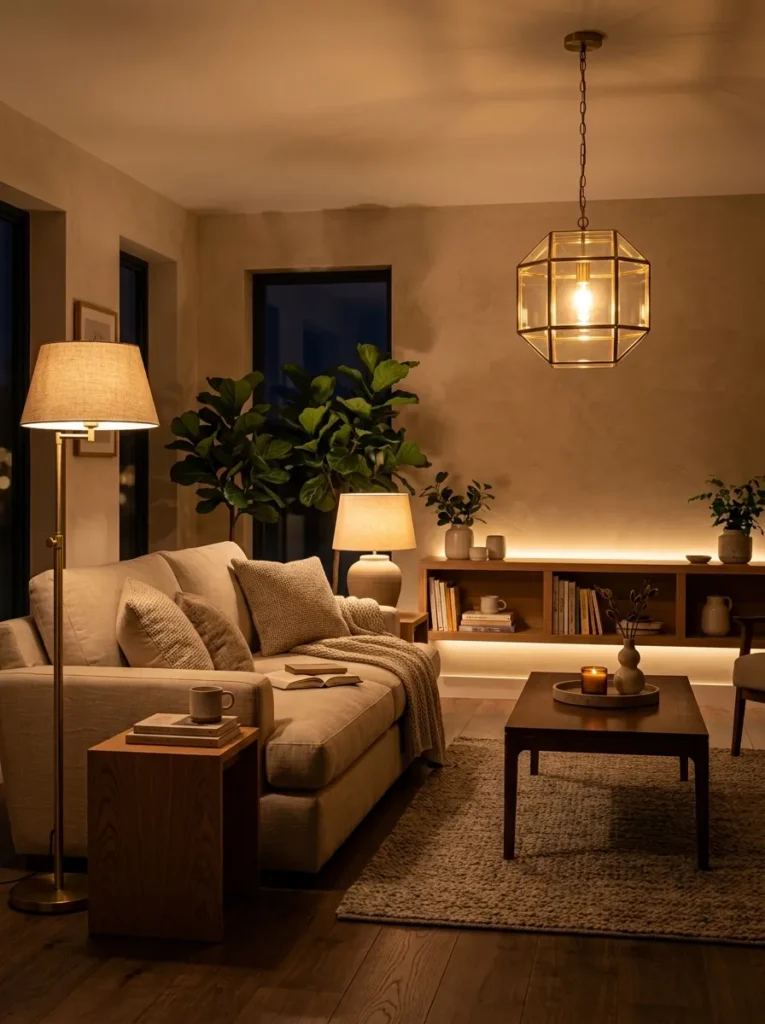
Vibe: Warm and atmospherically rich — the room that proves the single most transformative design upgrade available is not a new sofa but a new relationship with light.
Why it works: The timeless principle of layered lighting from multiple sources at different heights is the interior design decision that most powerfully transforms the experiential quality of any room regardless of its existing furnishing quality — it is the principle that explains why expensive hotels and great restaurants feel so different from domestic spaces with equivalent furniture investment, because those commercial environments have been designed by lighting professionals who understand what domestic spaces consistently neglect: that the quality of a room’s atmosphere is determined not by the quantity of its illumination but by its distribution, its warmth, and its controllability. A room illuminated exclusively from overhead produces a flat, undifferentiated light quality that eliminates the shadows and gradients that make three-dimensional surfaces appear beautiful; the same room illuminated from multiple sources at different heights creates the shadow, gradient, and directional light quality that makes every surface and every material appear at its most beautiful.
How to get it: The minimum layered lighting scheme for a living room is three sources: one ceiling-mounted source (pendant or recessed downlights on a dimmer), one floor or table lamp at seated eye height, and one low-level source (a table lamp at 600mm height or a low shelf LED). All sources must be at the same warm color temperature (2700K maximum, 2200K for the most atmospheric result) — a single cool-toned bulb in a warm-toned multi-source scheme creates a temperature conflict that undermines the warmth of all other sources. All sources should be on individual dimmers or smart bulbs to allow the ratio of light from each source to be adjusted for different times of day and different activities.
Shop the Look
| Product |
|---|
| Pendant light ceiling warm |
| Floor lamp tall warm shade |
| Table lamp seated height |
| LED strip low level warm |
| Trailing edge LED dimmer switch |
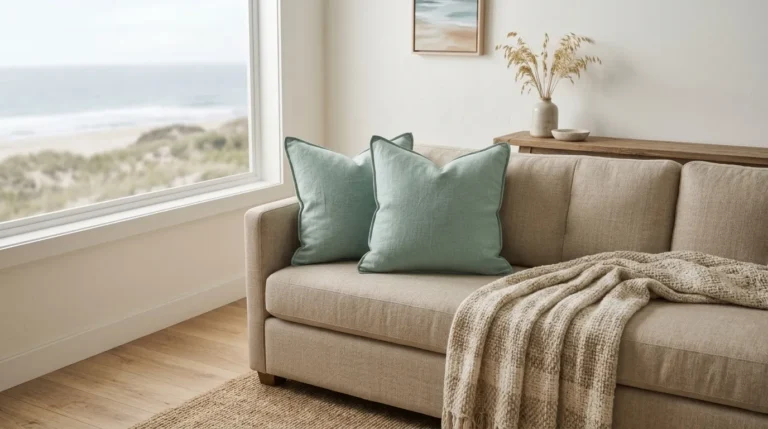
4. Use Natural Linen for Curtains, Cushions, and Upholstery
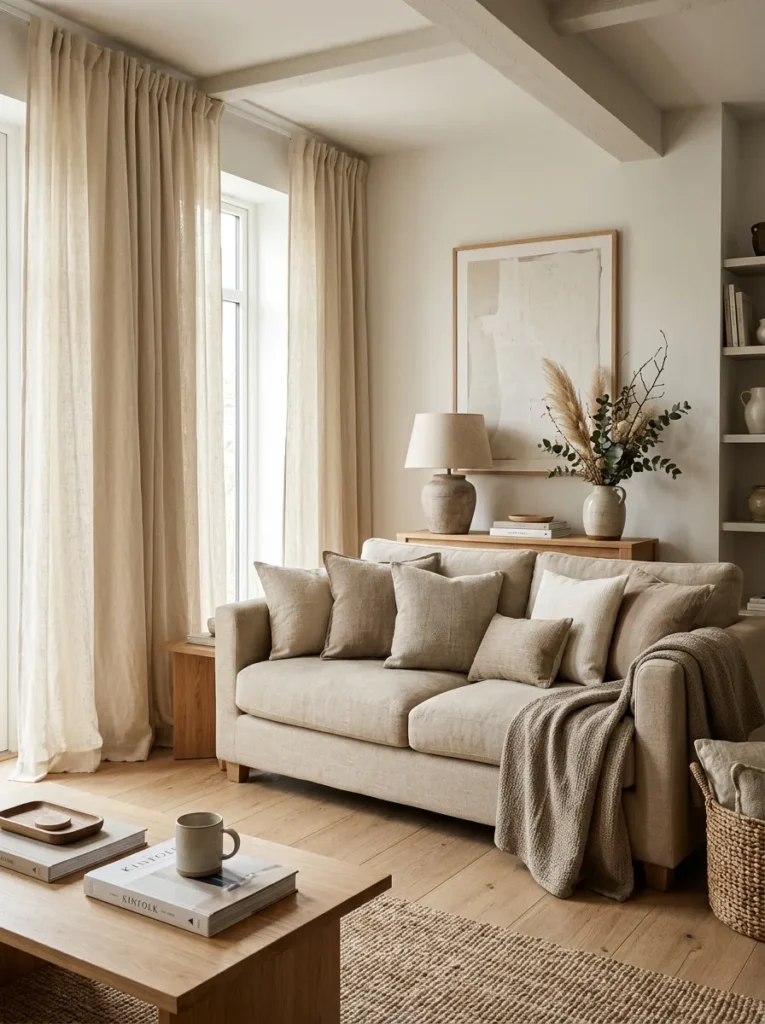
Vibe: Warm and materially coherent — the room that demonstrates that using one genuinely beautiful material consistently throughout a space produces more design quality than using many average materials in combination.
Why it works: Natural linen is the timeless interior textile that most completely satisfies the material honesty principle — it is made from flax fiber in a production tradition that predates recorded history, it looks like what it is at every examination distance, it improves with age and washing rather than deteriorating, it coordinates with every natural material palette that genuinely beautiful rooms employ, and it provides genuine tactile warmth at the skin-contact level of sofa seating, cushion resting, and curtain-drawing that synthetic alternatives cannot replicate. The specific visual qualities of natural linen — the slight irregularity of the weave, the natural color variation of the fiber, the characteristic drape — are the same qualities that have made linen the dominant textile choice of the world’s most considered interior designers for five decades. These qualities are inherent to the material rather than applied as a finish, which means they endure across every washing and every year of use rather than degrading as surface finishes on synthetic alternatives do.
How to get it: Source natural linen (100% flax, not linen-look polyester blends) from specialist linen retailers — Cultiver, Roughlinen, and French Flax Linen all produce genuine natural linen in the warm tonal range most appropriate for a timeless interior. The color temperature is critical: natural linen should be warm ivory, warm oatmeal, or warm greige rather than cool white, cool grey, or bright white — the warm undertone of natural linen’s color is as much a part of its design quality as its texture.
Shop the Look
| Product |
|---|
| Natural linen curtain panel ivory |
| Natural linen sofa oatmeal |
| Natural linen cushion cover set |
| Natural linen throw warm |
| Ceiling curtain track mount |
5. Invest in a Quality Handmade Rug
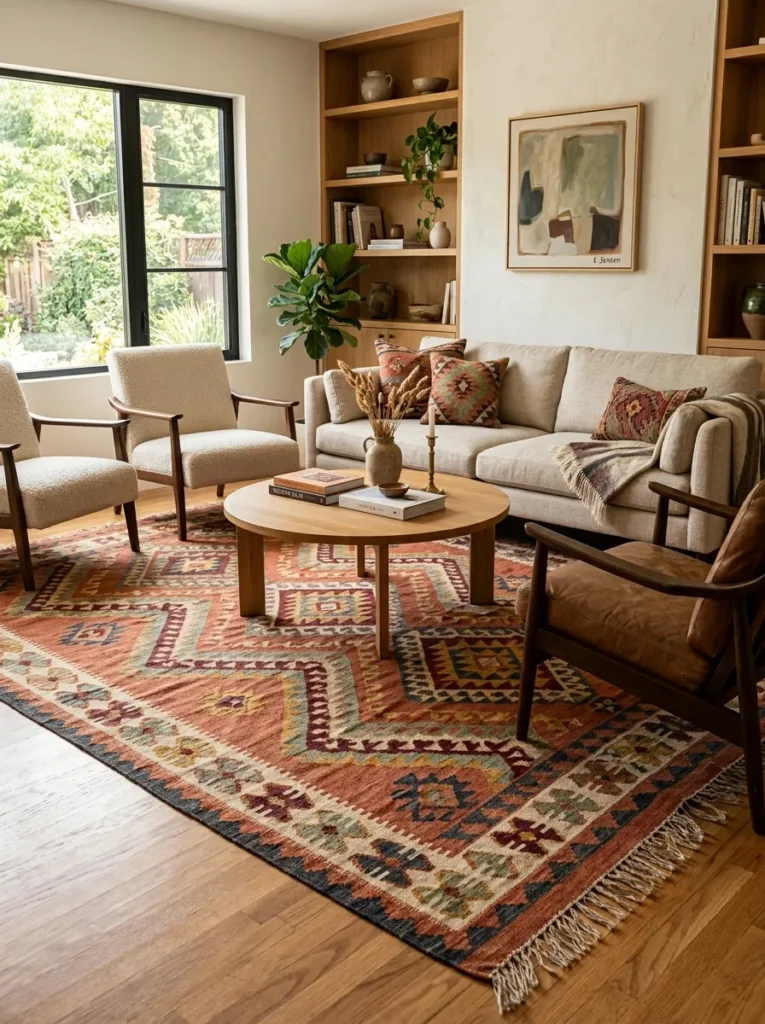
Vibe: Warm and materially rich — the room whose floor covering is also its most beautiful, most personal, and most historically resonant object.
Why it works: A genuine handmade rug — whether a Turkish kilim, a Persian or Moroccan pile rug, or a hand-tufted wool rug from a quality maker — is the floor covering investment with the longest design relevance and the greatest material improvement with age of any object available in residential interior design. A handmade rug improves with use: the pile compresses to a denser, more lustrous surface quality; the natural dyes fade to the specific tonal relationships that make aged rugs significantly more beautiful than new ones; the rug develops the specific worn quality of a heavily used path that is the equivalent of the patina on aged timber or aged leather. These improvements with time mean that a quality handmade rug purchased today will be more beautiful in twenty years than it is now — the opposite temporal relationship from any manufactured floor covering, which deteriorates from its best condition immediately upon installation.
How to get it: Purchase a handmade rug from a specialist rug dealer rather than from a general homewares retailer — specialist dealers carry genuine hand-knotted or hand-woven rugs from the traditional weaving regions (Turkey, Iran, Morocco, Afghanistan, India) that have the material quality and temporal improvement potential that machine-made reproduction rugs lack. The test for a genuine handmade rug is the irregular back — machine-made rugs have perfectly uniform, grid-pattern backs; handmade rugs have slight irregularities in the knot structure visible on the reverse.
Shop the Look
| Product |
|---|
| Turkish kilim rug genuine |
| Persian style wool rug handmade |
| Rug underlay non-slip |
| Natural dye certificate rug |
| Rug specialist consultation |
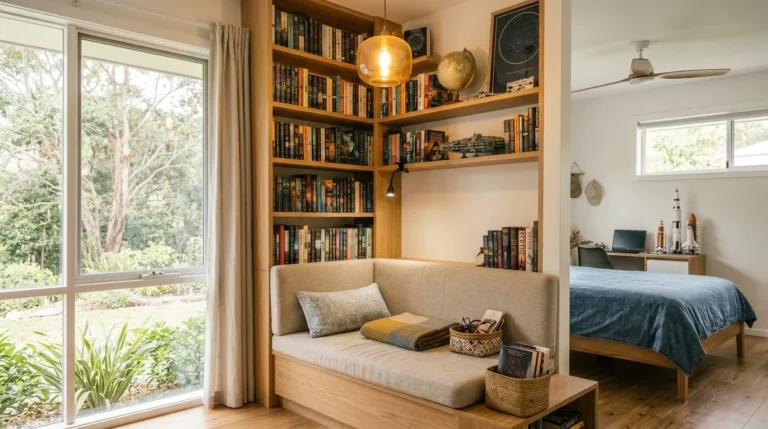
6. Install Built-In Bookshelves That Treat Books as Design Objects
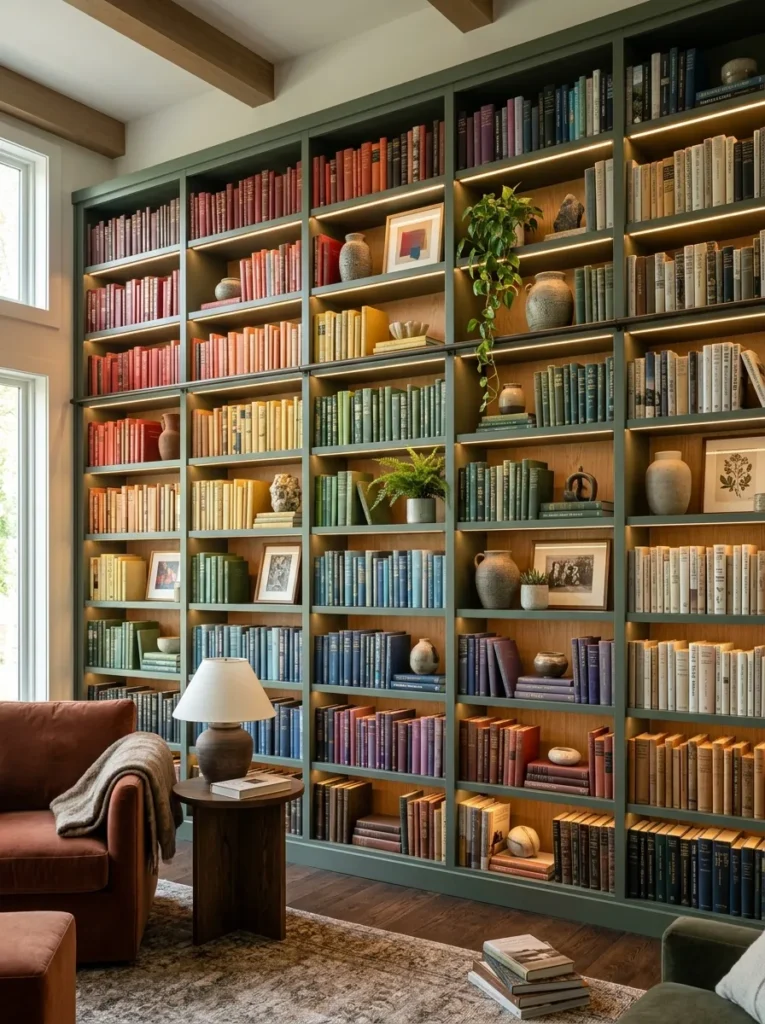
Vibe: Warm and intellectually rich — the room that reveals more about the people who live in it with every book that is read and replaced.
Why it works: Built-in bookshelves that treat books as design objects are the living room investment that most completely integrates the household’s intellectual and aesthetic life into the physical structure of the home — making the accumulated reading of a lifetime into the room’s primary design feature rather than storing it behind closed doors or in another room. A full-height bookshelf wall with a genuinely curated collection of books — organized by color, size, and visual coherence — provides a visual richness that develops in quality over time as the collection grows and evolves, improving the room’s design quality with every book added rather than remaining static as a purchased piece of furniture does. The books are the only category of domestic object that becomes more personally revealing, more visually interesting, and more materially rich the more of them are accumulated and displayed.
How to get it: Commission the built-in bookshelves from a custom joiner rather than assembling from flat-pack systems — the difference in visual quality between custom-built floor-to-ceiling shelving and assembled IKEA equivalent is the specific quality of the shelving’s relationship to the room’s architecture: custom shelving reaches from floor to ceiling precisely, fills the wall width without visible gaps, and has shelf depths and division proportions that are sized for the specific collection rather than for a generic product specification. Install warm LED strips along the underside of every second or third shelf to provide the warm downlighting that makes the books and objects on the shelves appear luminous rather than merely present.
Shop the Look
| Product |
|---|
| Custom bookshelf joinery quote |
| LED strip warm under-shelf |
| Hardcover book collection curated |
| Ceramic object set bookshelf |
| Small indoor plant bookshelf |
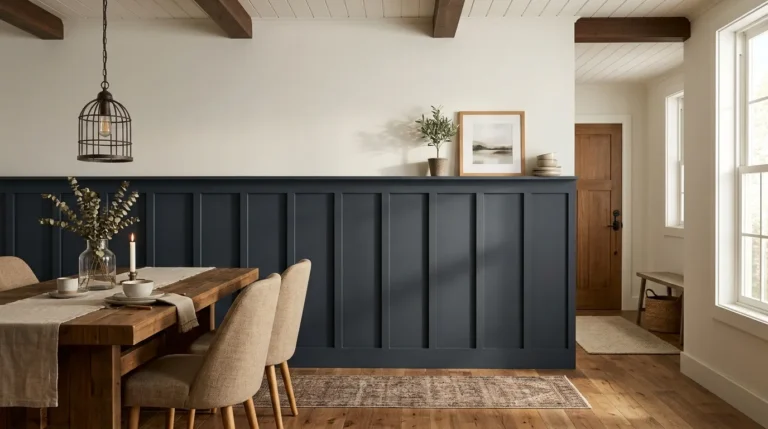
7. Choose Solid Wood Furniture Over Manufactured Alternatives
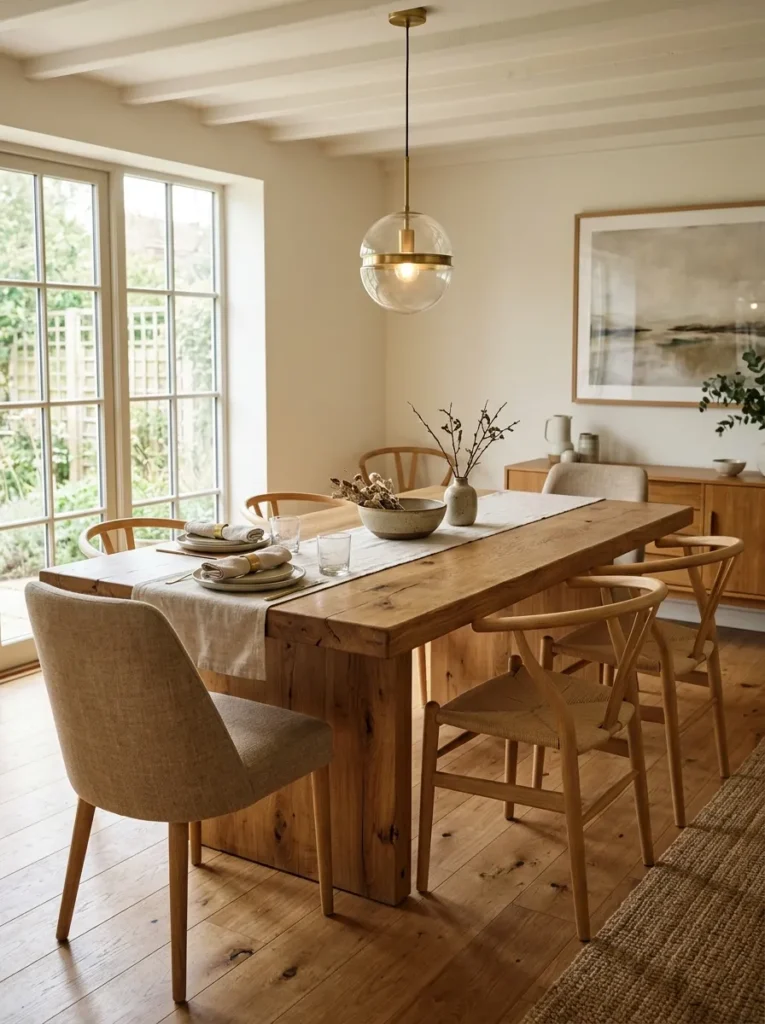
Vibe: Warm and material — the dining table that gets more beautiful every year it is used, which is the opposite of everything it replaced.
Why it works: Solid wood furniture is the furniture investment decision that most directly embodies the timeless design principle of temporal improvement — a solid timber table, chair, or cabinet becomes more beautiful with every year of use as its surface develops the specific patina of regular handling, the color deepens with light exposure, and the grain reads with increasing clarity as the surface develops its characteristic aged quality. This temporal improvement is not merely an aesthetic claim but a documented material fact: the antique furniture market consistently assigns higher value to well-used solid timber furniture than to new equivalents because the aged surface quality of a well-patinated solid timber piece is genuinely superior to the appearance of the same piece when new. Manufactured alternatives (MDF, particleboard, veneer on substrate) deteriorate from their best condition immediately upon purchase — they do not develop patina, they do not age beautifully, and they do not reward the accumulation of use and time.
How to get it: The test for genuine solid timber is simple: every face and edge of the piece, including the underside and back, should be in the same timber as the visible faces — solid timber has consistent grain throughout its section; veneered MDF has a visible substrate edge. Specify solid timber from furniture makers who disclose the timber species, the origin of the wood, and the construction method — a furniture maker willing to share this information is producing genuine solid timber; one who cannot or will not is likely producing veneer.
Shop the Look
| Product |
|---|
| Solid oak dining table custom |
| Solid timber dining chair set |
| Beeswax timber furniture polish |
| Linen table runner natural |
| Pendant light dining |
8. Edit Surfaces to Three Objects Maximum
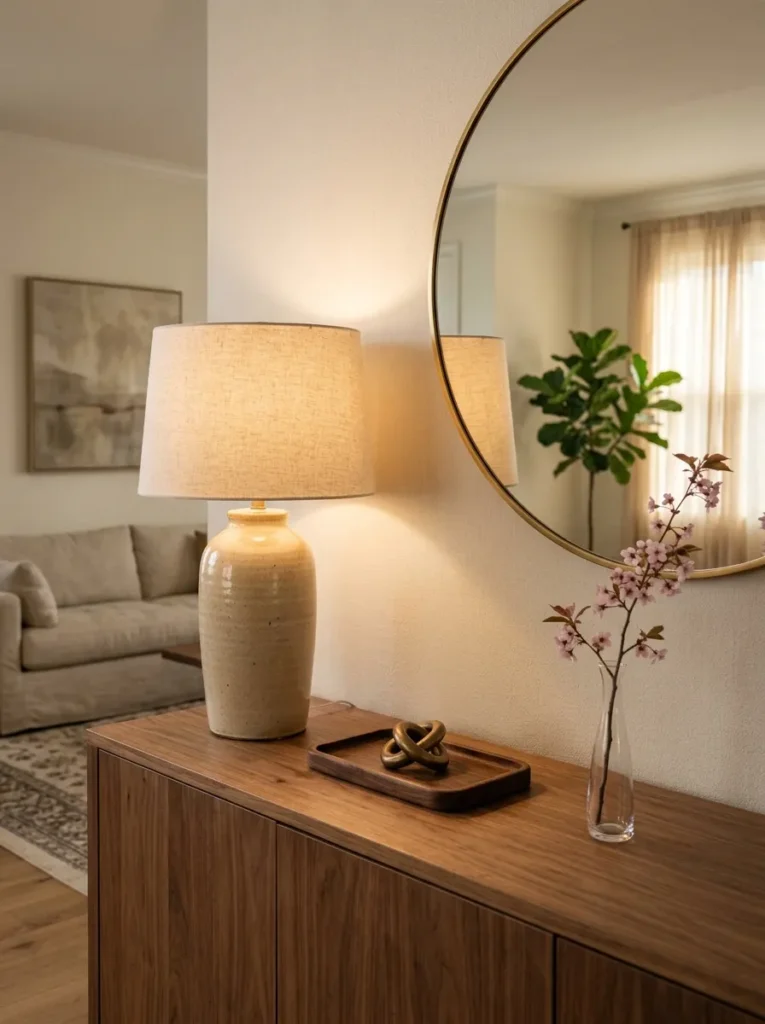
Vibe: Calm and considered — the surface that demonstrates the timeless design truth that space around beautiful objects makes them more beautiful.
Why it works: The discipline of editing every surface in a room to a maximum of three objects is the timeless interior design practice that most immediately and most costlessly transforms the visual quality of any room — it is the practice that museum curators apply to exhibition spaces (one or two significant works per wall with generous surrounding space), that gallery directors apply to retail displays, and that interior designers apply to every surface in every room they photograph and publish. The principle operates through the psychological mechanism of visual salience — an object surrounded by empty space receives the full attention of any observer, making even a modest object of average quality read as significant; the same object surrounded by five other objects of equal quality receives only partial attention and reads as one of many rather than as a specific, considered choice. Empty space around an object is not the absence of design but the most powerful design device available.
How to get it: Apply the three-object maximum to every surface in the house simultaneously over a single weekend — clear every surface completely, then return only three objects per surface, choosing the three that are most beautiful, most personally meaningful, or most compositionally interesting. Place everything in excess of three objects per surface in storage or donation. The objects removed reveal more about the quality of what remains than any purchasing decision could — the curation process is as informative as the display that results from it.
Shop the Look
| Product |
|---|
| Ceramic table lamp quality |
| Small decorative tray natural |
| Slim bud vase ceramic |
| Single stem seasonal botanical |
| Console table natural timber |
9. Use Natural Stone or Quality Stone-Effect Surfaces
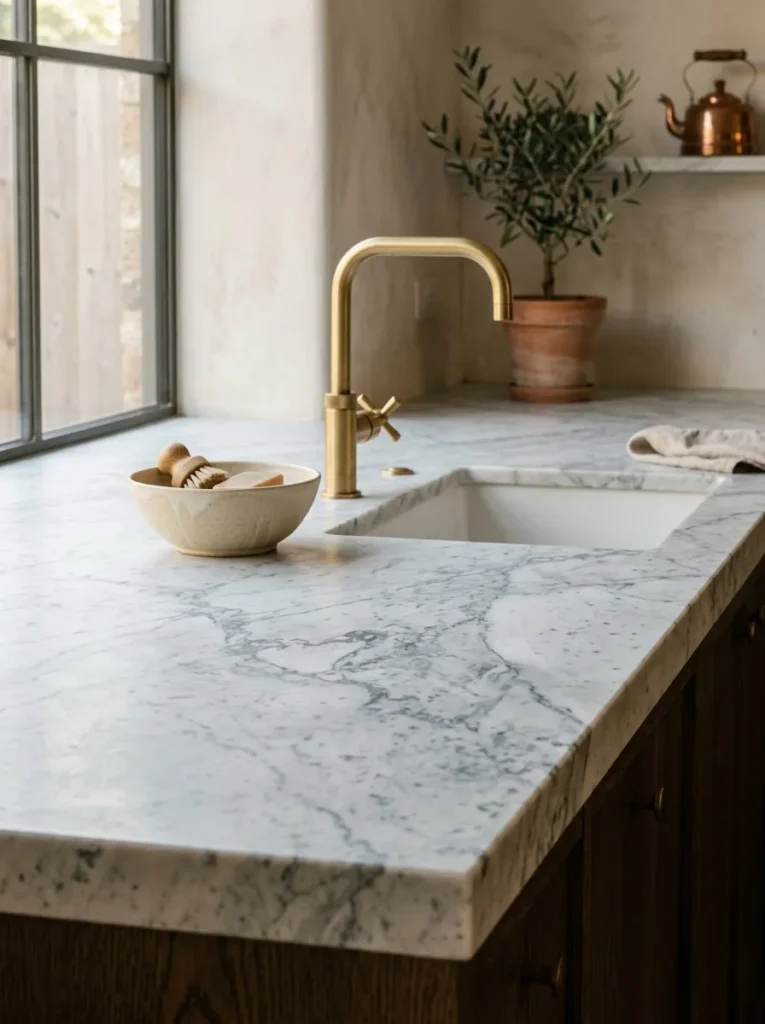
Vibe: Warm and material — the surface that rewards daily use with a quality of material presence that no manufactured alternative provides.
Why it works: Natural stone — marble, travertine, limestone, slate — is the timeless surface material that most powerfully demonstrates the design principle of material honesty at the domestic scale: the stone’s specific vein pattern, mineral color variation, and natural surface texture make it visually unique rather than reproducible, connecting the surface to the geological time and specific place of its formation rather than to the manufacturing process of its production. This unreproducibility is what makes natural stone genuinely precious in the design sense — every marble countertop is a unique geological artifact, and the specific vein pattern of a particular slab of Carrara marble cannot be exactly replicated anywhere else in the world. The quality stone-effect porcelain tile is the most effective accessible substitute — large-format porcelain tiles with high-resolution stone printing at $30–80 per square meter achieve a visual quality that is indistinguishable from genuine stone at normal room observation distances while providing the practical advantages of imperviousness and dimensional stability.
How to get it: Specify honed rather than polished stone finish for residential applications — polished marble and travertine reflect overhead light in a way that reads as commercial rather than residential, while honed stone maintains the natural matte quality of the geological material at its most authentic. Seal genuine stone with a penetrating stone sealer annually — the sealer protects against staining without creating the plastic-surface quality of a film sealer.
Shop the Look
| Product |
|---|
| Honed Carrara marble counter |
| Honed travertine floor tile |
| Large format Calacatta porcelain |
| Penetrating stone sealer |
| Quality basin tap brushed |
10. Hang Curtains from the Ceiling Rather Than the Window Frame
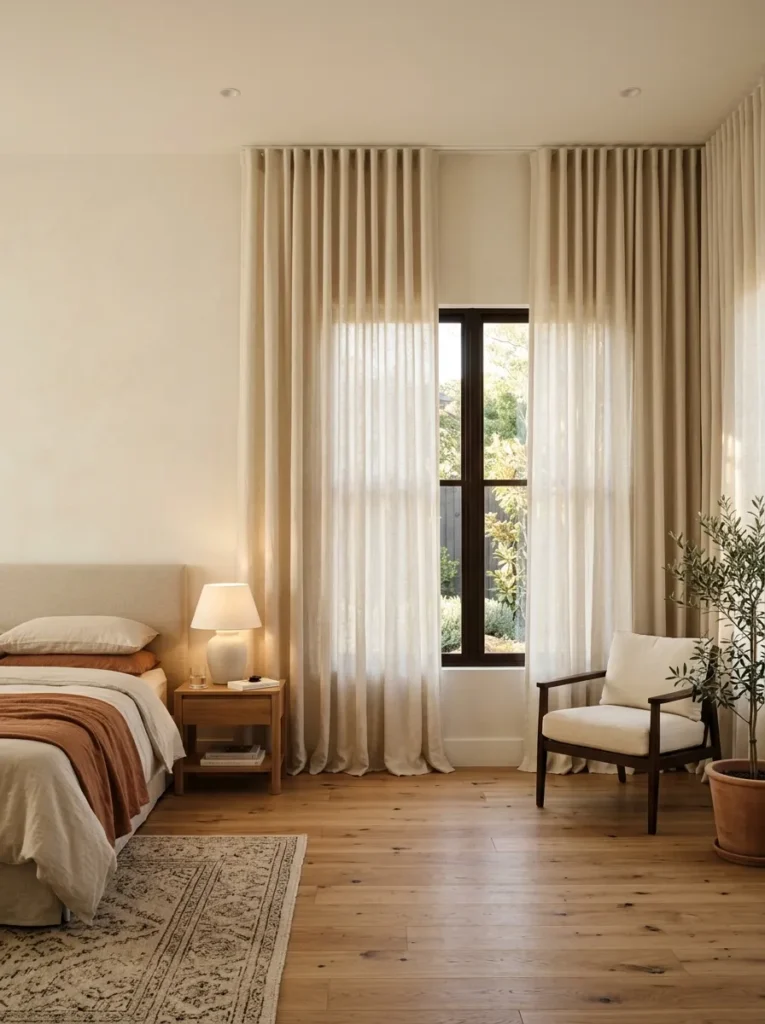
Vibe: Warm and architecturally generous — the room that is more beautiful for a curtain decision that costs exactly the same as a less considered alternative.
Why it works: Hanging curtains from the ceiling rather than from a rod positioned 100–200mm above the window frame is the single interior design decision with the highest visual impact per installation effort and per material cost — it costs no more than standard curtain installation (the same fabric quantity, the same hardware cost, the same installation effort) yet produces a room that reads as architecturally more generous, more carefully considered, and more genuinely beautiful than the standard installation. The principle operates by replacing the window’s actual dimensions with the room’s full height as the visual reference for the curtain — when a curtain hangs from the ceiling to the floor, the eye reads the full height between ceiling and floor as the window dimension rather than the actual window opening, making a standard window appear full-height and architectural. This specific visual upgrade — making a standard window appear full-height — is what makes ceiling-hung curtains the most consistently recommended and most consistently impactful decorating change available in any room.
How to get it: Install a ceiling-mounted curtain track (KVARTAL or equivalent) within 50mm of the ceiling, or mount a wall-fixed rod at ceiling height using a bracket system that positions the rod as close to the ceiling as structurally possible. The curtain fabric should be 1.5 times the window width in total gathered panel width for a luxurious, full gather. The curtain length should reach to within 10mm of the floor for a tailored look, or pool 30–50mm for the more romantic, European-inspired appearance.
Shop the Look
| Product |
|---|
| Ceiling curtain track mount |
| Natural linen curtain panel pair |
| Ceiling track bracket set |
| Curtain ring pleat hook |
| Linen tape curtain header |
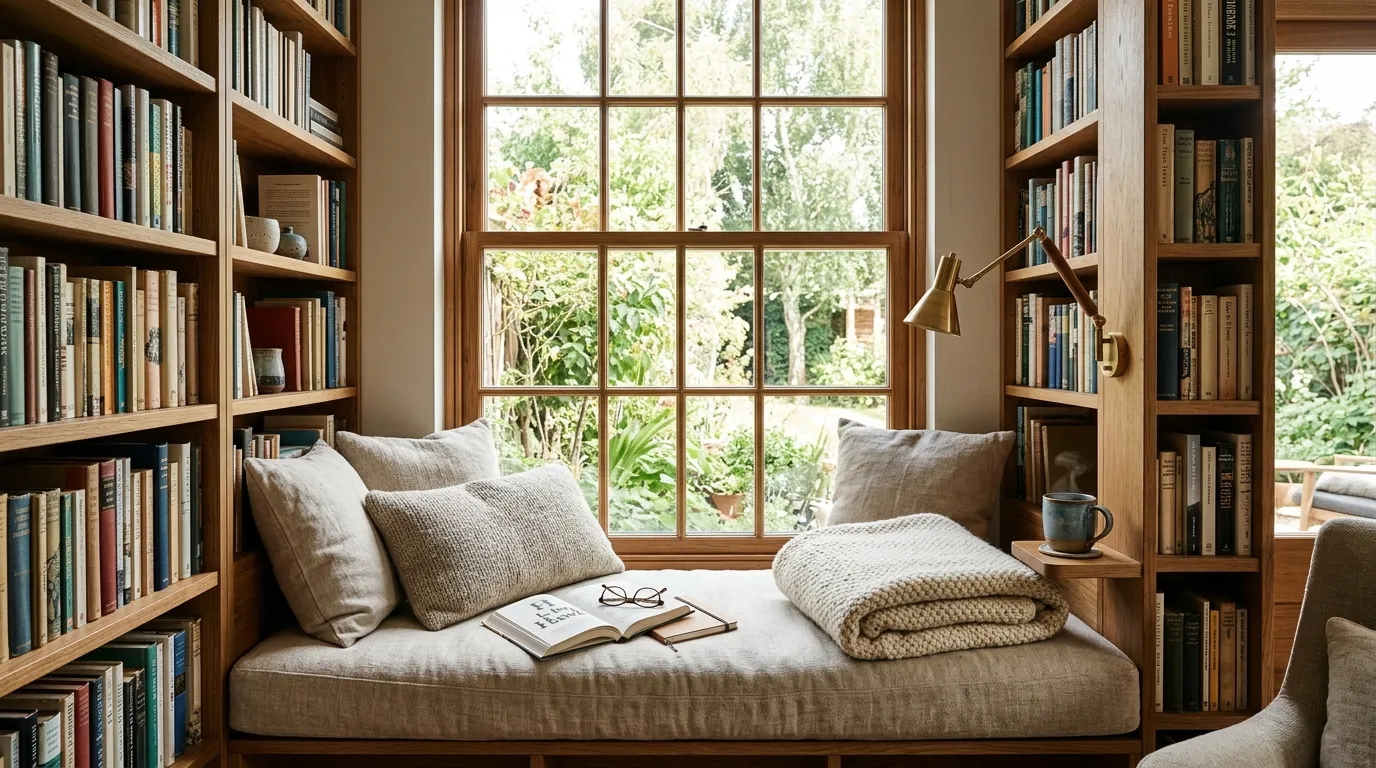
11. Create a Reading Nook with Generous Natural Light
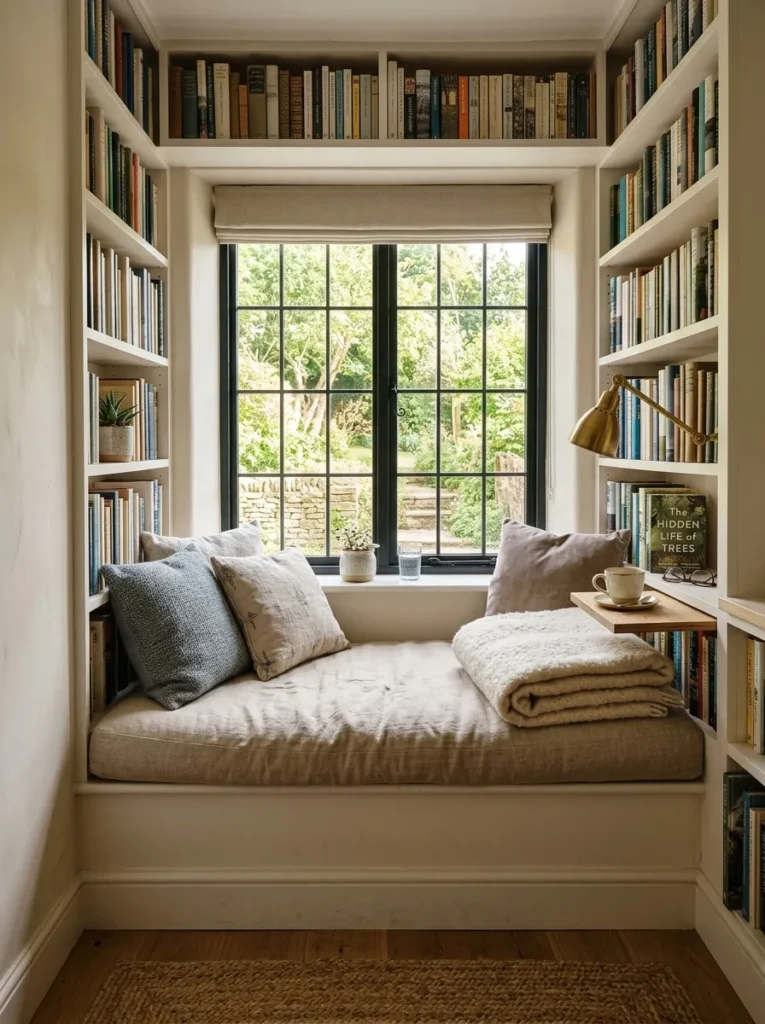
Vibe: Warm and deeply inhabitable — the corner of the house that everyone who visits immediately identifies as the place they would most like to spend the afternoon.
Why it works: A reading nook designed with genuine generosity — a deep window seat, flanking bookshelves, a quality lamp, and a warm textile — is the timeless domestic design element that most directly provides the specific spatial experience of sheltered enclosure within a larger room that human beings have sought in domestic environments throughout recorded history. The reading nook is the contemporary expression of the inglenook, the bay window seat, the library alcove, and the private garden bower — all domestic spaces that share the quality of providing a defined, smaller space within a larger room that offers protection on multiple sides and a view outward to a broader landscape. This quality of sheltered vantage — protected enclosure with an outward view — is a primal spatial preference that interior designers describe as the prospect-refuge principle, and it is the specific experiential quality that makes a well-designed reading nook the most sought-after corner in any house that contains one.
How to get it: A reading nook requires three spatial qualities to succeed: sufficient seat depth for genuine reclined seating (minimum 500mm deep, ideally 600mm), sufficient flanking enclosure on at least two sides (built-in shelving or walls), and a natural light source (a window at the seat position) that provides daylight reading quality without creating glare on the reading surface. A built-in window seat with flanking shelves is the most architecturally complete reading nook; a deep armchair positioned in a corner with a floor lamp and a nearby small bookshelf is the accessible alternative that achieves the same spatial quality at lower construction cost.
Shop the Look
| Product |
|---|
| Window seat linen cushion custom |
| Flanking bookshelf custom timber |
| Quality reading lamp adjustable |
| Natural wool throw reading |
| Small shelf tea cup position |
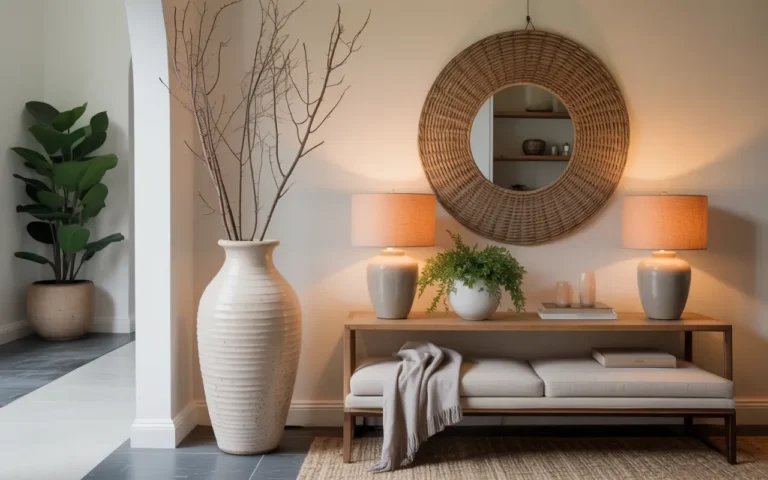
12. Use Mirrors to Amplify Natural Light and Spatial Quality
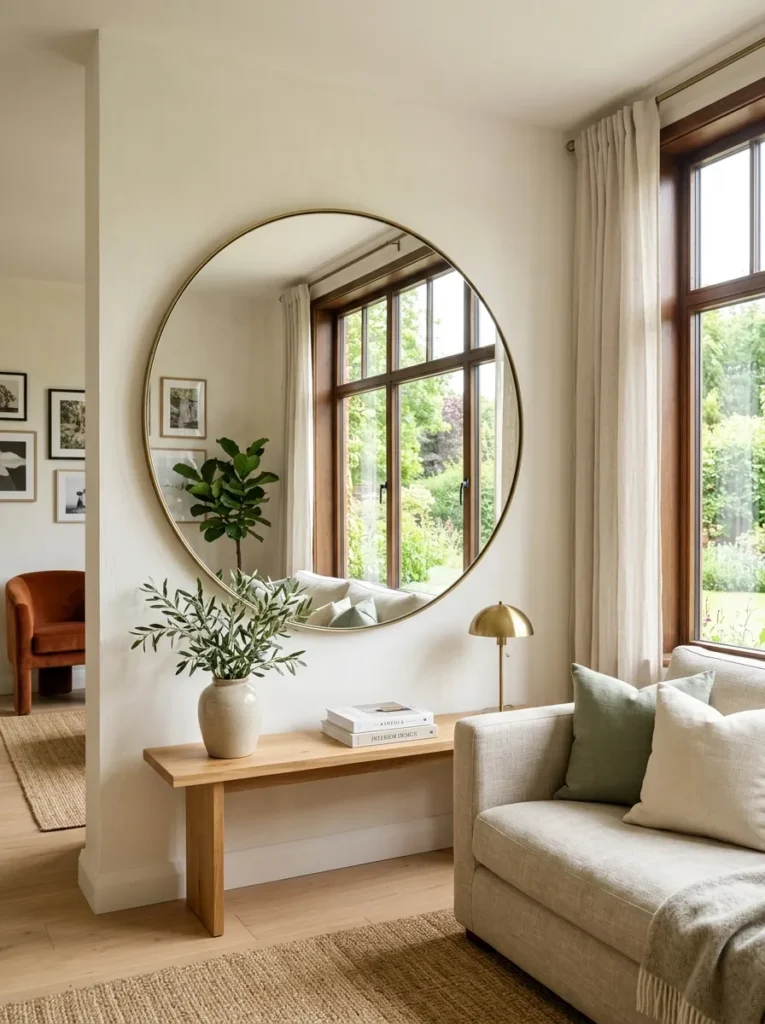
Vibe: Bright and spatially generous — the room that has twice the natural light it actually receives, which is the most sustainable and most beautiful way to improve any room’s quality.
Why it works: The principle of positioning a quality mirror on the wall opposite the room’s primary window to reflect natural light back into the room is the timeless decorating strategy that most effectively and most cost-efficiently amplifies the room’s spatial and atmospheric quality without any structural change. A large mirror positioned directly opposite a window doubles the apparent light level at the mirror position by reflecting the full luminous quality of the window back into the room — the room reads as having two light sources (the window and its reflection) from any position within the space. This natural light amplification has the secondary benefit of apparent spatial expansion: the reflected view of the window creates the visual impression of an aperture in the wall at the mirror position, suggesting a room that extends beyond the mirror’s surface in the same way that an actual window suggests the outdoor space beyond the glass.
How to get it: The mirror must be positioned on the wall directly opposite the window rather than on an adjacent wall — a mirror on an adjacent wall reflects the room’s interior rather than the window’s light, providing spatial enrichment without the light-amplification benefit. The mirror scale must be sufficient for the room — a minimum 80cm diameter for a standard living room, with 100cm+ providing significantly more luminous impact. The frame should be simple and visually light — a slim natural timber or aged brass frame keeps the mirror’s primary function (reflecting light) as its primary visual quality rather than making the frame itself the primary feature.
Shop the Look
| Product |
|---|
| Large round mirror 90cm |
| Aged brass frame mirror |
| Slim timber frame mirror |
| Mirror hanging hardware |
| Mirror cleaning kit |
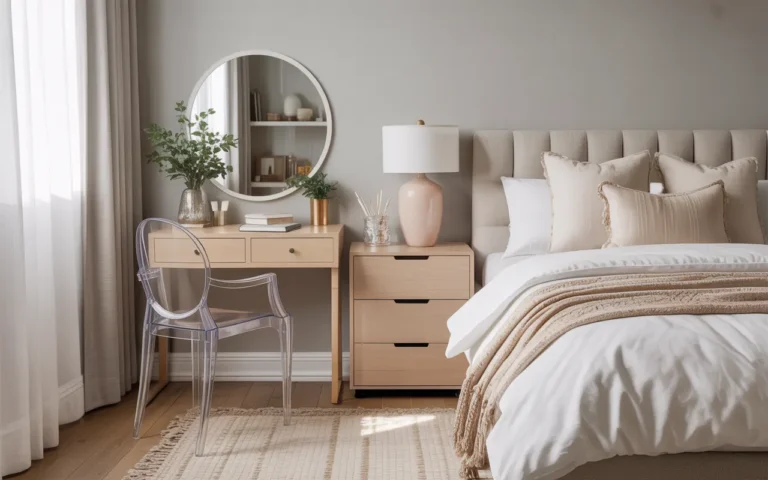
13. Invest in Quality Bedding for the Bedroom
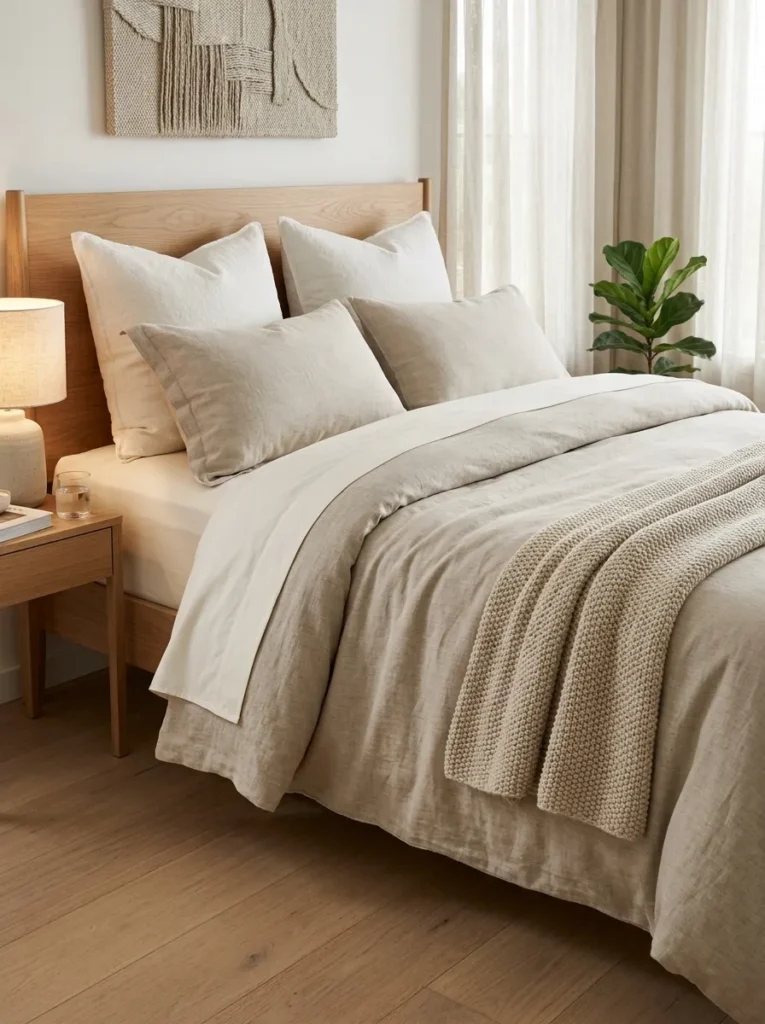
Vibe: Serene and luxurious — the bed that makes every morning departure from it feel like a minor sacrifice and every evening return to it feel like a reward.
Why it works: Quality bedding is the domestic investment with the highest daily-use quality-of-life return relative to its cost — the human body spends approximately one-third of its life in contact with bedding material, which means that the quality of the fabric at the most intimate tactile level is experienced for more hours per day than any other domestic material contact. The specific qualities of long-staple cotton or natural linen bedding — the softness that improves with each washing, the breathability that regulates temperature across the full night, the weight and drape that create the specific physical comfort of quality bedding — are experienced at a physical level that no visual or decorative element can replicate. Quality bedding is also the domestic purchase whose temporal improvement most directly mirrors that of the great timeless materials: a set of high-quality linen bedding purchased today will be softer, more beautiful, and more comfortable in five years than it is now.
How to get it: The minimum thread count for long-staple cotton bedding that reads as luxury quality is 400 thread count in a percale weave — above 400 thread count in percale, the tactile difference between product tiers is minimal and the marketing premium increases more rapidly than the quality. Natural linen bedding requires no thread count specification — linen’s quality is determined by the fiber length and the weave structure rather than thread count. Source from specialist bedding suppliers (Cultiver, Rough Linen, Boll & Branch, or Savoir Beds for the premium tier) rather than department store options whose quality is not reliably disclosed.
Shop the Look
| Product |
|---|
| Natural linen duvet cover |
| Linen European pillowcase pair |
| Long staple cotton fitted sheet |
| Linen throw foot of bed |
| Linen flat sheet |
14. Display Personal Collections with Curatorial Intention
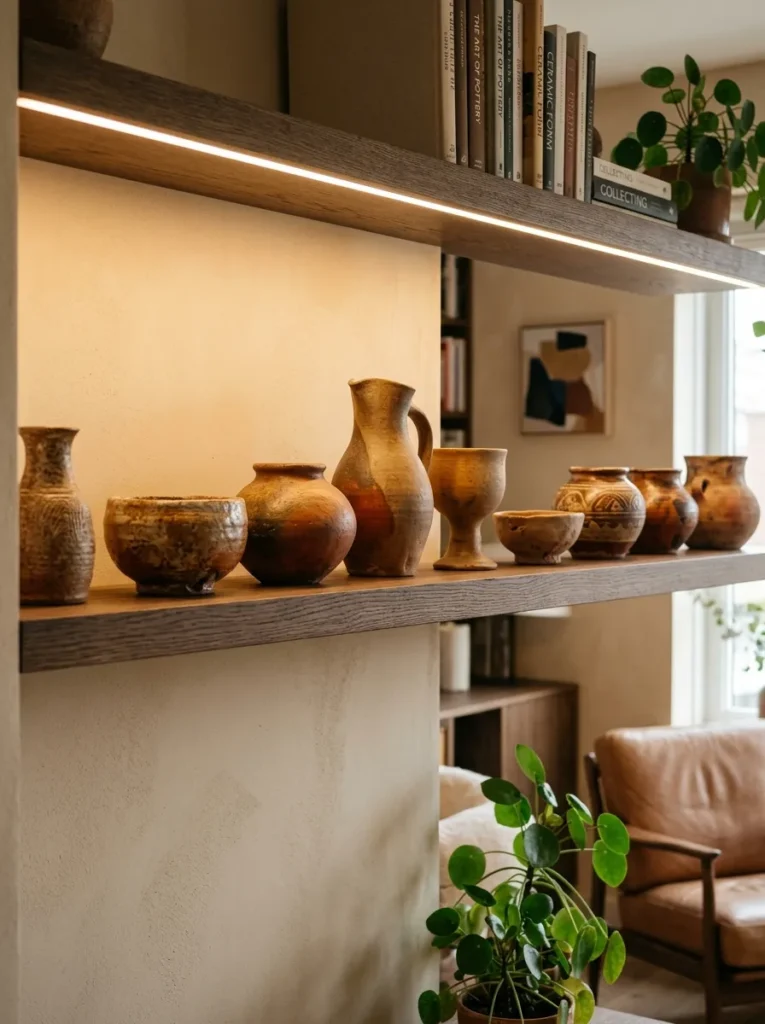
Vibe: Warm and personally revealing — the shelf that makes the room feel inhabited by someone specific rather than furnished for anyone.
Why it works: A personal collection displayed with curatorial intention — the specific attention to breathing space between objects, to the most interesting presentation angle for each piece, and to the compositional relationship between pieces — is the interior design gesture that most powerfully communicates the personal inhabitation of a room rather than its generic furnishing. Collections are the interior design element that most resists reproduction and most specifically identifies the people who assembled them: a collection of aged pottery, antique maps, pressed botanical specimens, vintage ceramics, or carved stone objects tells the story of the collector’s specific interests, specific travels, and specific aesthetic sensibilities in a way that no purchased interior design scheme can replicate. The curatorial discipline — the specific decision to give each piece space, to position each piece with intention, and to limit the collection to the number of pieces the shelf can display at quality — is what transforms an accumulation of objects into a collection of genuine design significance.
How to get it: The curatorial test for any collection display: remove every object from the shelf, place one piece at a time and assess whether its addition improves or complicates the display, and stop adding pieces at the point where the last addition was an improvement. This process typically reveals that a collection of twelve objects reaches its compositional maximum at six or eight pieces — the removed pieces are not discarded but stored in rotation, cycling into the display as the season or the aesthetic appetite of the curator changes.
Shop the Look
| Product |
|---|
| Aged pottery collection local market |
| Dedicated display shelf timber |
| LED strip warm shelf above |
| Individual pottery piece antique |
| Shelf bracket concealed quality |
15. Create Spatial Hierarchy Through the Placement of a Single Large Element
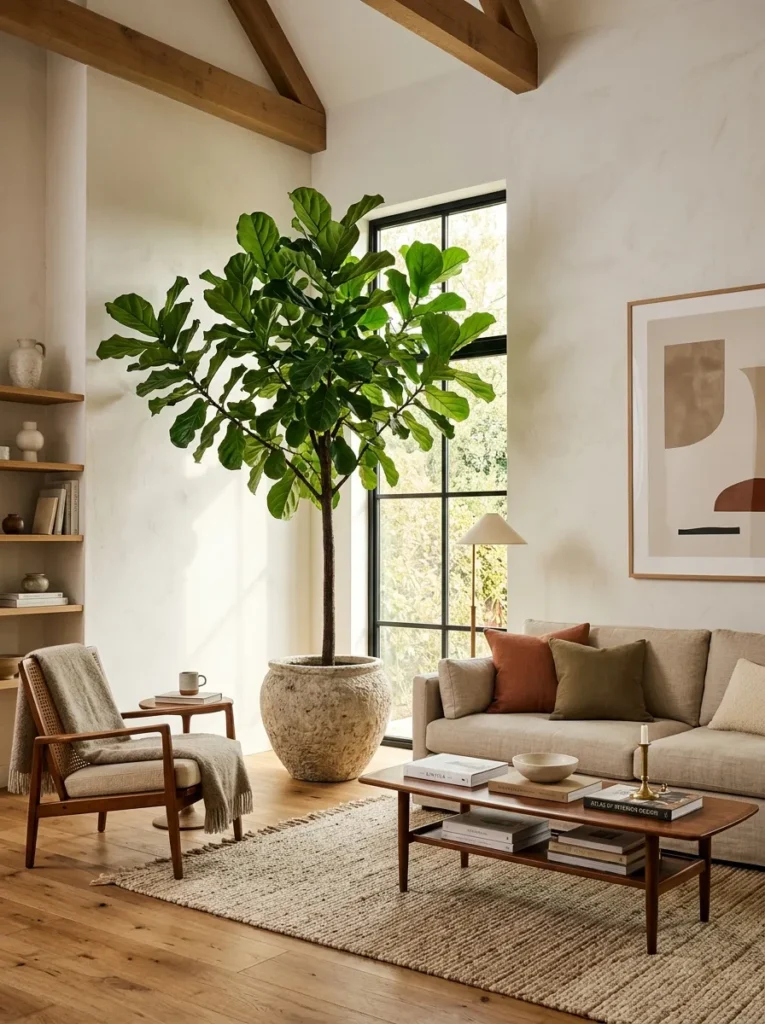
Vibe: Warm and compositionally resolved — the room that feels settled and purposeful from the moment you enter it because everything in it has a clear relationship to one primary element.
Why it works: Creating spatial hierarchy through the placement of a single large-scale element is the timeless compositional principle that most reliably produces a room that reads as designed rather than accumulated — it is the principle that distinguishes rooms that feel settled and resolved from rooms that feel unsettled and unfinished despite containing equal quantities of quality furniture and decoration. A room without a primary large element reads as a collection of equal-weighted objects with no compositional direction; a room with a single clearly dominant large element reads as a composed environment in which every other element has a clear relationship (near or far, echoing or contrasting) to the primary piece. This compositional hierarchy is the structural principle of every designed environment from the cathedral (organized around the altar) to the garden (organized around the house) to the exhibition (organized around the primary work) — and its absence in a domestic room is the most consistent explanation for why the room feels, despite considerable investment, not quite right.
How to get it: The large element that creates spatial hierarchy must be genuinely large relative to the room — a 100cm × 140cm artwork in a standard living room, or a 2-meter floor plant in a generous pot, or a full-height bookshelf on a primary wall. The test is whether the large element is the first thing seen on entering the room from the primary entry point — if another element competes for first attention, the hierarchy has not yet been established. Position the large element at the sightline that is most directly opposite the primary room entry, and organize all other furniture and decoration in relationship to it rather than in relationship to each other.
Shop the Look
| Product |
|---|
| Large format artwork 100x140cm |
| Large floor plant established |
| Stone pot large plant |
| Quality frame large format |
| Room planning grid paper |
How to Start Your Timeless Interior Design Transformation
Your single first move is to audit the existing material quality of your home before making any new purchases — identifying the three to five objects currently in your possession that you consider genuinely beautiful, genuinely personal, and genuinely irreplaceable, and positioning each of them as the primary object of the room it inhabits rather than as one of many equally weighted objects distributed across surfaces and rooms. This audit costs nothing and produces no new objects, but it establishes the design principle that should govern every subsequent purchase: the genuinely exceptional object deserves primacy and space, while the average object should be replaced when means allow or edited out immediately. The audit frequently reveals that a home already contains the foundation of a timeless interior — one or two genuinely beautiful pieces of furniture, a handmade rug, a collection of meaningful ceramics — surrounded by average objects that dilute rather than amplify the quality of the exceptional pieces.
The most common timeless interior design mistake is treating every design decision as equally important — spending significant budget on a trend-driven feature item (a fashionable light fitting, a statement wallpaper, a designer accessory) while under-investing in the foundational decisions that most determine the room’s long-term quality (the paint color depth and complexity, the quality of the primary sofa fabric, the layering of the lighting system). The correct investment hierarchy for a timeless interior places the largest proportional budget on the decisions that are most permanent (floor coverings, wall colors, built-in joinery, primary upholstery) and the smallest proportional budget on the decisions that are most easily changed (cushions, throws, accessories, seasonal botanical elements).
Three specific investments under $100 that immediately improve a home’s timeless quality: (1) Replacing every visible light bulb in the primary living room and bedroom with warm white LED equivalents at 2700K ($15–30 in total) immediately shifts the room’s atmospheric quality from functional to warm and creates the foundational light quality from which all other timeless interior improvements proceed. (2) Installing a set of trailing-edge LED dimmer switches on the primary room lighting circuits ($25–45 per switch, installed by a licensed electrician) converts the room’s lighting from a binary on-off system to a fully controllable atmospheric tool — the dimmer is the single most impactful lighting investment available per dollar spent. (3) Editing every surface in the house to a maximum of three objects simultaneously ($0, requiring only the willingness to remove and store or donate the excess) immediately produces the spatial discipline that makes every remaining object appear more significant, more considered, and more beautiful than it did surrounded by competing objects.
Realistically, a complete timeless interior transformation — exceptional primary furniture piece, complex quality paint color, layered lighting system, natural linen textiles, handmade rug, built-in bookshelves, solid timber dining table, ceiling-hung curtains, natural stone surface, quality mirror, quality bedding, curated personal collection, and a primary spatial hierarchy element — represents a significant multi-year investment that might range from $15,000 to $60,000 depending on the scale of the home and the quality level targeted at each category. However, the timeless interior design principle specifically accommodates a patient, incremental approach — each individual decision in this list is independently valuable and independently achievable, and each decision’s value compounds over time rather than depreciating. A single genuinely timeless design decision made each year produces a home of genuine quality within a decade; a trend-driven decorating cycle pursued with the same annual budget produces a home of perpetual dissatisfaction that never quite arrives at the quality it aspires to.
Frequently Asked Questions About Timeless Interior Design
What makes an interior design decision timeless rather than merely fashionable?
A timeless design decision is one whose quality is grounded in material honesty, proportional rightness, and functional precision rather than in the visual currency of the current trend cycle. The test for timelessness is temporal rather than aesthetic — a design decision is timeless if it was considered beautiful and appropriate fifty years ago, is considered beautiful and appropriate today, and can reasonably be predicted to be considered beautiful and appropriate fifty years from now. Natural linen, solid timber, natural stone, aged leather, handmade ceramics, quality wool, and genuine handmade textiles all satisfy this temporal test; chipboard veneer, polyester upholstery, laminate countertops, and trend-specific color choices consistently fail it. The most reliable guide to timeless design decisions is the enduring work of the 20th century’s great designers — the Shakers, William Morris, Eileen Gray, Hans Wegner, Charles and Ray Eames — whose work continues to be produced and admired without revision because it was designed with material honesty and proportional rightness from the outset.
How do I create a timeless interior on a limited budget?
The most powerful timeless interior improvements require minimal or zero budget: editing surfaces to three objects maximum (free), installing warm light bulbs (under $30), hanging curtains from the ceiling rather than the window frame (same fabric cost, different hardware position), positioning the room’s best existing piece as the primary spatial element (free), and applying the spatial discipline of generous circulation space between furniture (free reorganization). The budget-appropriate material upgrade that produces the highest timeless quality return is quality linen cushion covers and a natural fiber throw — these textile improvements can be made for $80–150 and immediately shift the room’s material register toward the warm, natural quality that defines genuinely timeless interiors. Save the largest budget allocations for the most permanent decisions (floor coverings, wall paint, primary upholstery) and invest in those decisions with maximum quality rather than distributing the budget across many trend-driven smaller purchases.
Can a timeless interior also be personal and distinctive?
Yes — and the most genuinely timeless interiors are specifically those that are most personal and most distinctive, because personal distinctiveness is itself a quality that does not date. A room assembled from trend-driven purchases shares its visual language with every other room assembled from the same trend cycle, which is the quality that makes it feel dated as the trend passes; a room assembled from genuinely personal objects — a handmade rug bought in Marrakech, a shelf of books actually read, a collection of ceramics accumulated over twenty years, an inherited piece of furniture — is timeless in the deepest sense because its specific combination of personal objects can never be replicated and therefore never dates. The personal collection displayed with curatorial intention (Idea 14) is the timeless interior design principle that most specifically encourages the personal and the distinctive as a design quality.
How do I know when a design decision is genuinely timeless versus merely currently popular?
The most reliable test for genuine timelessness versus fashionable popularity is the provenance test — does the design decision have a documented history of being valued across multiple decades by multiple cultural contexts, or does it appear primarily in recent editorial and social media content? Aged brass hardware, natural linen, handmade ceramics, complex quality paint colors, ceiling-hung curtains, and layered lighting all have documented histories in the world’s most admired residential interiors across fifty or more years of design culture; they appear in contemporary editorial not because they are newly fashionable but because they have always been valued and their value is being recognized again after periods of overshadowing by contrary trends. Genuinely trend-driven decisions — specific colors, specific graphic patterns, specific material finishes that have appeared in design media primarily within the past two to five years — should be approached with caution and deployed as easily changed accent elements (a cushion, a single accessory, a seasonal botanical display) rather than as permanent material investments.
What is the single most impactful timeless interior design change I can make today?
The single most impactful timeless interior design change achievable today — without any purchase, any professional involvement, and any structural work — is to replace every light bulb in the primary living space and bedroom with warm white LED bulbs at 2700K, and to observe the room for five minutes after making this single change. This observation consistently reveals that the room’s material quality — the specific warmth of the timber, the depth of the textiles, the complexity of the wall color — was always present but was being masked by the cool, flat quality of inadequate or incorrectly specified artificial light. The warm light transformation does not improve the room’s materials; it reveals them in the quality of light in which they appear most beautiful, which is the light quality that all genuinely timeless interiors have always used and that all genuinely timeless interior designers have always specified first.
Ready to Create Your Timeless Interior?
These 15 ideas span the full range of what a timeless interior design approach can achieve — from the spatial authority of a single exceptional piece of furniture that organizes an entire room around its quality, and the atmospheric transformation of layered warm lighting from multiple sources, to the material coherence of consistent natural linen throughout a room’s textiles, the temporal improvement of handmade rugs and solid timber furniture, the light amplification of a quality mirror positioned opposite a window, and the personal revelation of a curated collection displayed with genuine compositional intention — so whether you are beginning the design of a new home from a blank canvas or improving an existing interior that has never quite achieved the quality you imagined for it, there is a genuinely achievable, genuinely enduring design principle here for your specific spaces, your specific budget, and your specific aesthetic values. The transformation begins not with a purchase but with a principle — the decision to invest in material quality, spatial discipline, and compositional intention rather than in the visual currency of the trend cycle — and continues with the patient accumulation of genuinely exceptional decisions that compound in quality over time rather than depreciating with each passing season. Today’s specific action: identify the one object currently in your home that you consider genuinely exceptional — the one object whose quality, beauty, and personal meaning you have never questioned — and give it the space it deserves: position it where it receives the room’s best natural light, clear the surface it occupies of everything except two supporting objects, and observe what the room becomes when its best object is treated with the respect that object has always deserved. That observation is the beginning of your timeless interior, and every subsequent design decision follows from the standard that one genuinely exceptional object establishes.